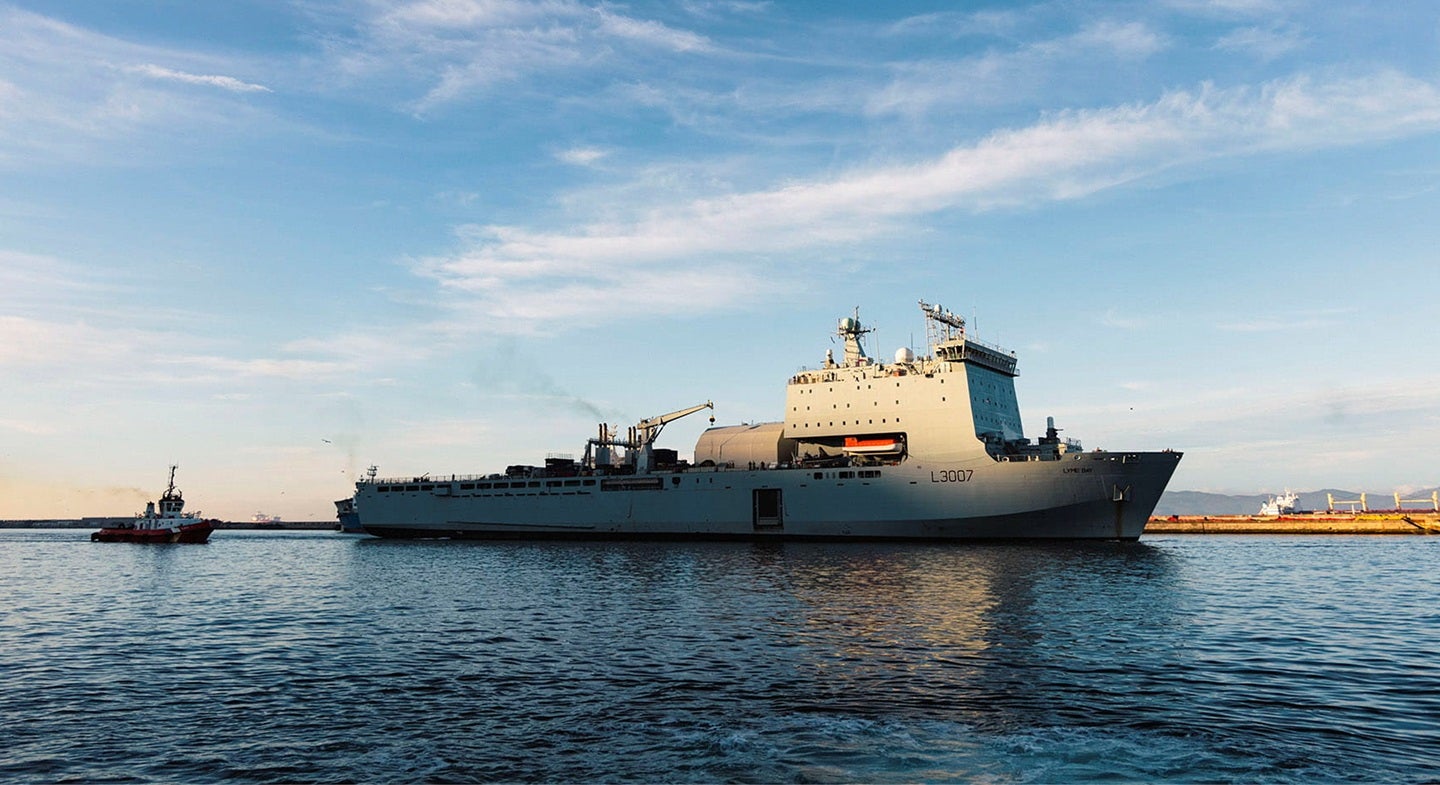
Royal Navy Equips RFA Lyme Bay with Autonomous MCM Capabilities
The Royal Navy strengthens its mine countermeasure capabilities with RFA Lyme Bay's upgrade. This enhances readiness for potential operations in the Hormuz Strait.
The Royal Navy has upgraded the RFA Lyme Bay to include autonomous mine countermeasure (MCM) capabilities. This move comes ahead of a potential multilateral mission aimed at securing navigational safety in the strategic Hormuz Strait. The enhancement of these capabilities signals a proactive approach by the Royal Navy to adapt to modern maritime security challenges.
Historically, the Hormuz Strait is a critical chokepoint through which approximately 20% of the world's oil supply passes. In recent years, tensions in the region have escalated, prompting the need for effective maritime security operations to deter potential threats to shipping lanes. The Royal Navy's involvement is a significant indicator of its commitment to maintaining stability in this key area.
The RFA Lyme Bay is equipped with advanced technology that allows it to conduct autonomous mine detection and neutralization missions. This upgrade not only enhances the vessel's operational capacity but also reduces the risk to personnel involved in mine countermeasure operations. The use of unmanned systems is becoming increasingly vital in modern naval warfare, reflecting a broader trend toward automation in military engagements.
With its enhanced capabilities, RFA Lyme Bay will be better positioned to collaborate with allied forces during joint operations in the Gulf region. Such collaborations are crucial in ensuring the security of critical maritime routes and safeguarding international trade interests. Moreover, the integration of autonomous MCM capabilities underscores the Royal Navy's adaptation to evolving maritime threats.
Looking forward, the Royal Navy's commitment to enhancing mine countermeasure capabilities not only benefits regional security but also strengthens its deterrence posture globally. The ability to effectively respond to threats in the maritime domain is essential for maintaining a stable international order, especially given the heightened tensions in and around the Hormuz Strait. The effectiveness of these upgrades will be closely monitored as potential operations evolve in this strategically significant area.