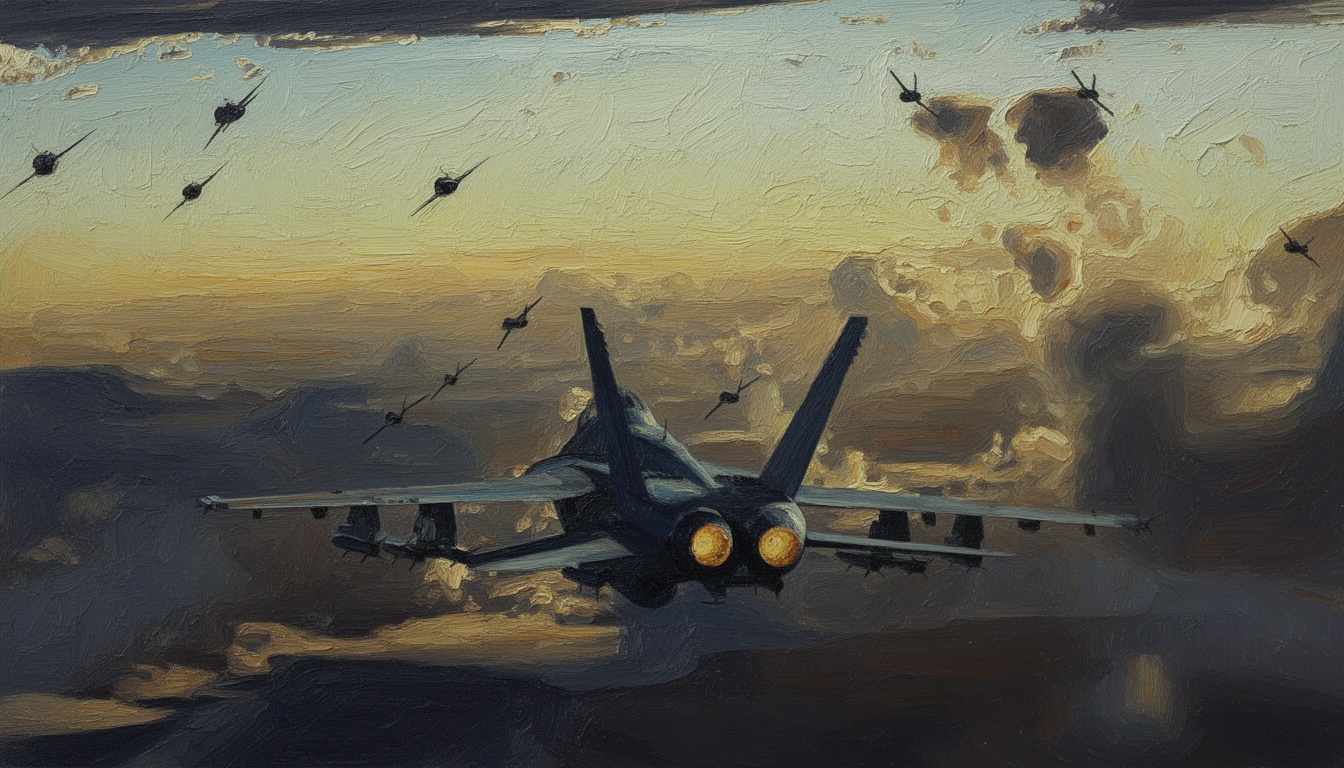
Navy Seeks 1,000-Mile Combat Radius for Tactical Drones
The U.S. Navy is announcing a significant requirement for its future carrier-based tactical drone fleets, aiming for a combat radius of 1,000 miles. This capability is critical for enhancing operational effectiveness and maintaining strategic advantages in maritime operations.
The U.S. Navy has set forth a substantial requirement for its upcoming carrier-based tactical drone fleets, demanding a combat radius of 1,000 miles. This specification marks a pivotal shift in the capabilities envisioned for future naval aviation, reflecting a strategic imperative to extend reach and influence over potential adversaries.
Historically, aircraft carriers have served as central assets in naval warfare, enabling extended missions over vast maritime zones. The introduction of high-capacity tactical drones with such extensive operational ranges could revolutionize the conduct of naval operations by providing intelligence, surveillance, reconnaissance, and strike capabilities from significant distances, reducing the vulnerability of manned aircraft.
This requirement aligns with the ongoing focus on modernization within the U.S. Navy, driven by increasing global maritime competition. The advancement of technology allows for the integration of unmanned systems capable of supplementing or augmenting traditional naval capabilities, which is essential in a rapidly evolving security environment marked by technological advancements and the emergence of new threats.
Technical specifications for these tactical drones are anticipated to include advanced sensors and weapon systems that optimize performance over extended ranges. The development process will also consider the integration with existing carrier strike groups, ensuring seamless operations alongside manned aircraft. A combat radius of 1,000 miles will enable comprehensive mission profiles, allowing for multi-domain operations that are critical for future naval strategies.
The Navy's proposal is likely to have far-reaching implications for maritime operations and military strategy. As the need for adaptability and resilience in naval forces increases, the addition of such capabilities will play a crucial role in establishing deterrent options and operational success, thereby maintaining U.S. influence in contested maritime environments.