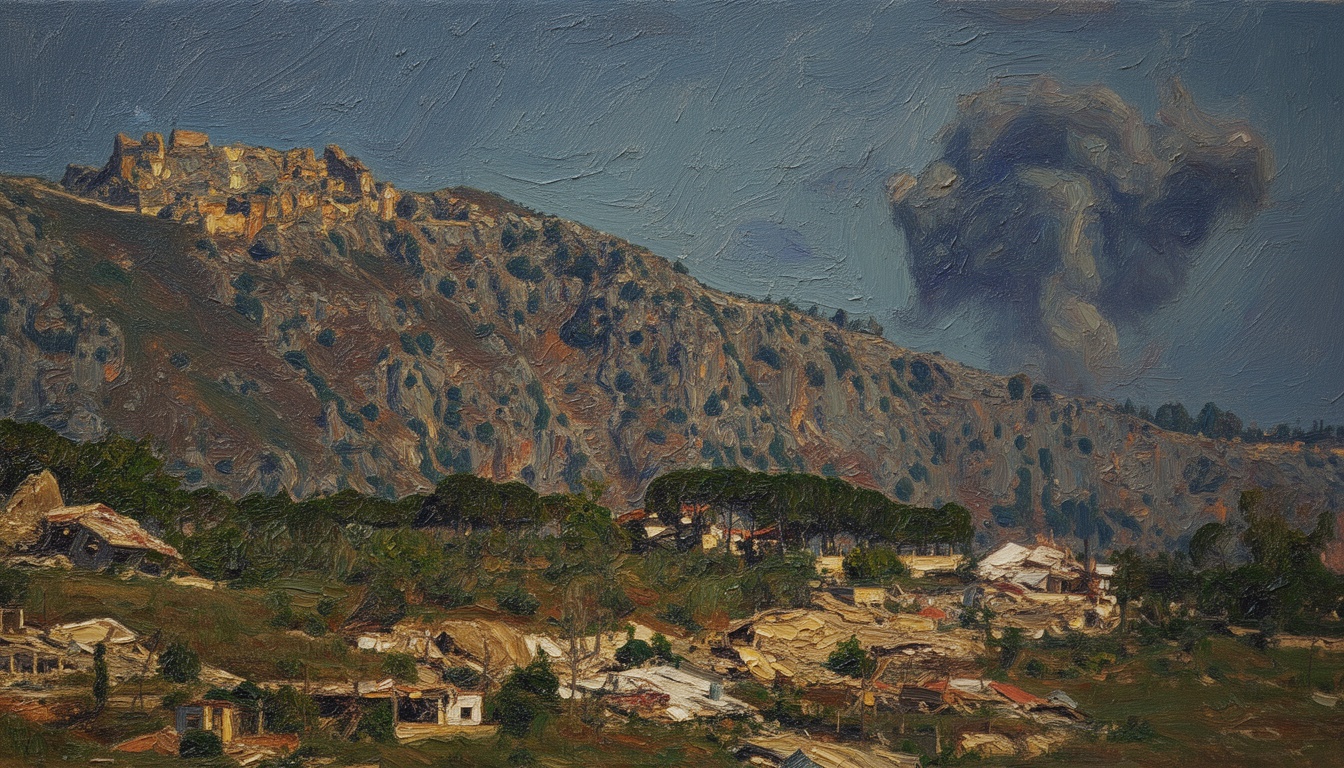
18 Killed in Israeli Air Strikes, 4 Israeli Soldiers Dead
Intense fighting escalates in southern Lebanon with significant casualties. Israel's first military losses reported since recent diplomatic negotiations.
Intense fighting erupted in southern Lebanon on Friday, resulting in 18 fatalities due to Israeli air strikes. This ongoing conflict marks a significant escalation, coinciding with reports from Israel of four soldiers killed amid these operations. The violence seems directly linked to the recent US-Iran negotiations aimed at de-escalating tensions in the region.
Israel has confirmed that its air strikes targeted Hezbollah positions through the night into Friday morning. In response to these attacks, Hezbollah stated that it launched assaults against Israeli forces near the town of Nabatieh. This reciprocal violence indicates a considerable deterioration in the security situation, with both sides suffering losses.
The current confrontations represent the first military casualties for Israel in Lebanon following an announcement of a US-Iran deal intended to curb hostilities across the Middle East. The strikes and subsequent retaliations illustrate how fragile the situation remains, particularly for Israel, which now faces both external military threats and internal challenges with its regional adversaries.
Israel's military operations reportedly included precision strikes on Hezbollah's command centers and weapon depots, leveraging advanced munitions. The reported deaths of four Israeli soldiers marks a critical moment for Israel, indicating a shift in its operational environment that could necessitate a reevaluation of its military strategy moving forward.
The implications of this escalation could be profound, both politically and militarily. Should the cycle of retaliatory strikes continue, it may lead to a broader regional conflict, undermining efforts at diplomacy and pushing both nations deeper into multilateral tensions. Such developments warrant close monitoring as they could influence security calculus in the Middle East significantly.