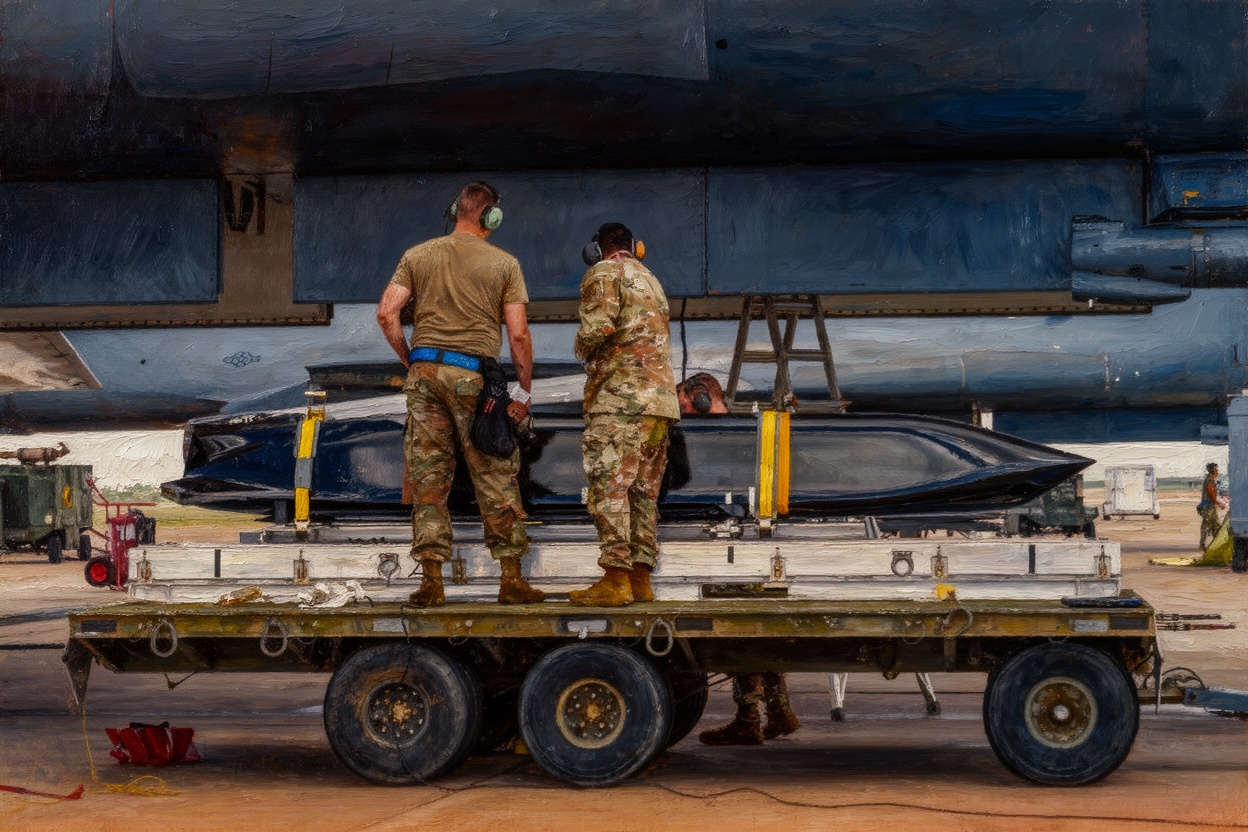
US Air Force Plans Major Increase in JASSM and LRASM Production
The US Air Force aims to procure over 11,000 cruise missiles, significantly boosting JASSM and LRASM stockpiles. This expansion reflects a major shift in the Pentagon's inventory strategy.
The U.S. Air Force has announced plans to dramatically increase its procurement of Joint Air-to-Surface Standoff Missiles (JASSM) and Long Range Anti-Ship Missiles (LRASM) under a new contract. Over the next five to seven years, the Pentagon anticipates purchasing more than 11,000 of these cruise missiles, marking a significant escalation in its military capabilities against emerging threats.
In recent years, the Pentagon has consistently raised its objectives for the JASSM and LRASM, responding to the evolving global security landscape. The JASSM is designed to strike both stationary and moving targets with precision at ranges over 1,000 kilometers, while the LRASM is tailored specifically for anti-ship capabilities, enhancing naval warfare operations. This increase in production aligns with the Pentagon's drive to modernize its arsenal amid rising tensions, particularly in the Indo-Pacific region.
The JASSM and LRASM are critical components of the U.S. military's long-range strike capabilities. Their expanded production signifies a shift in strategic focus and a response to a more complex deterrence environment. With the rise of peer competitors and regional adversaries, these investments underscore the need for advanced precision strike systems to ensure U.S. military supremacy.
The details of the contract underline a commitment to enhancing the overall combat readiness of the Air Force. The JASSM has been operational since 2003, and its variants have proved effective in various conflicts. The LRASM, on the other hand, is still being fine-tuned but promises to revolutionize maritime engagement strategies for the future.
As the procurement process unfolds, analysts will be watching for how this increase impacts the U.S. military's operational tempo and its posture in vulnerable theaters. The new contract could alter the balance of power in contested regions as these advanced cruise missiles become more widely deployed, projecting U.S. force multipliers in times of conflict.