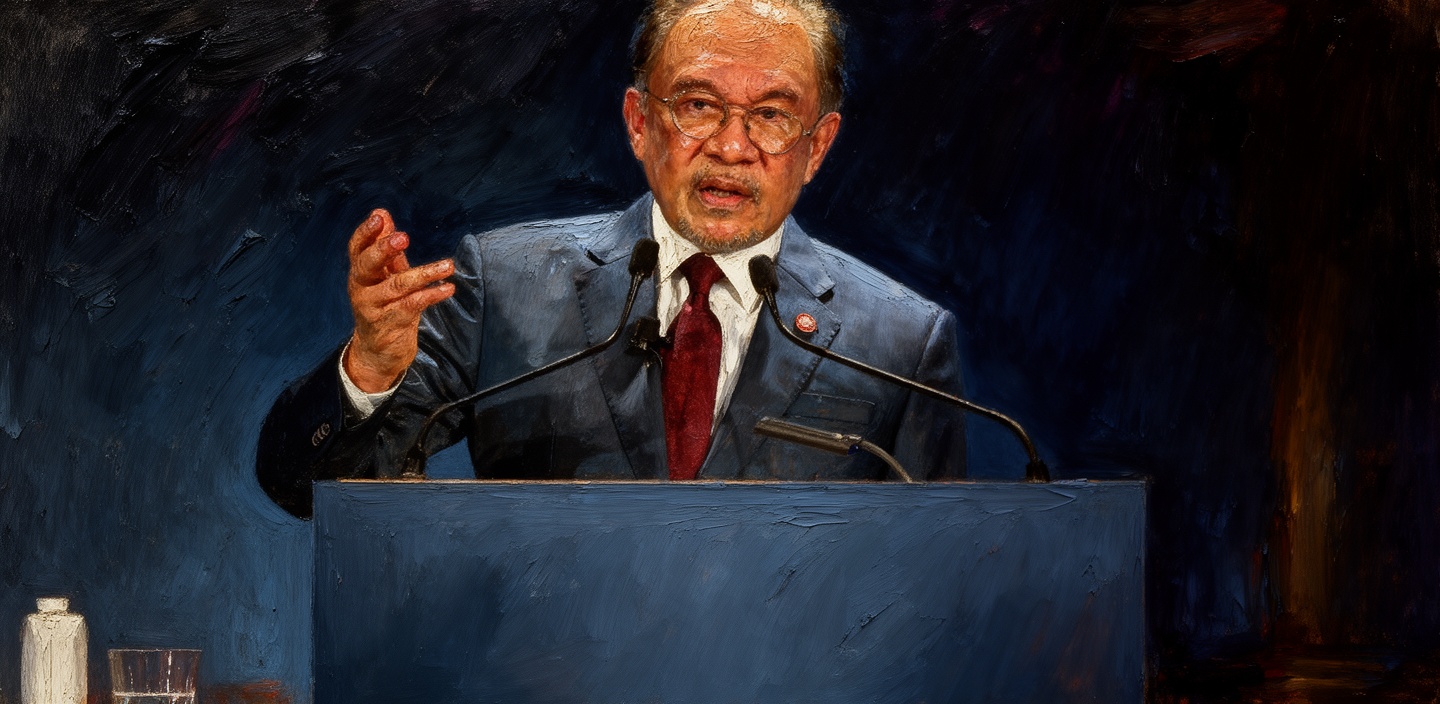
Malaysia's Anwar Warns Against Weaponizing Trade
Malaysian Prime Minister Anwar Ibrahim has raised concerns about major global powers potentially weaponizing trade for political leverage. This warning highlights the risks of economic tools being used to influence international relations.
Malaysian Prime Minister Anwar Ibrahim has cautioned against the dangers of major global powers weaponizing trade for geopolitical advantages. During a recent speech, he emphasized that using economic sanctions and trade restrictions as tools for political objectives can have destabilizing effects on global markets and international relations.
Trade has always played a crucial role in international diplomacy, but Anwar's comments come at a time of heightened tensions between significant global players. Concerns have been raised about countries using economic measures not only to exert influence but also to retaliate against adversaries in an increasingly competitive global landscape.
The strategic significance of this warning cannot be overstated. Anwar's message serves as a call to reconsider how nations engage with one another economically. It underscores the necessity for cooperative frameworks that facilitate trade while avoiding the pitfalls of using economic power as a weapon.
Malaysian trade policy has been traditionally oriented toward fostering relationships across various nations. Anwar's government opts for trade agreements that are transparent, equitable, and mutually beneficial. The Prime Minister noted that Malaysia remains committed to integrating itself within frameworks that uphold free trade principles, distancing itself from practices that might involve coercion.
In conclusion, Malaysia's position could lead to discussions on creating more robust international norms regarding trade practices. Expectations are that nations will need to collaborate more effectively to ensure that trade remains a source of cooperation rather than conflict in an era marked by geopolitical rivalry.