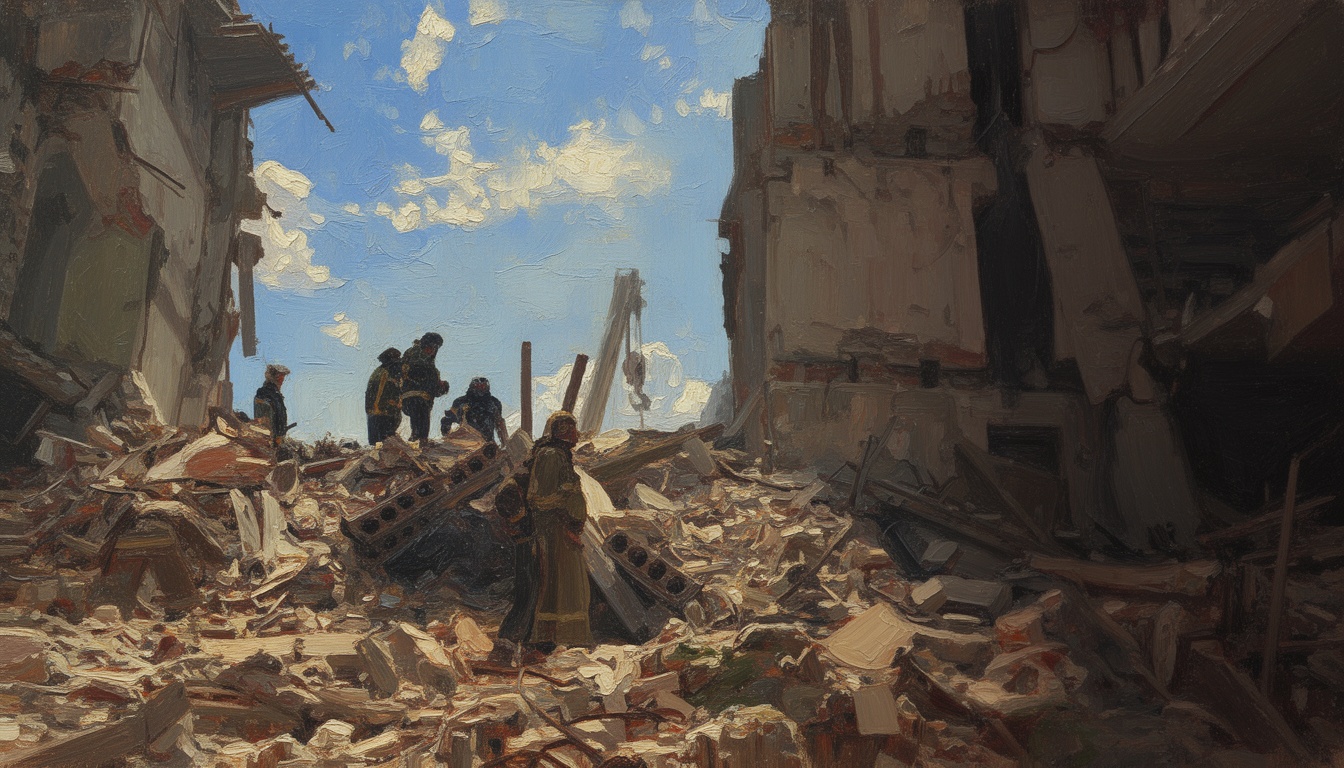
Sixteen Killed in Drone Strike on Student Dorm in Luhansk
The drone strike in Luhansk leads to rising tensions between Russia and Ukraine. Russian officials attribute the attack to Ukraine, amidst international scrutiny.
A recent drone strike on a student dormitory in the Russian-controlled Luhansk region has resulted in at least 16 fatalities, primarily among young women. This incident occurred in the eastern part of Ukraine and has drawn severe condemnation from Russian officials, who squarely blame Ukraine for the attack. The rising death toll was confirmed during a heated debate at the United Nations on the ongoing conflict in Ukraine.
The strike adds fuel to the already heightened tensions between Russia and Ukraine, coming on the heels of previous accusations and counter-accusations regarding military actions in the region. Noteworthy is the concentration of casualties among young women, reflecting the broader human impact of the ongoing conflict. The incident has elicited reactions from various nations, particularly those concerned with humanitarian aspects and civilian safety during military operations.
Strategically, this event may serve as a catalyst for further military escalations in Ukraine, with both sides preparing for heightened conflict. Russian officials have been vocal in their assertion that Ukraine poses a significant threat to Russian territories, while Ukraine denies any involvement in the strike. The incident stresses the precarious nature of military operations in populated areas, raising questions about the rules of engagement and targeting.
Technical analyses of the drone strike itself are still pending, as investigators strive to gather evidence about the type of drone used and its operational capabilities. Reports indicate this strike might involve commercially available drones modified for military use, which complicates the traditional assessments of drone warfare efficacy and accountability.
The likely consequences of this tragic incident could further entrench both nations in their positions, leading to increased military deployments and a focus on deterrence strategies in the region. As the UN deliberates over this event, it may compel an international response aimed at de-escalation, though the path forward remains murky amidst entrenched geopolitical interests.