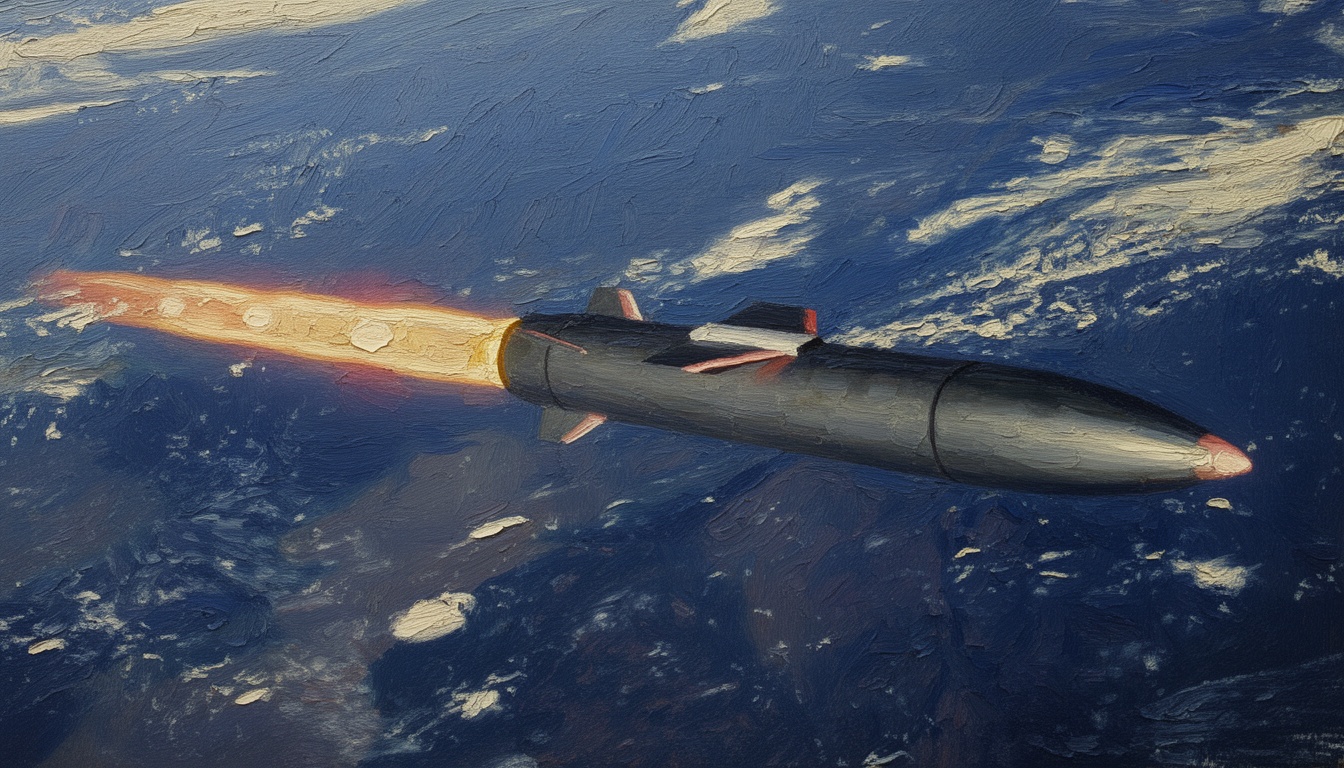
3D-Printed Engines Transforming Hypersonic Weapon Development
The emergence of 3D-printed engines marks a significant advancement in hypersonic weapon technology. This innovation could redefine defense capabilities for major powers globally.
A revolutionary leap in military technology is underway as 3D-printed engines for hypersonic weapons are rapidly advancing towards operational capability. Ursa Major is pioneering this development, focusing on solid rocket motors that promise enhanced performance and efficiency.
In recent years, the need for hypersonic capabilities has intensified among major military powers. These weapons can travel at speeds exceeding Mach 5, enabling them to bypass traditional missile defense systems. The integration of 3D printing technology allows for the rapid prototyping and production of complex engine designs, potentially reducing development timelines significantly.
This innovation carries critical strategic significance, as hypersonic weapons provide a new layer of deterrence and combat capability. Effective deployment of such weapons could shift the balance of power in international relations, especially if nations can field these systems before their adversaries.
Ursa Major's approach not only aims to produce state-of-the-art engines but also emphasizes the flexibility and scalability of manufacturing processes. 3D printing allows for the rapid iteration of designs and materials, responding quickly to the evolving requirements of military applications.
As this technology matures, it is likely to attract significant investment and interest from defense ministries worldwide. The advancement of 3D-printed hypersonic engines may well shape the future landscape of warfare, pushing nations to adapt their strategic postures and military doctrines accordingly.