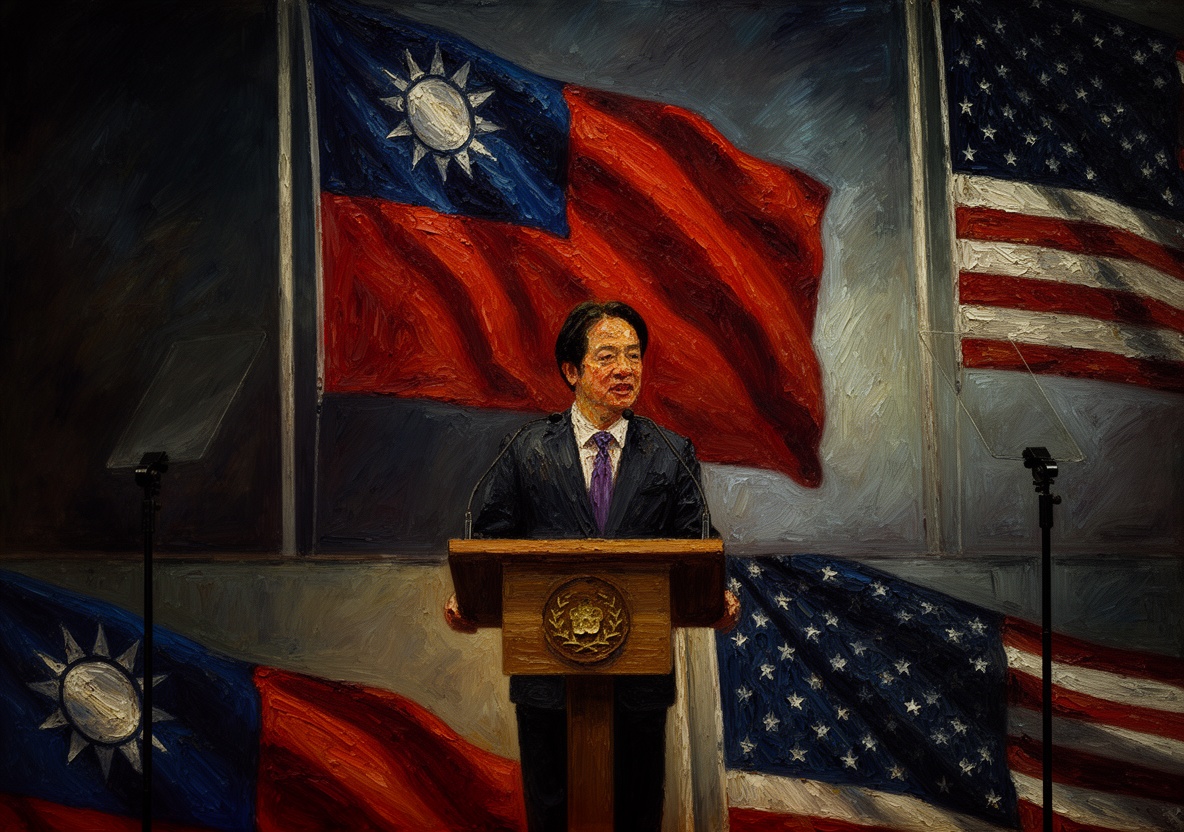
Taiwan Stands Firm on Democratic Values Against Pressure
Taiwan's President Lai Ching-te asserts that the island will not compromise its democratic principles despite Chinese threats. Taipei aims to maintain its dignity while avoiding conflict.
Taiwan's President Lai Ching-te has declared that the island will not abandon its commitment to democracy and dignity amid increasing pressure from China. During a recent address, Lai emphasized that Taiwan will not provoke conflict, but will remain steadfast in its democratic values.
Contextually, Taiwan operates under a democratic framework, contrasting sharply with mainland China's authoritarian regime. Lai's statement reaffirms Taiwan's resolve to uphold its “free way of life.” These remarks come during a period of heightened tension and military activities in the Taiwan Strait, as China continues its aggressive posture towards the island.
Strategically, Taiwan's stance is critical as it seeks to ensure security through international support. Lai's commitment to democratic principles appeals not only to domestic audiences but also resonates with allies who share similar values. The situation underscores the delicate balance Taiwan seeks to maintain in addressing Chinese hostility while garnering support from the international community.
Operationally, Taiwan has been enhancing its defense capabilities in response to perceived threats. The Ministry of National Defense has budgeted approximately $19 billion for military upgrades in 2024, focusing on enhancing air defense systems and naval capabilities. This investment reflects Taiwan's commitment to self-defense in the face of persistent Chinese military posturing.
As a consequence of these developments, Taiwan is likely to continue reinforcing its military capabilities while urging diplomatic dialogues to ease tensions with China. The international community is expected to keep a close watch on Taiwan's actions, as its commitment to democratic values positions it as a key player in the Asia-Pacific security landscape.