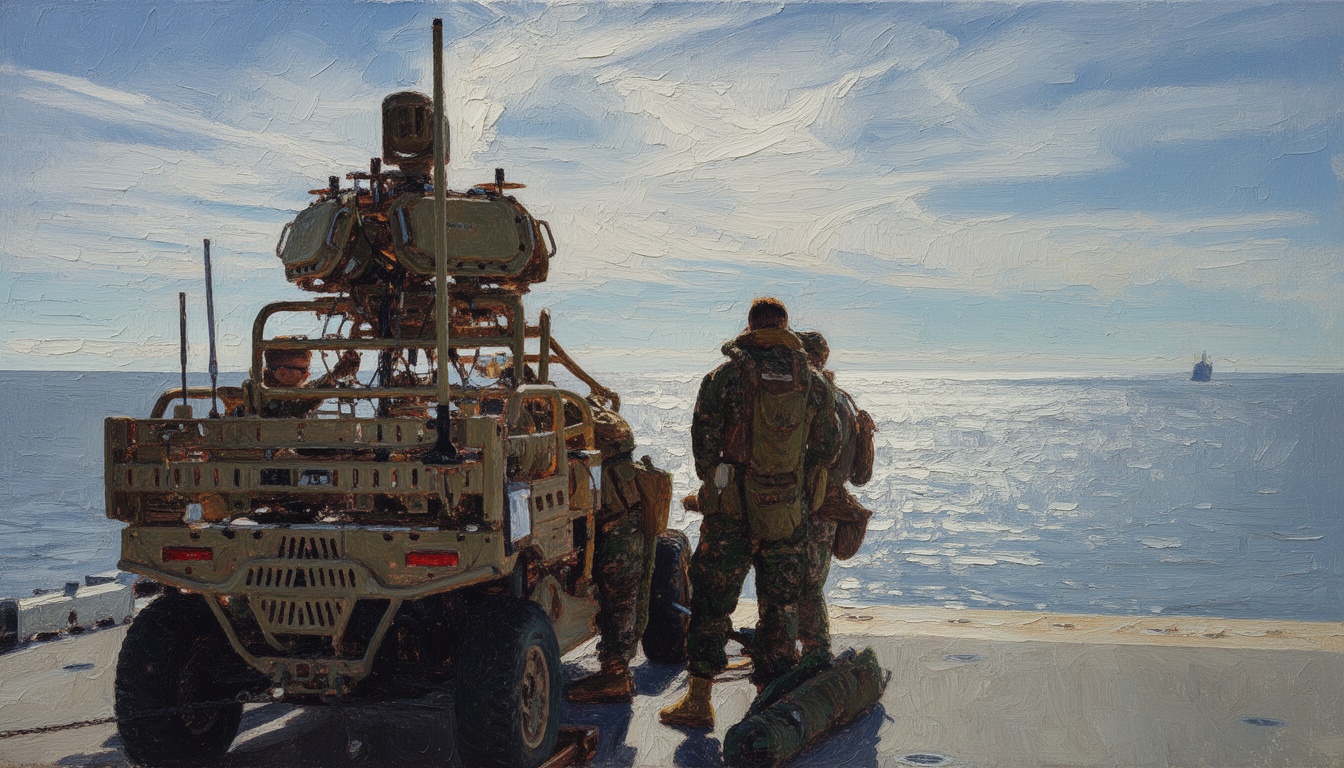
Marine Corps Awards Contract for Autonomous Ground Vehicle
The US Marine Corps has contracted Overland AI for an autonomous ground vehicle. This vehicle is not designed to replace the Joint Light Tactical Vehicle (JLTV).
The US Marine Corps has awarded a contract to Overland AI for an autonomous ground vehicle that aims to enhance operational capabilities. According to Overland AI CEO Byron Boots, this particular system is not intended to replace the Joint Light Tactical Vehicle (JLTV), a core element of modern Marine logistics. This decision underscores the commitment to integrate autonomous systems while maintaining legacy platforms.
The Joint Light Tactical Vehicle has been a staple of the Marine Corps' fleet since its introduction. It is designed for versatility and rugged terrain capabilities. The new autonomous vehicle, while complementary, will focus on supporting transport and logistics operations, thereby increasing the efficiency of deployed forces. Marine Corps leadership sees automation as a pivotal component in modern warfare, enabling troops to focus on mission success.
Strategically, this contract could signify a major step towards integrating innovative technologies into the Marine Corps' operations, potentially influencing other military branches. As warfare evolves, so does the necessity for vehicles that can operate without direct human intervention, particularly in hostile environments. The adoption of such technology could lead to significant shifts in how ground forces manage logistics and operational efficiency.
The specifics of the vehicle itself, including its capabilities, cost, and timelines for delivery, are yet to be disclosed. However, the emphasis on an autonomous design suggests a focus on reducing manpower risks and improving response times in critical scenarios. This new addition to the Marine Corps' arsenal represents a move towards enhanced operational flexibility in an increasingly complex battlefield.
In summary, while the autonomous ground vehicle will not replace existing equipment, it reflects an important trend toward modernization within the Marine Corps and greater military effectiveness. Future assessments will reveal the impact of these autonomous technologies on military operations over time.