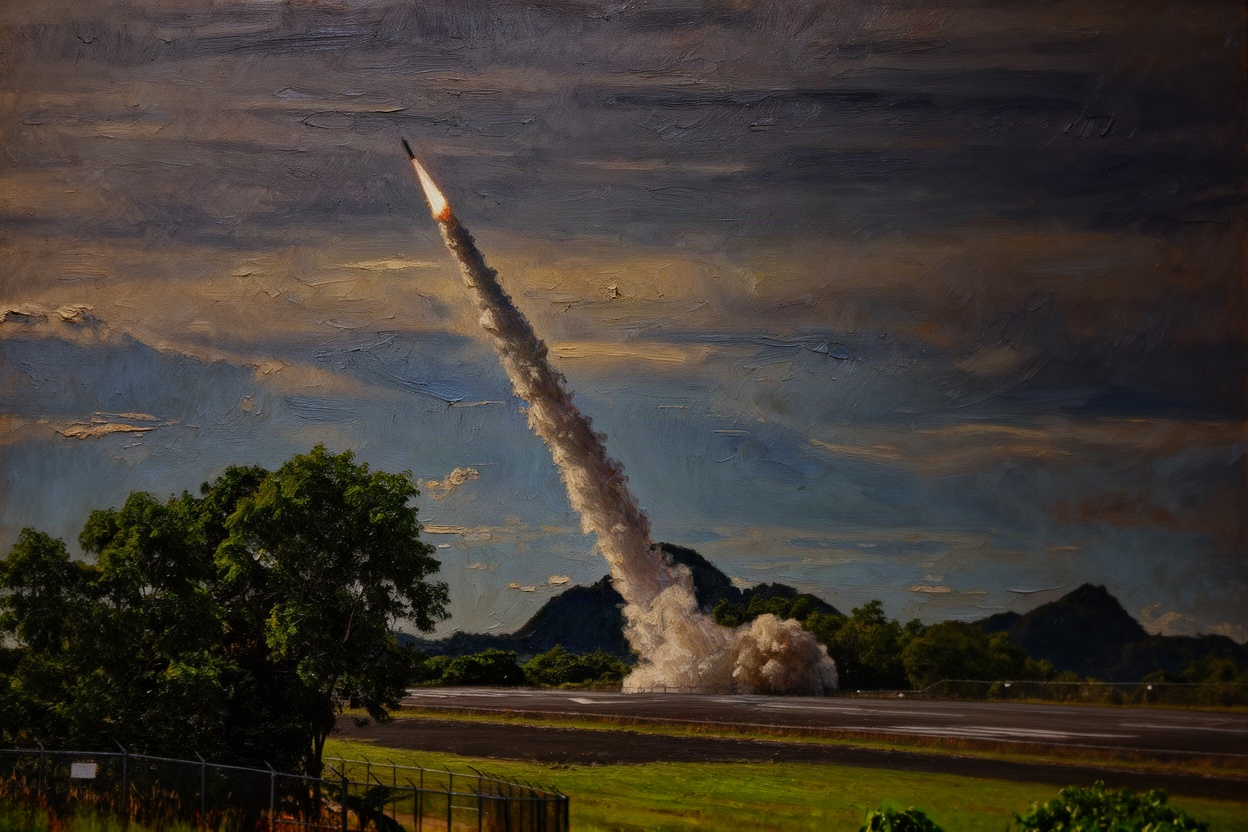
US Army Depletes Long-Range Precision Missile Supply in Iran Conflict
The U.S. Army's extensive use of long-range precision missiles in its five-month conflict with Iran has raised concerns over munitions stockpiles. This depletion may affect future military readiness and capabilities.
The U.S. Army has reportedly exhausted a significant portion of its long-range precision missile stockpile during the five-month conflict with Iran. This intense military engagement has highlighted the reliance on precision-guided munitions in contemporary warfare, raising questions about the sustainability of the U.S. military's missile arsenal in future confrontations.
This conflict, which unfolded between March and August 2023, necessitated the employment of advanced weaponry, including the AGM-158 Joint Air-to-Surface Standoff Missile (JASSM) and the AGM-86 ALCM nuclear-capable cruise missile. The high operational tempo of the engagement reportedly led the U.S. military to utilize 'virtually all' of its available long-range precision munitions, resulting in substantial operational stress on its supply chain.
Strategically, this depletion poses a challenge for U.S. military planners who must consider rapid replenishment of stockpiles and potentially reassess operational strategies in future conflicts. The reliance on precision munitions underscores the changing dynamics of warfare, particularly the need to balance offensive capabilities with sustainable logistics.
The U.S. Department of Defense is expected to conduct a thorough review of its missile inventory and stockpiling strategies, aiming to address vulnerabilities exposed during the Iranian conflict. Additionally, discussions about enhancing partnerships with allied nations for broader munitions sharing and stockpile management may gain traction in the coming months.
In conclusion, as the long-range precision missile stockpiles shrink, U.S. military readiness could be jeopardized, necessitating immediate action to restore operational capabilities. The situation underscores the importance of maintaining robust defense capabilities to deter potential threats in a rapidly evolving geopolitical landscape.