China Activates World's Largest Superconducting Magnet for Fusion
China's achievement in superconducting magnet technology marks a significant leap in nuclear fusion research. The CRAFT project is set to enhance the global understanding of fusion energy.
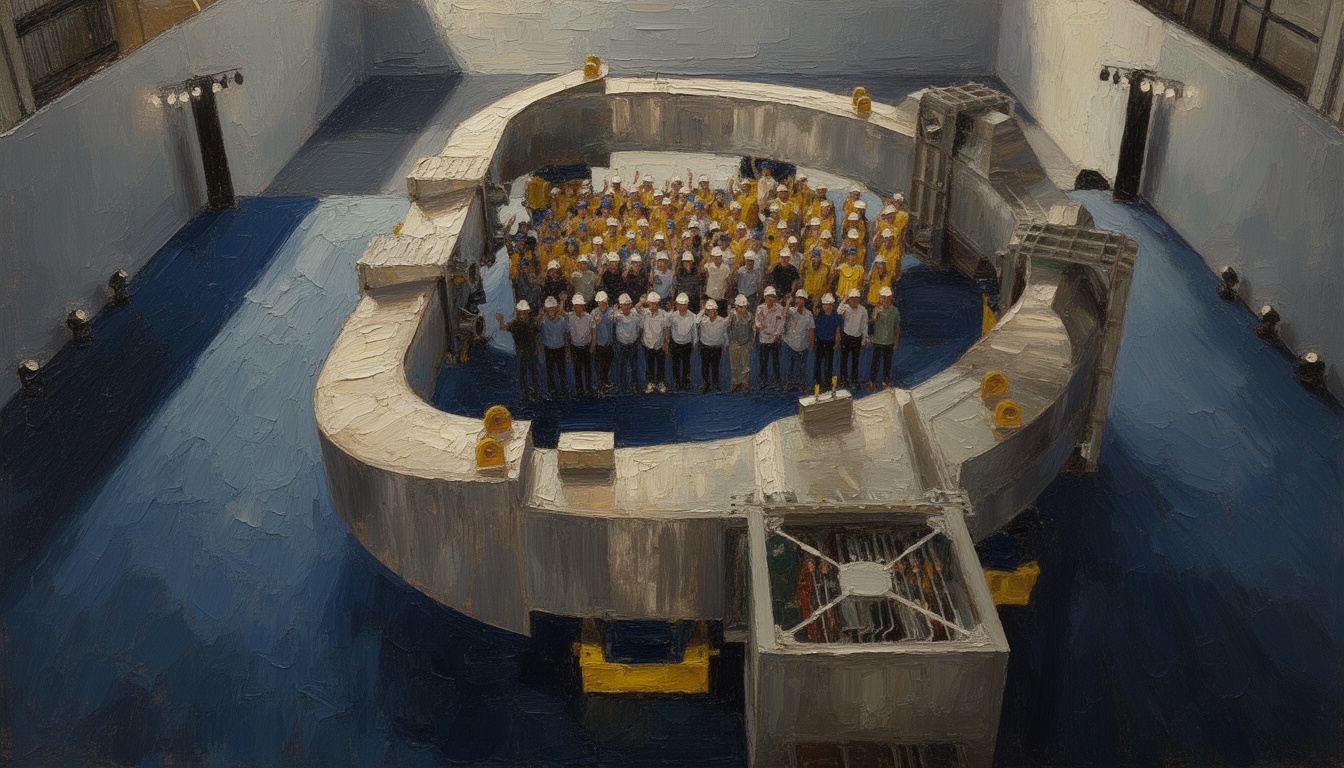
China has successfully fired up the world's largest superconducting magnet, as a critical component of its CRAFT (Chinese Fusion Engineering Test Reactor) project, also known as the "artificial sun." This milestone was marked after passing the final testing phase, during which the magnet surpassed international performance benchmarks, demonstrating China's advancing capabilities in fusion research.
The superconducting magnet assembly includes two vital components: a toroidal-field magnet that functions as a magnetic cage to contain plasma and a central solenoid that serves as the igniter for the fusion reaction. Together, these components are expected to play a crucial role in achieving a stable and controlled nuclear fusion reaction, a goal that has long eluded scientists worldwide.
This engineering breakthrough by researchers at the Institute of Plasma Physics under the Chinese Academy of Sciences addresses major challenges associated with magnetic confinement fusion technology. The success of the CRAFT project is anticipated to accelerate advancements in fusion energy, potentially revolutionizing the global energy landscape with sustainable power sources.
Technical specifications indicate that the superconducting magnet operates at extremely low temperatures, which is essential for maintaining its superconductivity. The success of this project could set the groundwork for future nuclear fusion reactors that might provide nearly limitless clean energy, significantly impacting global energy politics and industries.
Looking forward, the implications of this achievement could extend well beyond China's borders. As the nation continues to make strides in fusion technology, it poses a competitive challenge to other countries in nuclear research and renewable energy development. Should China succeed in refining its fusion capabilities, it may play a pivotal role in the new energy paradigm in the coming decades.