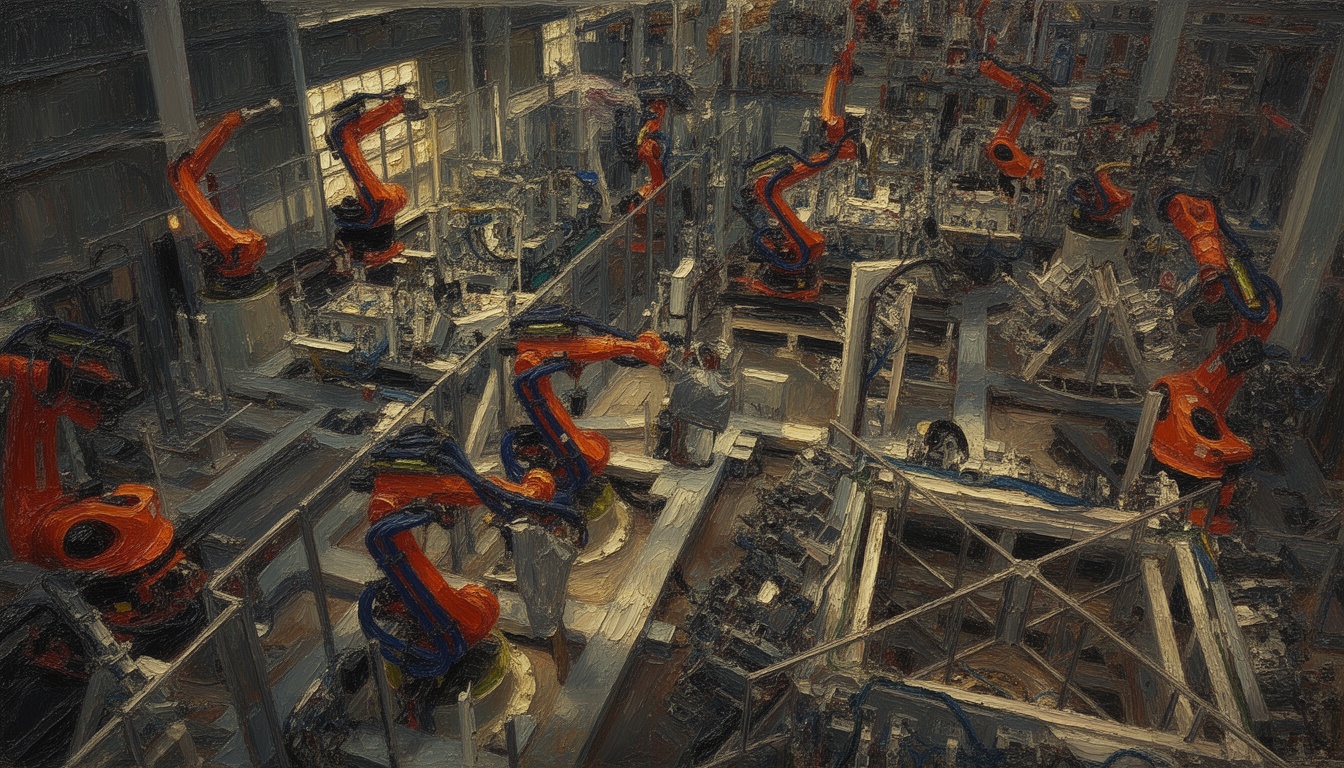
China's Manufacturing Surge Reshapes Global Economic Landscape
China's resurgence in manufacturing signifies a shift in global industrial power. The West faces urgent decisions as China redefines economic norms across various sectors.
China's continued ascendance in the manufacturing sector represents a pivotal shift in global economic dynamics, according to Columbia University professor Adam Tooze. This new phase, termed "China shock 2.0," suggests that the nation is not merely catching up, but is redefining the limits of economic potential in multiple industries, such as aviation, space exploration, and artificial intelligence.
Historically, the initial "China shock" in the early 2000s depicted China's rapid industrial growth as it integrated into the global economy. However, the current developments highlight Beijing's ambition to not only participate in but also influence, and reshape crucial sectors, thereby enhancing its competitive edge.
The implications of this economic shift are profound. As China's manufacturing capabilities expand into high-tech industries, it is also reshuffling the competitive stakes for Western powers. Nations must assess their strategies in response to this evolving landscape, particularly in domains such as advanced manufacturing, technology, and defense.
Key sectors experiencing this change include telecommunications, microprocessors, and robotics. Investments in nuclear and fusion power, along with quantum computing, further illustrate China's commitment to leading technological advancement. The West, particularly its industrial powers, must critically evaluate its policies and collaboration strategies to remain relevant in this fast-evolving global market.
The potential long-term consequences of this shift cannot be underestimated. If China continues to redefine the boundaries of economic possibility, it may alter global supply chains and challenge existing power frameworks. The urgency for the West to recalibrate its approach becomes increasingly apparent, given the strategic stakes involved in manufacturing and technology sectors.