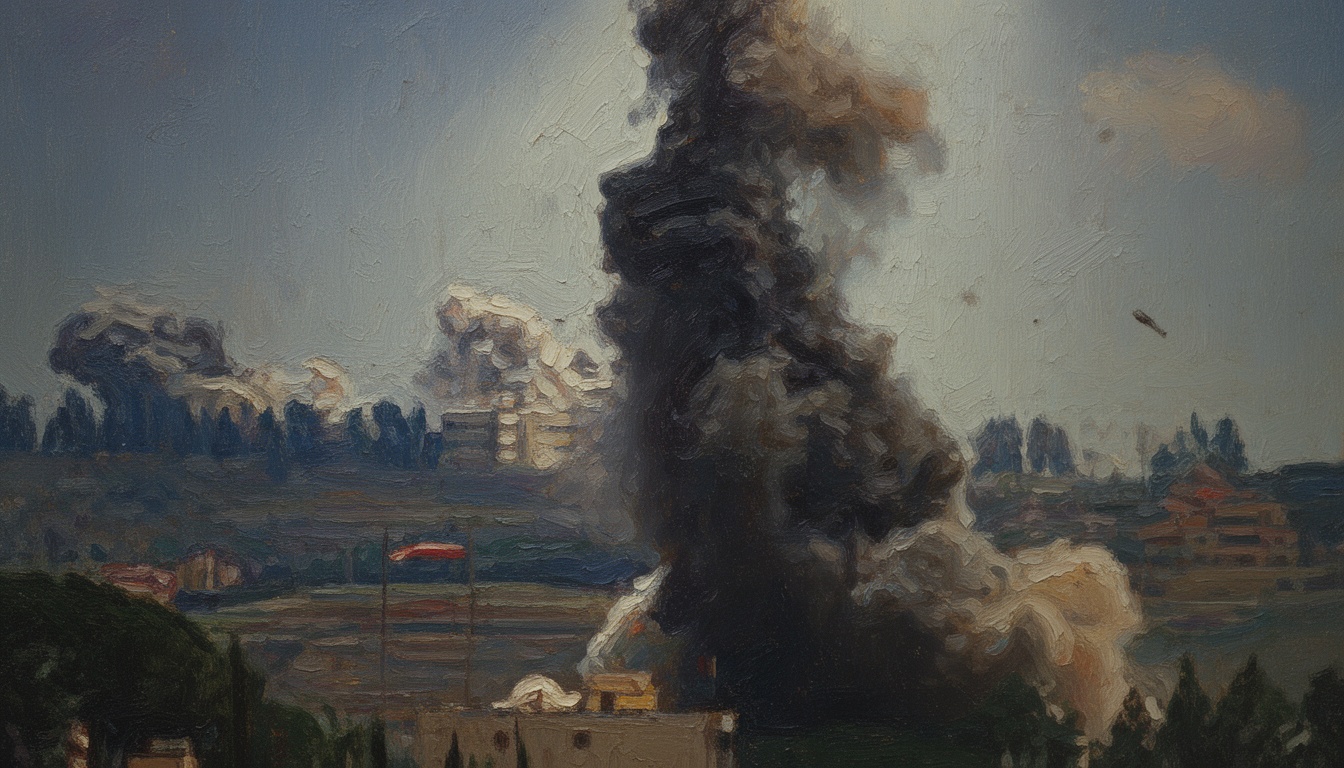
Israel Launches Strikes in Southern Lebanon Amid Truce with Hezbollah
Israel's military operations continue in southern Lebanon despite a partial truce with Hezbollah. Tensions remain as the situation evolves post-agreement.
Israel has conducted airstrikes in southern Lebanon, targeting Hezbollah positions amidst an ongoing military campaign in the region. This development follows a deal brokered by the United States, aimed at establishing a partial truce between Israeli forces and Hezbollah. Although Israel refrained from striking Beirut specifically, the airstrikes mark a significant continuation of hostilities along the border.
The backdrop to these recent strikes involves a complex security environment in Lebanon, where Hezbollah has maintained a strong military presence. The recent U.S.-led efforts sought to reduce escalation and promote stability, yet the durability of the truce appears uncertain in light of continued military actions. The situation remains volatile, with both sides poised for possible further engagement.
Strategically, Israel's operations reflect ongoing security concerns regarding Hezbollah's capabilities and influence in southern Lebanon. The military actions could be perceived as a demonstration of deterrence amid fears of Hezbollah launching cross-border attacks. These strikes serve to reinforce Israel's position while attempting to complicate Hezbollah's operational environment.
Operationally, the strikes have involved precision targeting of specific Hezbollah installations using advanced munitions. Casualty figures remain unclear, but the potential for escalation exists. The situation demands close monitoring as the dynamics change with each military action taken by either side.
Looking ahead, the likelihood of further conflict remains high as both Israel and Hezbollah navigate their strategic interests in the region. The partial truce's effectiveness will be tested in the coming days, and the international community's role in mediating further tensions will be critical to maintaining stability in southern Lebanon.