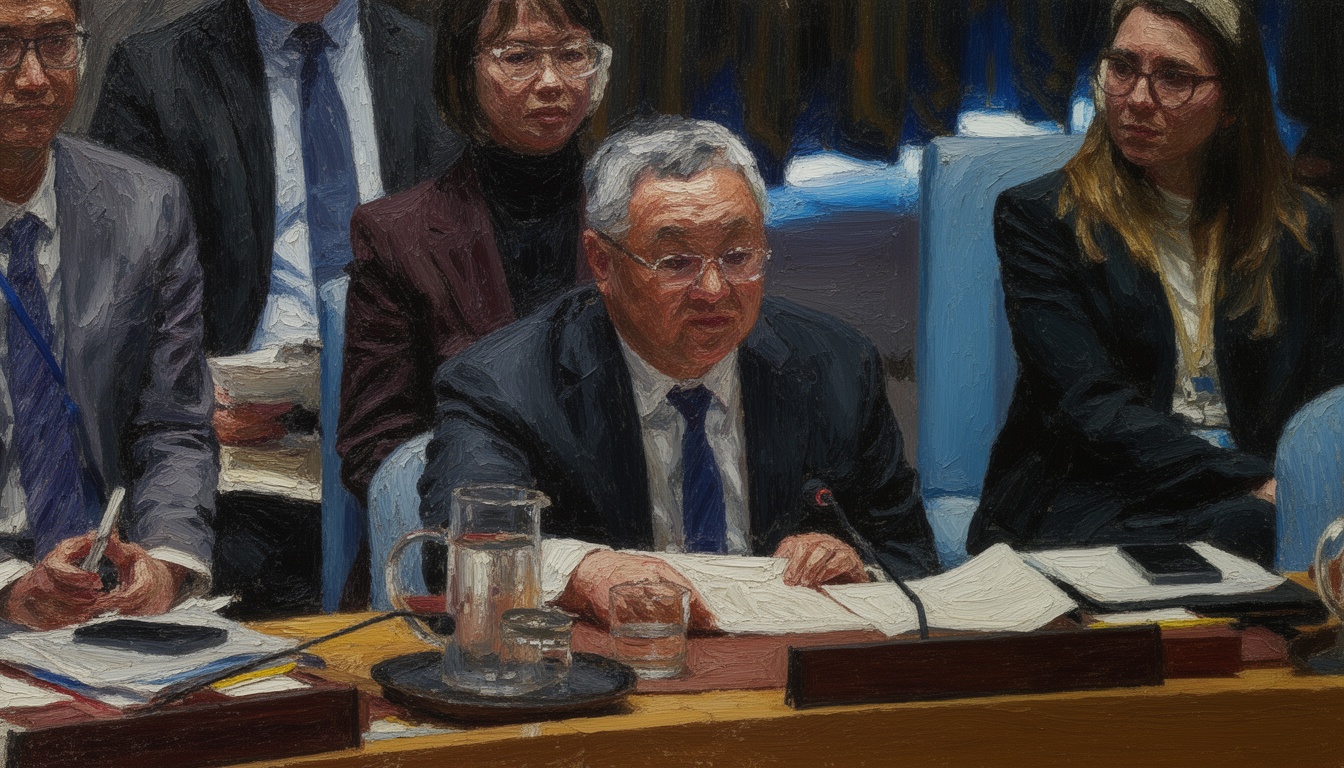
China's UN Envoy Warns Hormuz Closure Critical for Trump-Xi Talks
The closure of the Strait of Hormuz is emerging as a pivotal issue in upcoming discussions between U.S. President Donald Trump and Chinese President Xi Jinping. China emphasizes the urgency of maintaining a ceasefire in the region.
China's UN Ambassador Fu Cong has declared that the potential closure of the Strait of Hormuz will dominate the discussions between U.S. President Donald Trump and Chinese President Xi Jinping during their upcoming talks. Fu highlighted that maintaining peace in the region and ensuring the reopening of Hormuz are 'urgent' priorities that require immediate attention.
The Strait of Hormuz is a critical chokepoint for global oil supplies, with about 20% of the world's oil passing through it. Recently, tensions in the region have escalated, raising concerns about interruptions to maritime traffic and potential economic repercussions globally. Fu’s remarks underline China's growing involvement in the geopolitical dynamics of the Middle East, where it seeks to play a stabilizing role.
Strategically, the closure or disruption of the Strait could significantly impact global oil prices and supply chains, making it a central topic in international diplomacy. Both the U.S. and China have vested interests in maintaining freedom of navigation in the strait, which is vital for energy security.
Ambassador Fu did not elaborate on specific measures China might propose during the talks, but he reiterated the Chinese position advocating for dialogue and diplomatic solutions to avoid conflicts. To underline the urgency, he emphasized that any escalation in hostilities could lead to wider regional instability, highlighting the need for cooperative approaches.
As the Trump-Xi talks approach, the focus on the Strait of Hormuz reflects a broader context of U.S.-China relations balancing on multiple fronts, including trade, climate change, and regional security. Analysts suggest that the outcome of these discussions could lead to significant shifts in diplomatic strategies regarding the Middle East and could redefine power dynamics involving major powers in the region.