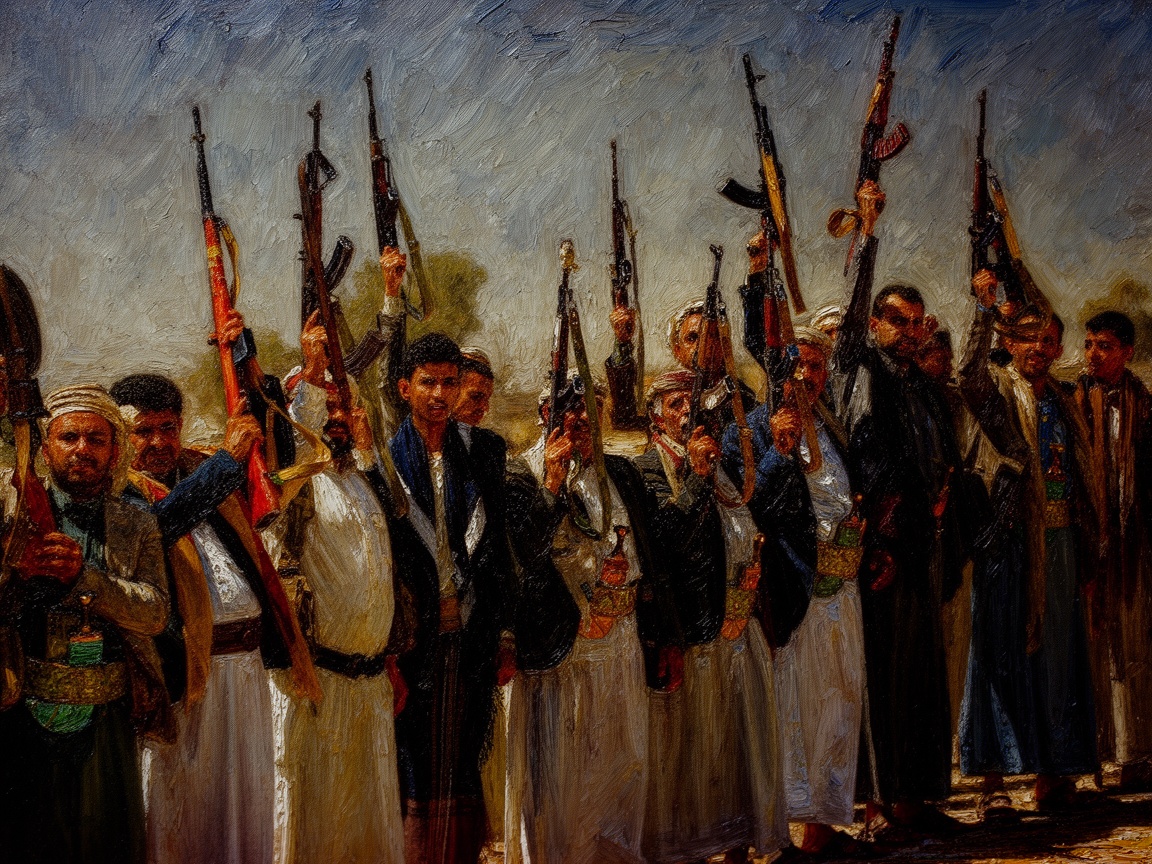
Coalition Pledges Unprecedented Force Against Houthi Threats
The Saudi-led coalition has announced a significant military response to increasing Houthi threats, following the unprecedented blocking of Saudi warplanes. This escalation marks a critical juncture in regional tensions, especially given the Iranian plane's landing in Sana'a for the first time in a decade.
The Saudi-led coalition has vowed to mobilize unprecedented military force in response to escalating threats from the Houthi movement in Yemen. This announcement follows the Houthi's recent actions to block Saudi warplanes in Yemeni airspace, signaling a dangerous shift in the balance of power within the region.
Background context reveals that the Houthis have increasingly tested the limits of the coalition's air supremacy. The situation escalated further when an Iranian plane was allowed to land in Sana'a for the first time in ten years, indicating strengthened ties between Iran and the Houthis, heightening concerns among regional powers about Iranian influence in the Arabian Peninsula.
Strategically, this development significantly raises the stakes for the Saudi-led coalition, as the Houthi's defiance could embolden more aggressive tactics supported by Iranian logistics. The situation poses a severe challenge to the coalition's efforts to maintain air superiority and restrict Iranian military support to the Houthis.
Operationally, the coalition's pledge includes not only increased aerial operations but also potential ground maneuvers aimed at countering Houthi advances. The coalition has a mix of modern fighter jets like the Eurofighter Typhoon and advanced UAV systems, which are likely to be utilized more aggressively in this renewed campaign against the Houthis.
In terms of likely consequences, the escalation could lead to a broader conflict that could involve more regional actors. The coalition's decisive actions may provoke even stronger retaliatory measures from the Houthis, perpetuating a cycle of violence. An increase in hostilities may also have implications for humanitarian conditions in Yemen, already one of the world's most critical crises.