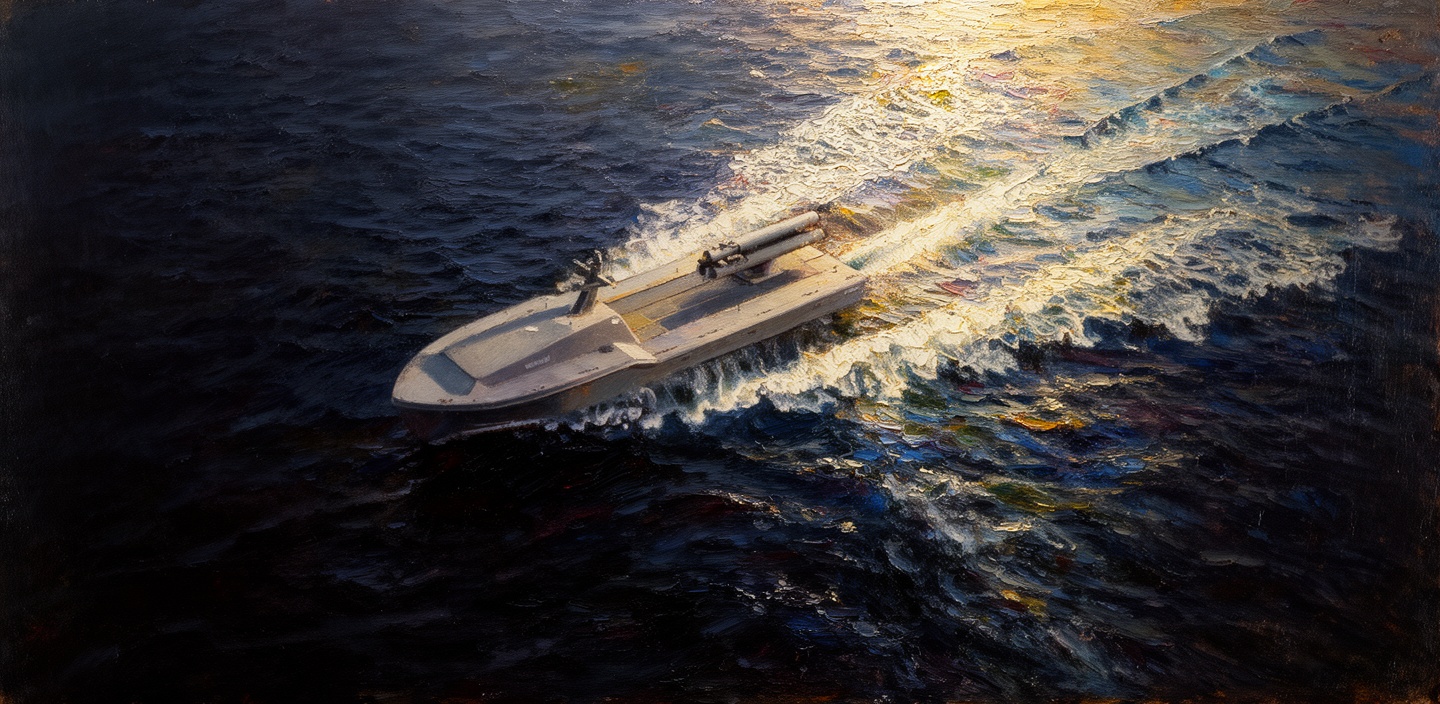
Saronic Launches First 16-Meter Uncrewed Vessel
Saronic has unveiled its first Mirage ASV, enhancing its naval capabilities. This addition marks a strategic milestone in autonomous maritime technology.
On July 2, 2026, Saronic announced the launch of its first Mirage, a 16-meter (52-foot) dual-use Autonomous Surface Vessel (ASV). This vessel is designed for various applications, expanding Saronic's fleet alongside the existing 7-meter (24-foot) Corsair and the 55-meter (180-foot) Marauder. The introduction of the Mirage represents a significant step forward in Saronic's commitment to delivering advanced autonomous maritime solutions.
The expansion of Saronic’s fleet with the Mirage comes at a time when the global demand for unmanned maritime systems is on the rise. The ASV is engineered to perform multiple roles, from reconnaissance to support in naval operations. This development is particularly relevant in the context of increasing tensions in various maritime regions, where autonomous vessels can play a crucial role in intelligence gathering and operational support.
The strategic significance of the Mirage lies not only in its operational capabilities but also in its contribution to enhancing naval deterrence. According to Saronic, the company's autonomous vessels are equipped with advanced navigation systems and payload capabilities, making them versatile assets in a rapidly evolving security landscape. This move underscores the importance of innovation within naval forces and the shift towards unmanned systems.
The Mirage, alongside the Corsair and Marauder, signifies a diversified approach to naval operations, allowing for greater flexibility and efficiency. The 16-meter vessel is optimized for various maritime environments and can be deployed quickly, adapting to the needs of contemporary military and commercial operations. Investment in autonomous technology is poised to reshape naval strategies across multiple nations.
Looking ahead, the expansion of Saronic's fleet with the introduction of the Mirage is expected to influence the competitive landscape in naval defense technologies. The increasing capability to produce such vessels at speed and scale may lead to a rise in similar developments among other defense contractors, ultimately impacting global maritime security dynamics.