Chinese Astronauts Return from Record 200 Days in Space
The successful landing of Shenzhou-21 signifies a major achievement in China's space exploration program. This event also highlights China's technological advancements in human spaceflight.
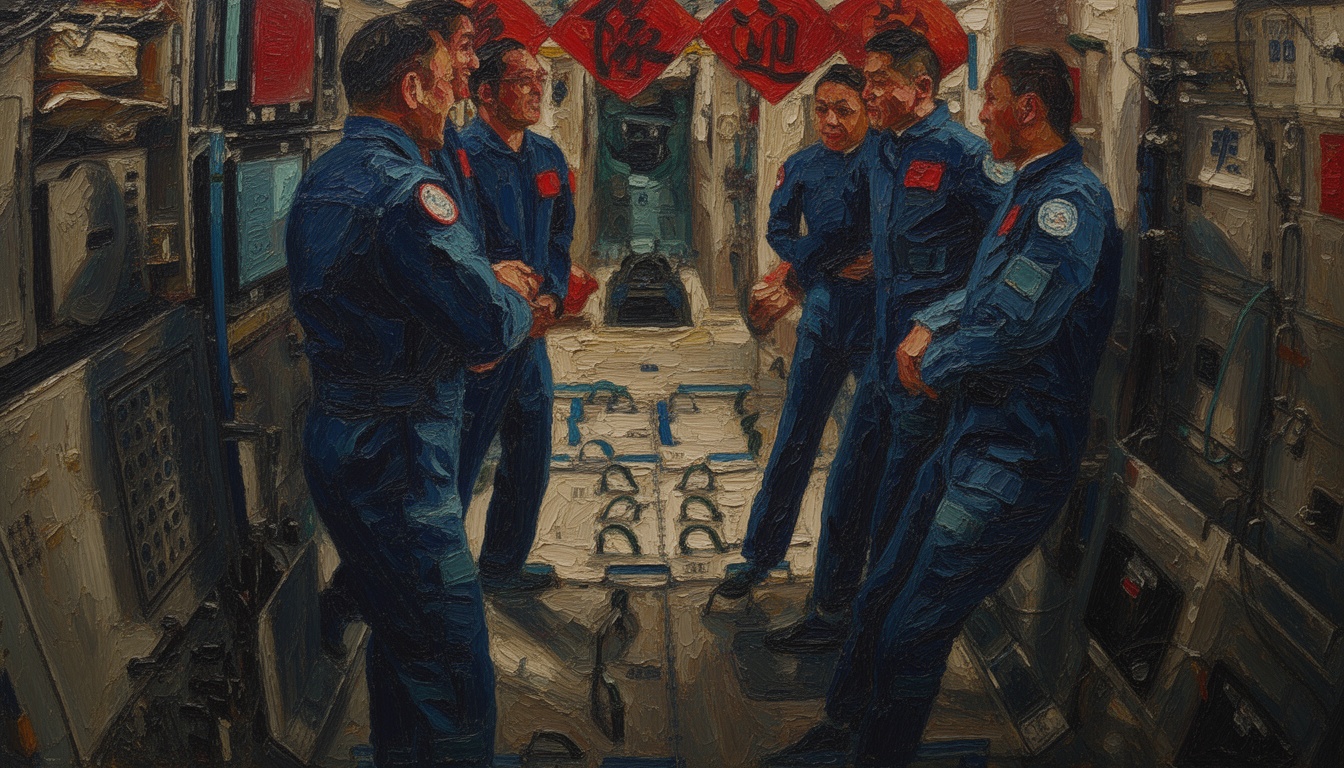
Chinese astronauts aboard the Shenzhou-21 spacecraft returned to Earth on Friday, marking the end of a remarkable 200-day mission aboard the Tiangong space station. They landed at Dongfeng landing site in the Inner Mongolia autonomous region at approximately 8:11 PM. This mission set a record for the longest stay in space by a Chinese crew, demonstrating significant progress in China's human spaceflight capabilities.
The Shenzhou-21 mission, which began over 200 days ago, aimed to advance China's experimentation and research in low Earth orbit, as well as support the development of the Tiangong space station. The astronauts' stay was extended for an additional month after their spacecraft was utilized for an emergency retrieval operation for the previous crew, highlighting the resilience and adaptability of China's space mission framework.
This landing is considered a strategic milestone, reinforcing China's role in international space exploration and emphasizing its technological capabilities amid global competition in space. As China continues to expand its presence in low Earth orbit and beyond, its achievements contribute not only to scientific advancements but also to national prestige on the global stage.
The Shenzhou-21 astronauts are expected to share valuable insights from their extensive time in the Tiangong space station, which is crucial for future missions planned to enhance the operational capacity of China’s space endeavors. Such long-duration space missions are vital for gathering data on human health and performance in microgravity, pivotal for future deep space exploration.
As the world watches China's advancements in space technology, the return of the Shenzhou-21 team is a clear signal of the country’s growing ambition and capability in pursuing a leading role in the domain of international aerospace. The implications of successful missions like this one could redefine strategic partnerships and foster further collaborations in space technology research.