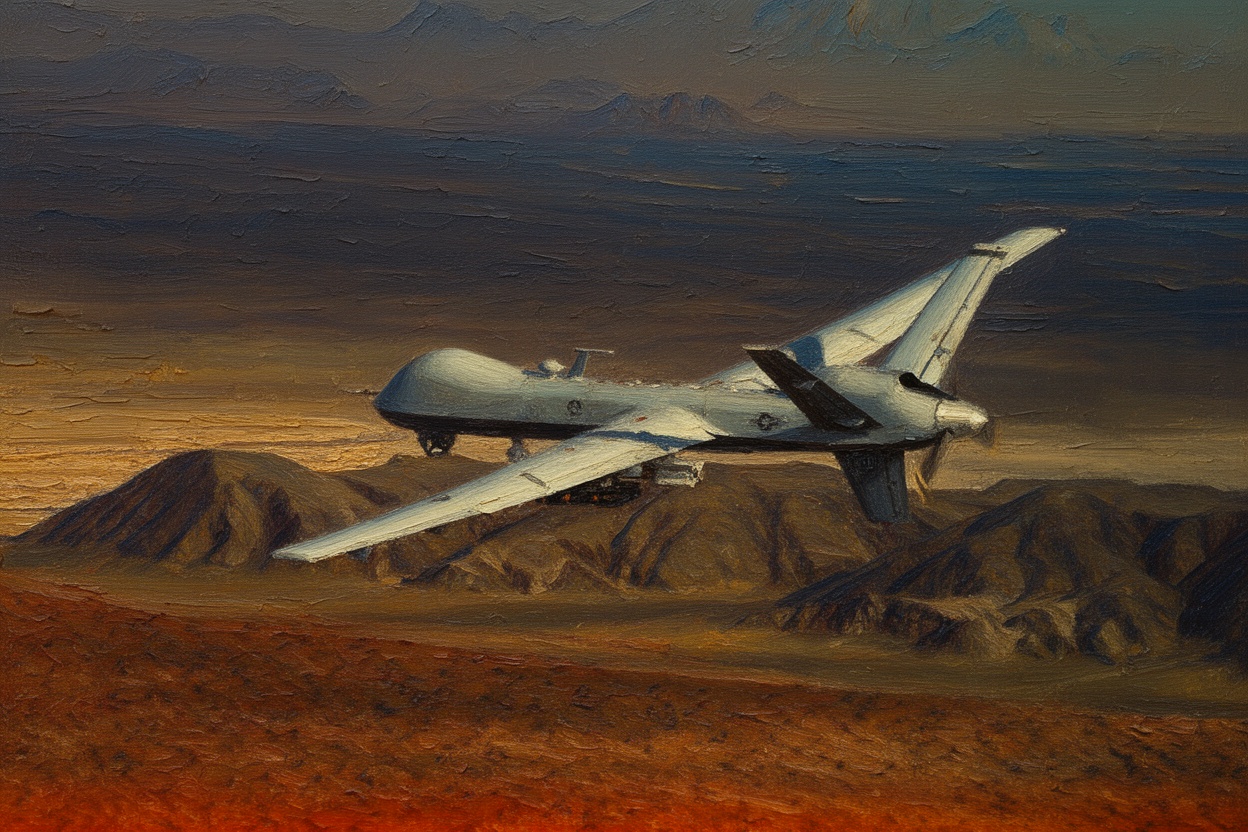
Air Force Calls MQ-9 'MVP' in Iran Air Campaign
The MQ-9 Reaper has played a critical role in U.S. operations against Iran. As discussions for future manned-unmanned integration continue, its importance in air warfare is underscored.
On May 20, U.S. Air Force leaders testified before Congress regarding the effectiveness of the MQ-9 Reaper in military operations targeting Iran. Designated as the ‘MVP’ of the recent air campaign known as Epic Fury, the MQ-9 has proved to be an essential asset in remote warfare due to its operational range and advanced capabilities.
The MQ-9 Reaper, which is designed for intelligence, surveillance, and reconnaissance, has been pivotal in carrying out precision strikes against high-value targets in Iran. Its remotely piloted nature allows for reduced risk to personnel while maintaining an aggressive stance in air operations. Air Force leaders emphasized that the Reaper's role in recent missions illustrates a shift towards incorporating unmanned systems in future conflicts.
The discussion surrounding the integration of manned and unmanned systems is central to the future of air combat. With Congress exploring increased funding for such capabilities, the Air Force's endorsement of the MQ-9 underscores a commitment to advancing drone warfare technologies. As unmanned systems are expected to play a greater role in next-generation combat strategies, the MQ-9 serves as a testament to their effectiveness.
Operationally, the MQ-9 Reaper can carry out strikes using Hellfire missiles and laser-guided bombs, providing a high degree of versatility in combat scenarios. Furthermore, its ability to loiter for extended periods allows for continuous surveillance and rapid response capabilities in fluid operational environments.
With increasing reliance on unmanned platforms, the success of the MQ-9 in the air campaign against Iran raises questions about the future landscape of warfare. As the military explores additional funding and technological advancements, the MQ-9 is likely to remain a cornerstone of U.S. airpower strategies going forward.