Anti-Drone Warfare Critical Gap in Maritime Defense
The rise of autonomous one-way attack drones reveals vulnerabilities in maritime defense. A distinct approach for Anti-Drone Warfare is urgently needed for effective maritime security.
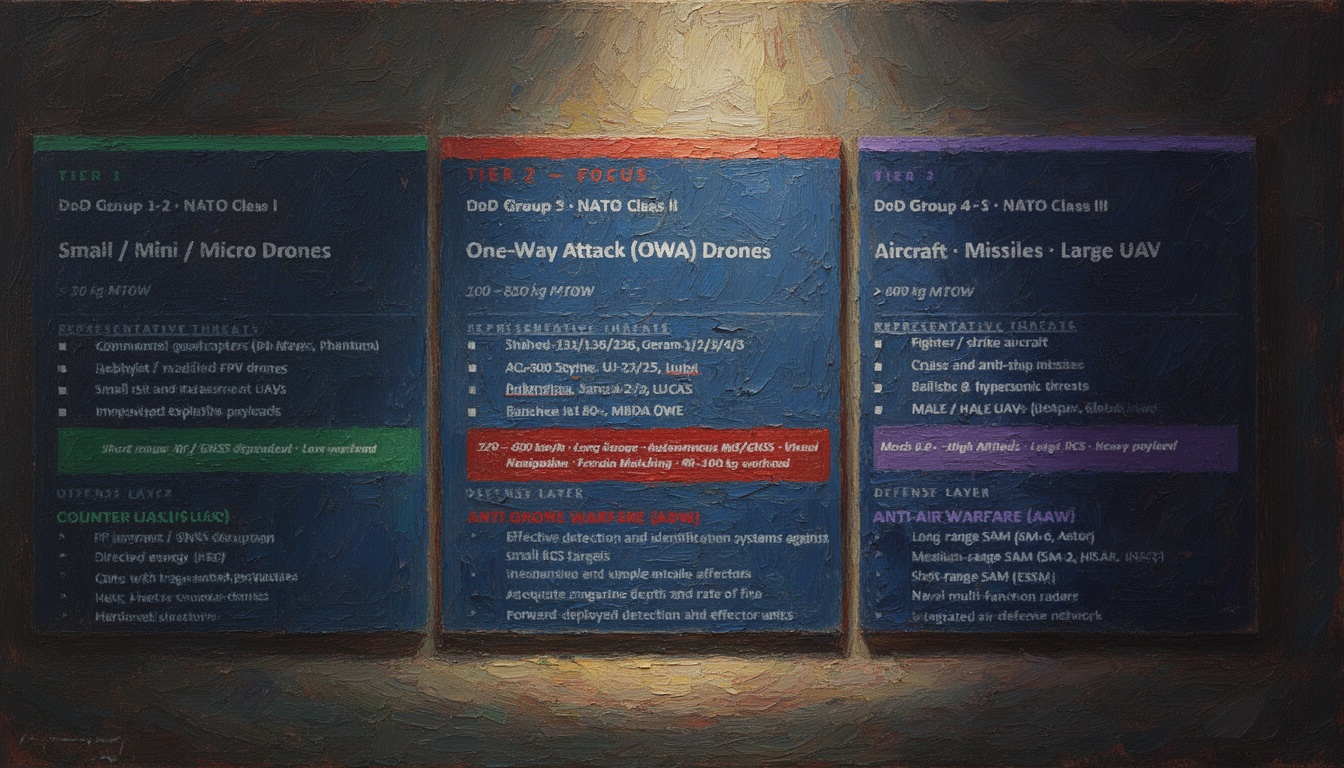
The increasing use of autonomous one-way attack (OWA) drones has highlighted a significant vulnerability within the maritime defense framework. This specialization falls outside conventional air defense and counter-unmanned aerial systems (C-UAS), necessitating the development of a new operational domain for Anti-Drone Warfare (ADW). The structural gap in maritime capabilities poses a considerable threat to naval operations, demanding focused attention from defense planners.
In recent years, OWA drones have proliferated, presenting unique physics and economic factors that differentiate them from traditional aerial threats. The current maritime defense systems are not tailored to address the complexities introduced by these new drones. This limitation leads to a strategic gap whereby naval forces may be inadequately equipped to handle emerging drone threats effectively.
Strategically, the absence of a dedicated ADW approach jeopardizes the integrity of maritime operations. Naval forces relying solely on existing air defense systems risk falling short against drone incursions that exploit vulnerabilities in large-scale maritime engagements. Hence, there is an imperative for the integration of specific ADW capabilities into the naval architectural framework.
Operationally, ADW requires unique specifications for detection, engagement, and neutralization of OWA drones. Current platforms may not possess the necessary technology and integration capabilities to counter these threats effectively. Investments in advanced radar systems, electronic warfare modules, and drone interception technologies are essential for closing this structural gap and ensuring maritime security.
Looking ahead, if maritime defense architectures do not evolve to integrate Anti-Drone Warfare strategies, the capability of naval forces to project power and secure critical maritime routes will be significantly diminished. This oversight could enable adversaries to exploit new asymmetrical warfare strategies, leading to escalated tensions and potential conflict in contested maritime zones.