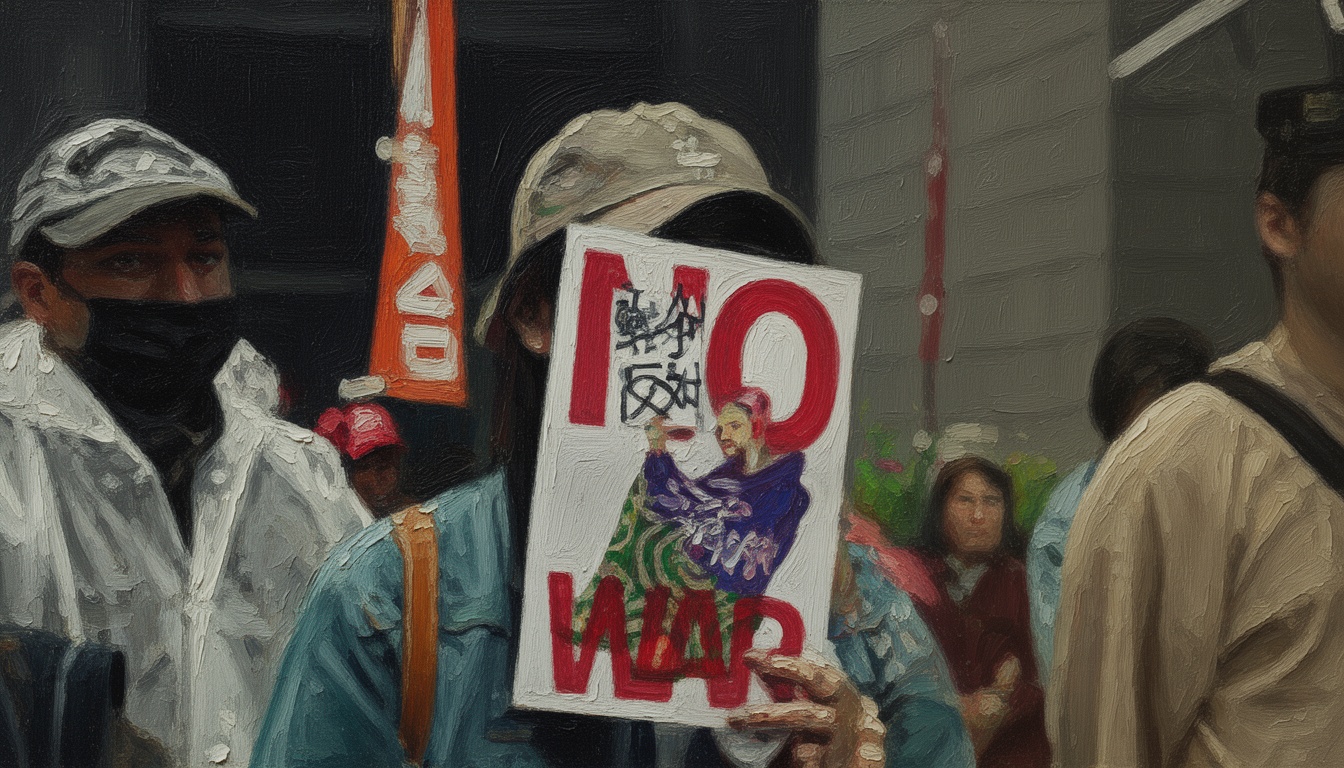
Anti-war Protests Erupt in Japan Over Defense Reforms
Japan faces significant internal division as the public protests against potential changes to its pacifist constitution. Prime Minister Fumio Kishida's advocacy for stronger defense measures is fueling this unrest.
Massive anti-war protests in Japan have taken place, marking the largest demonstrations of this nature in decades. Thousands of citizens gathered in cities like Tokyo to vocalize their opposition to Prime Minister Fumio Kishida's proposals for amending the pacifist Article 9 of the Japanese Constitution. This article has been a cornerstone of Japan’s post-war identity, limiting the use of military force and maintaining a self-defense policy.
The protests signify a deep rift within Japanese society over national security policy. Many citizens express concerns that proposed changes would lead Japan away from its pacifist principles and possibly escalate tensions in East Asia. Critics fear that enhancing military capabilities could draw Japan into regional conflicts, especially considering ongoing threats from North Korea and territorial disputes with China.
Strategically, the contention arrives as Japan aims to bolster its defense posture amid rising regional threats. The Japanese government is seeking to implement measures such as increasing defense budgets and expanding military cooperation with allies, particularly the United States. These moves are seen as essential for ensuring Japan's security in a rapidly changing geopolitical environment.
Operationally, the Japanese Self-Defense Forces are already evolving, with procurement plans including the F-35A Lightning II fighter jets and the Aegis missile defense system. The defense budget for the upcoming fiscal year is projected to rise to approximately ¥6.1 trillion ($56 billion), a significant increase aimed at enhancing Japan's military readiness and capabilities.
The ongoing protests are likely to create pressure on the Kishida administration as public sentiment grows increasingly wary of militarization. If the government pursues constitutional amendments despite widespread opposition, it could lead to increasing social unrest and political repercussions ahead of the upcoming elections.