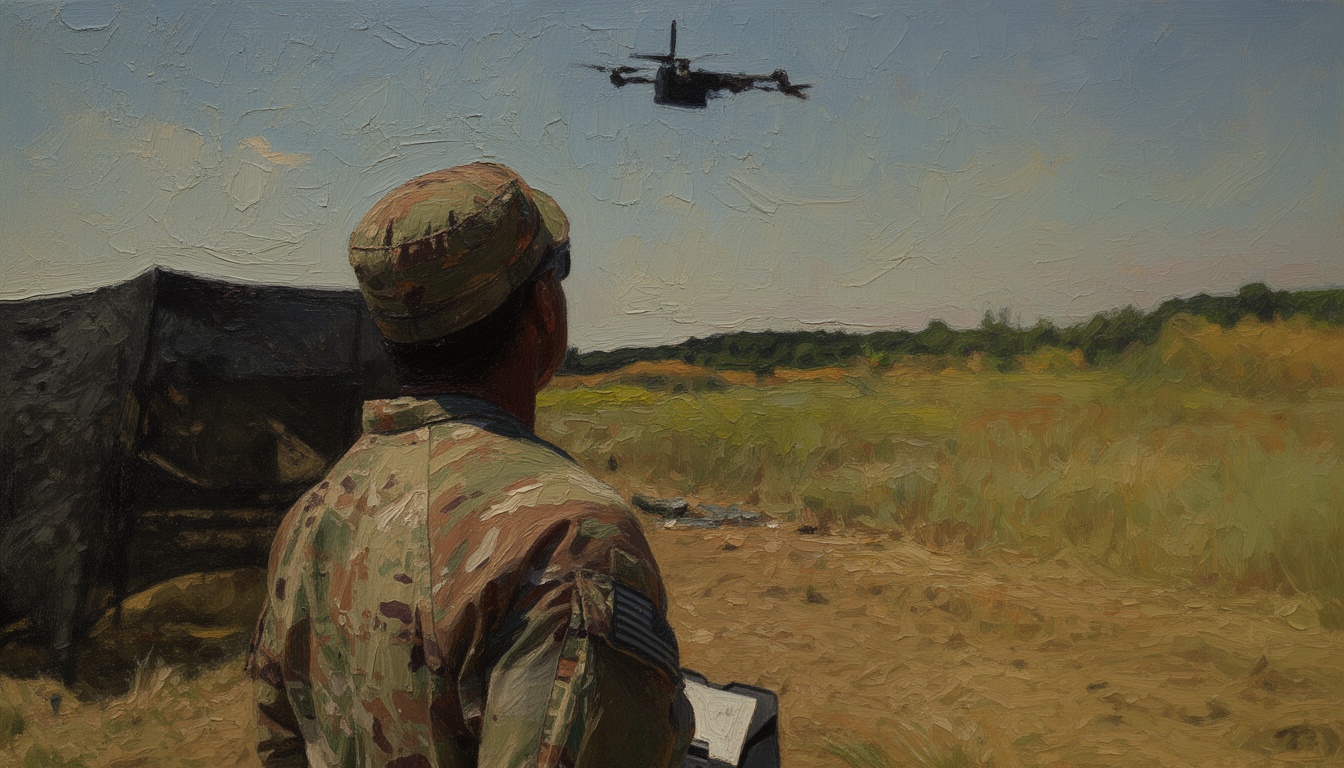
Army Air Assault Brigade Finds AI Tools Ineffective for Tactical Planning
The Army's assessment shows that current AI language models fall short in understanding three-dimensional operational contexts. Col. Ryan Bell highlights significant limitations in utilizing AI for tactical planning.
The U.S. Army Air Assault Brigade has reported that current artificial intelligence tools, particularly large language models, are inadequate for tactical planning. Colonel Ryan Bell pointed out that these models lack the capability to understand three-dimensional space, which is crucial for effective operational planning and decision-making.
Background investigations reveal that while AI technology has made advancements, its application in military contexts remains limited. The unique requirements of battlefield operations necessitate a level of spatial awareness and contextual understanding that AI currently fails to provide. Colonel Bell emphasized that relying on AI for developing courses of action can lead to misinterpretations and ineffective strategies.
Strategically, this assessment could have broader implications for how the military integrates technology into decision-making processes. As warfare becomes increasingly reliant on advanced technologies, ensuring that AI tools align with operational realities is essential. The findings from the Air Assault Brigade may compel further examination of AI capabilities and potential adjustments in military training programs.
Operationally, the Army's critique underlines the importance of human judgment in tactical scenarios. While AI can enhance certain processes, it cannot replace the depth of understanding that experienced personnel bring to the table. The Army may need to develop more specialized AI systems tailored specifically for military applications.
Looking ahead, the Army will likely invest in refining AI tools or developing new ones that can better serve operational needs. This evaluation might prompt initiatives aimed at bridging the gap between technology and tactical planning, ensuring that military forces can effectively leverage innovations in their operations.