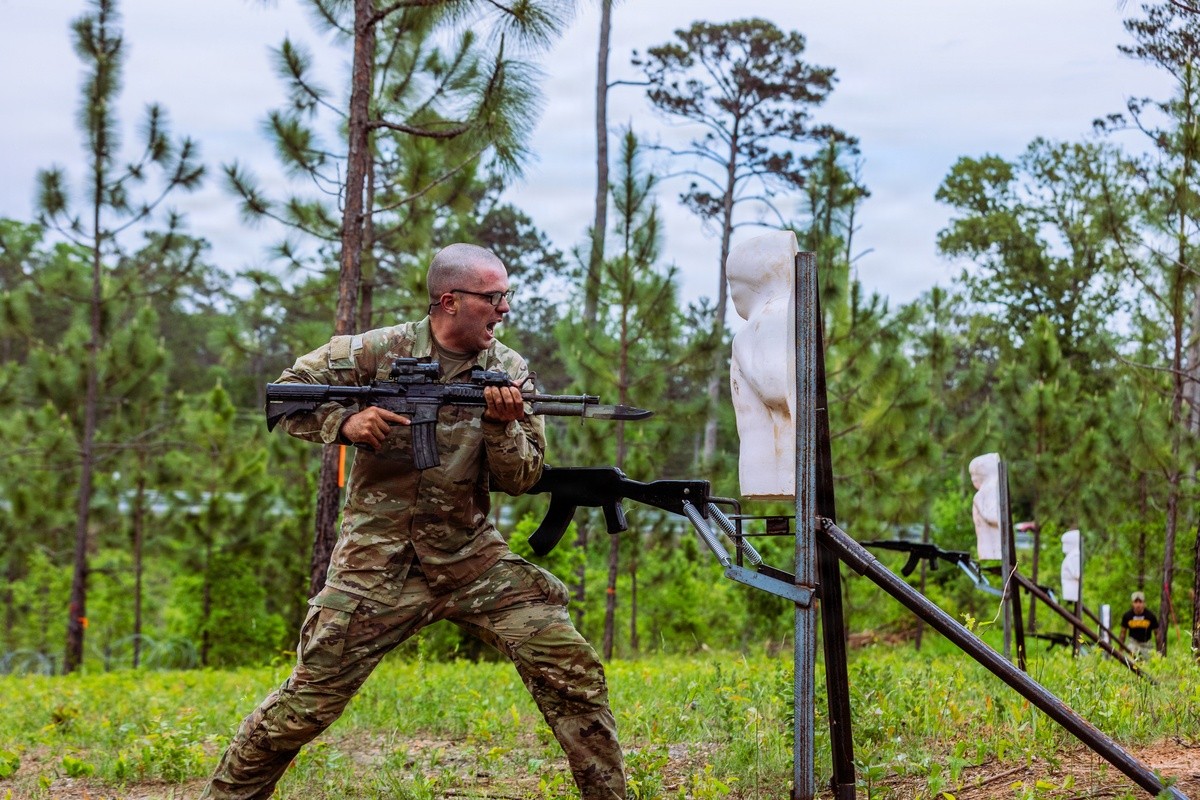
Army Rangers Introduce New Bayonet Course at Fort Benning
The Army Rangers are enhancing combat training with a new bayonet course at Fort Benning. This initiative emphasizes close-quarters combat skills vital for modern warfare.
In a significant shift towards adapting combat training for modern challenges, the Army Rangers have introduced a new bayonet course at Fort Benning, Georgia. This program aims to equip soldiers with essential skills in close-quarters combat applicable in an age dominated by drones and long-range engagements.
The bayonet course will be a mandatory component of the training for soldiers seeking to earn the prestigious Ranger tab. Participants will engage in various stabbing techniques, practicing not only the mechanics of using a bayonet effectively but also the mental toughness required for hand-to-hand combat scenarios. The initiative is a response to feedback indicating the need for enhanced combative skills amidst evolving battlefield conditions.
The strategic significance of this new course lies in its focus on traditional combat skills which are often overlooked in the current training landscape. In an era where drones and technology dominate warfare, the Army recognizes that close-quarters combat remains a critical aspect of military operations. This course is designed to ensure that Rangers can effectively transition between technology-centric engagements and direct confrontations.
Specific details of the course include multiple phases that incorporate both individual and team-based exercises. Soldiers will train extensively with M9 bayonets, practicing various drills that emphasize speed, precision, and adaptability on the battlefield. Training is scheduled to begin next month, with recruitment already underway for future Ranger classes.
In conclusion, the introduction of the new bayonet course marks a pivotal move for the Army Rangers, highlighting their commitment to maintaining a balance between modern warfare tactics and essential combat skills. As the program rolls out, it could significantly impact the effectiveness of Rangers in various operational scenarios, reinforcing their reputation as elite combat soldiers.