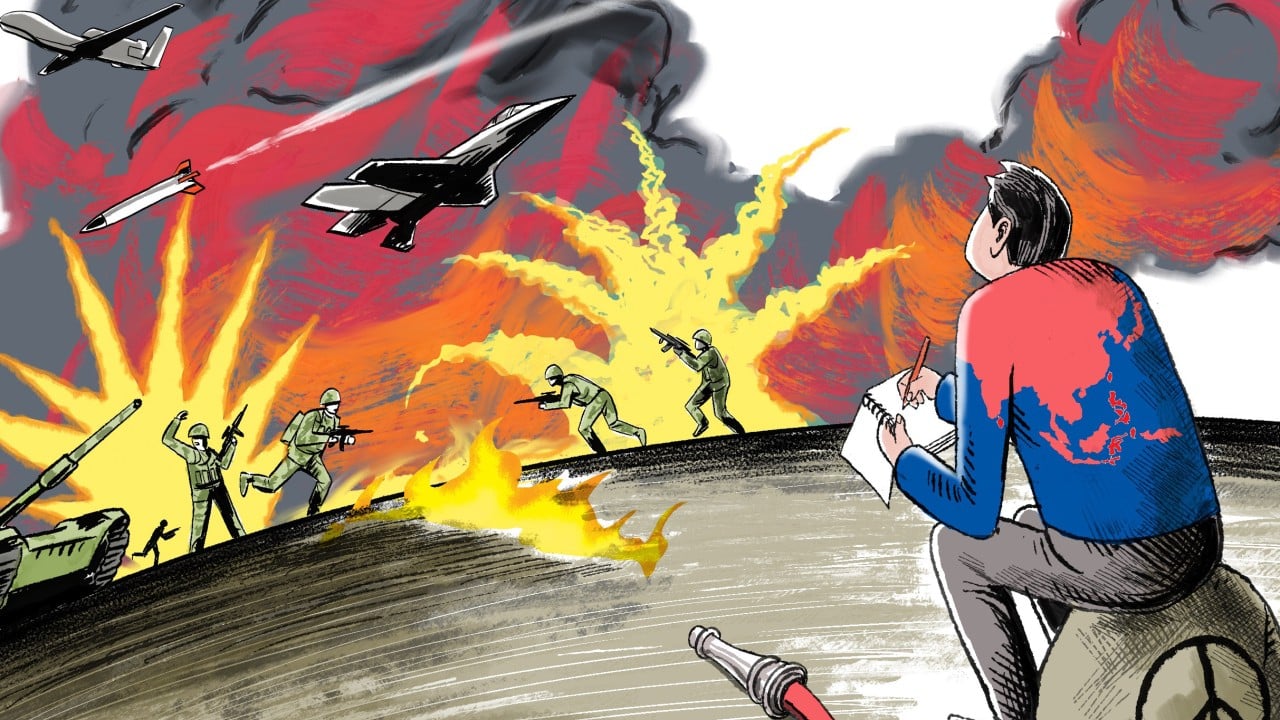
Asia Observes Key Lessons from Global Conflicts
The ongoing Ukraine war serves as a critical study for Asia. Observations of global conflicts provide insights into geopolitical dynamics and security challenges.
Since the onset of the Ukraine conflict in 2022, countries across Asia have actively monitored unfolding wars, approaching them with a critical lens as if engaged in an advanced study course on international relations. The war has revived debates on crucial topics, including NATO's expansion, Russian security concerns, the question of Ukrainian sovereignty, pervasive fears within Europe, the geopolitical influence of American power, the intricacies of energy politics, and the roles of sanctions, nationalism, and resistance movements.
In addition to the situation in Ukraine, Asian nations have observed the human toll of the conflict in Gaza. Images of devastation have reached Asian shores, sparking awareness and urgent discussions about regional stability and humanitarian crises. This has consequently shaped perspectives on potential security threats in Asia, compelling nations to evaluate their diplomatic and military strategies in light of these global conflicts.
Furthermore, the actions of the United States, particularly its direct intervention in Venezuela, where the U.S. apprehended the Venezuelan president and justified this act as lawful, serve as a focal point of analysis. This event raises questions about sovereignty and the legitimacy of foreign interventions, encouraging Asian states to rethink their sovereignty and leverage their positions in a multipolar world.
Iran's reactions to various attacks and its retaliatory measures have also garnered significant attention. The regional responses to Iranian actions will likely influence security calculations among Asian countries, prompting a reassessment of defense strategies amid rising tensions in the Middle East.
Ultimately, these global events are no longer perceived as distant conflicts by Asians; they are recognized as integral to understanding future security dynamics and the necessary adaptations in policy that will ensure stability in the region. The implications are vast, urging initiatives for security cooperation and regional resilience as Asia prepares to navigate the complexities of an unpredictable global landscape.