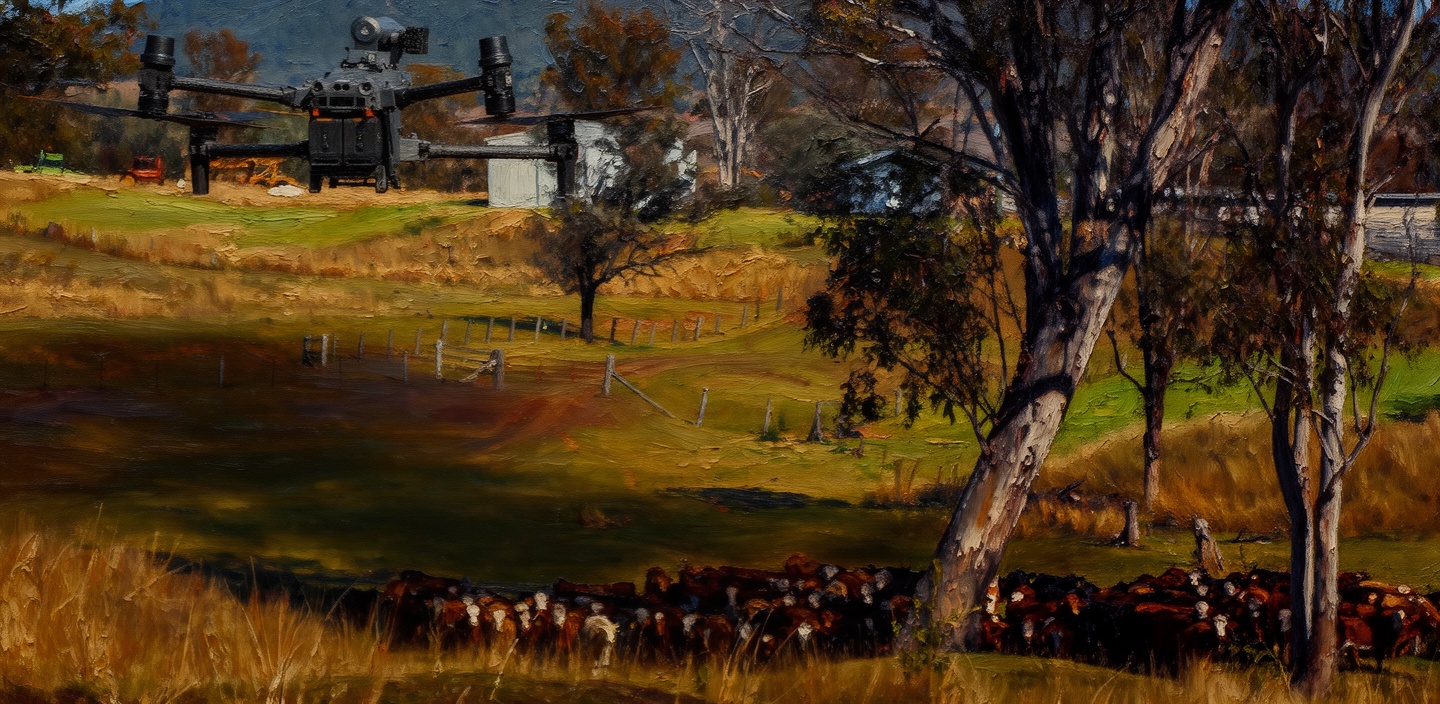
Australia Harnesses Drones and AI for Agriculture
Australia is rapidly advancing in agricultural technology, integrating drones and artificial intelligence to enhance production efficiency and sustainability. This shift signifies a substantial evolution in the agricultural sector's approach to modern challenges.
Australia's agricultural sector is experiencing a technological revolution, leveraging drones and artificial intelligence (AI) to improve efficiency. Recent reports indicate that farmers across the country are increasingly adopting these tools to monitor crops, manage livestock, and optimize resource usage. In particular, drones are being utilized for aerial surveys, enabling farmers to assess land conditions and crop health from above, saving time and resources.
Historically reliant on traditional farming methods, Australia's shift towards high-tech solutions signals a broader trend in agriculture worldwide. The integration of AI is allowing for advanced data analysis, which can predict outcomes based on numerous variables such as weather patterns and soil conditions. This capability can greatly aid farmers in decision-making processes, ultimately leading to enhanced productivity and sustainability.
The strategic significance of this technological adoption cannot be overstated. By enhancing agricultural output and efficiency, Australia positions itself to better compete in the global market. This modernization not only addresses domestic food production needs but also aligns with international demands for food security as populations grow. Furthermore, it supports environmental initiatives aimed at reducing agricultural waste and promoting sustainable practices.
Details indicate that various universities and research institutions in Australia are at the forefront of developing these innovative solutions. Projects focusing on AI-driven analytics for crop monitoring are underway, with investments reaching millions of dollars. The utilization of drones and AI can also contribute to precision agriculture, where resource application is tailored to specific field areas based on data-driven insights.
Looking ahead, the implications for Australian agriculture are profound. As these technologies become more widespread, it is likely that production costs will decrease, allowing farmers to invest further in sustainable practices. The success of this technological integration could serve as a model for other agricultural sectors worldwide, potentially leading to a global agricultural transformation fueled by innovation.