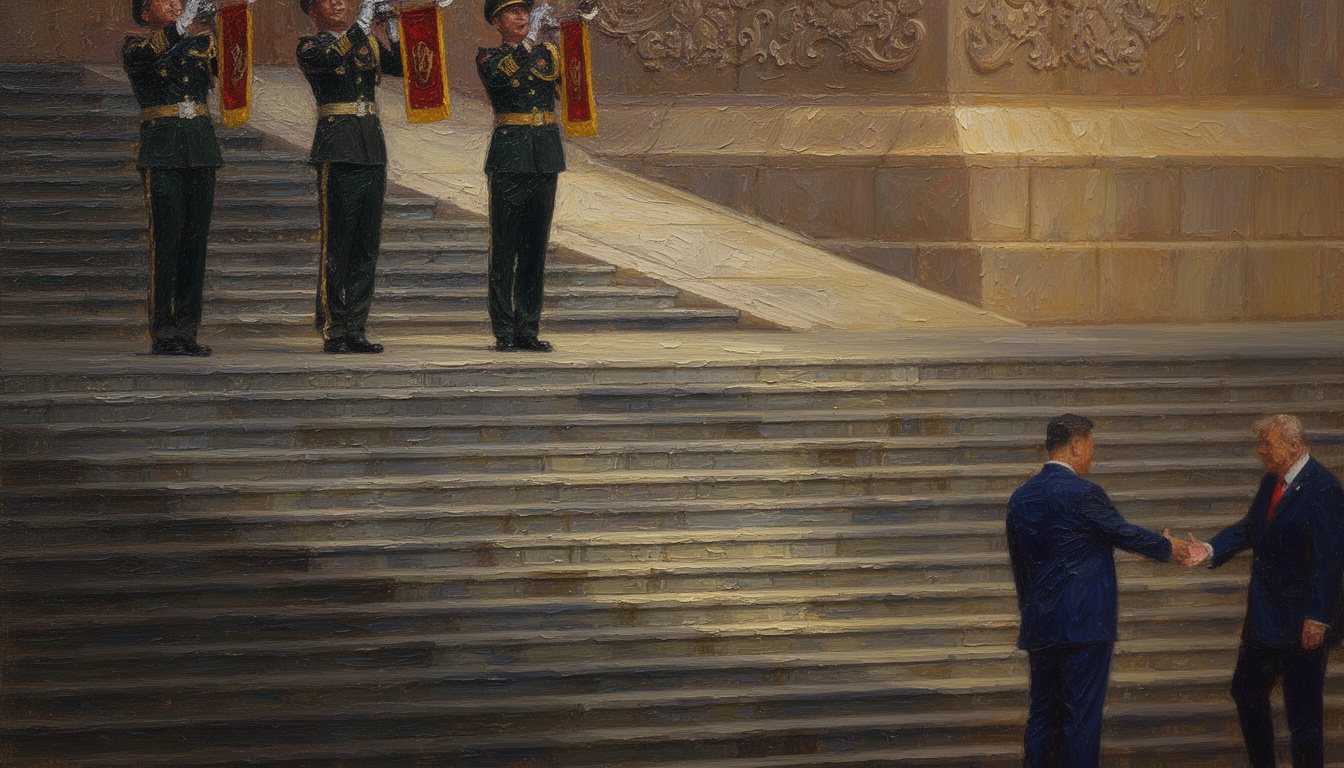
Beijing Gains Strategic Upper Hand Before Trump-Xi Summit
The anticipated summit between the US and China reveals a significant strategic advantage for Beijing. As diplomatic tensions escalate, the implications for global security and power dynamics cannot be underestimated.
As the summit between former President Donald Trump and Chinese President Xi Jinping approaches, early indicators suggest that Beijing has achieved a strategic upper hand. Recent diplomatic moves and military posturing indicate China's growing influence, as negotiations loom with the potential to reshape international relations.
This upcoming meeting, intended to address trade tensions and security concerns, occurs within a context of heightened competition between major world powers. The backdrop of escalating tensions in the South China Sea and Taiwan Strait intensifies the stakes, as both nations seek to assert their dominance in these critical regions.
Strategic significance lies in the perception of strength and resolve each leader projects. President Xi's recent military drills and assertive rhetoric signal China's commitment to defending its territorial claims and core interests. On the other hand, the US faces challenges in maintaining a cohesive approach amidst internal political divisions and a sometimes ambiguous foreign policy direction.
Operational details surrounding the summit include discussions on trade tariffs and technology transfer policies, alongside military cooperation and potential arms control agreements. Moreover, recent data reveals that US-China trade negotiations could impact over $700 billion in bilateral trade, underscoring the potential economic ramifications of the summit.
The outcomes of this meeting will likely influence global security dynamics for years to come. Should Trump and Xi reach substantial agreements, it could pave the way for a new era of US-China relations. Conversely, failure to align could exacerbate existing tensions and conflict scenarios in the Asia-Pacific region, significantly affecting regional allies and the broader international community.