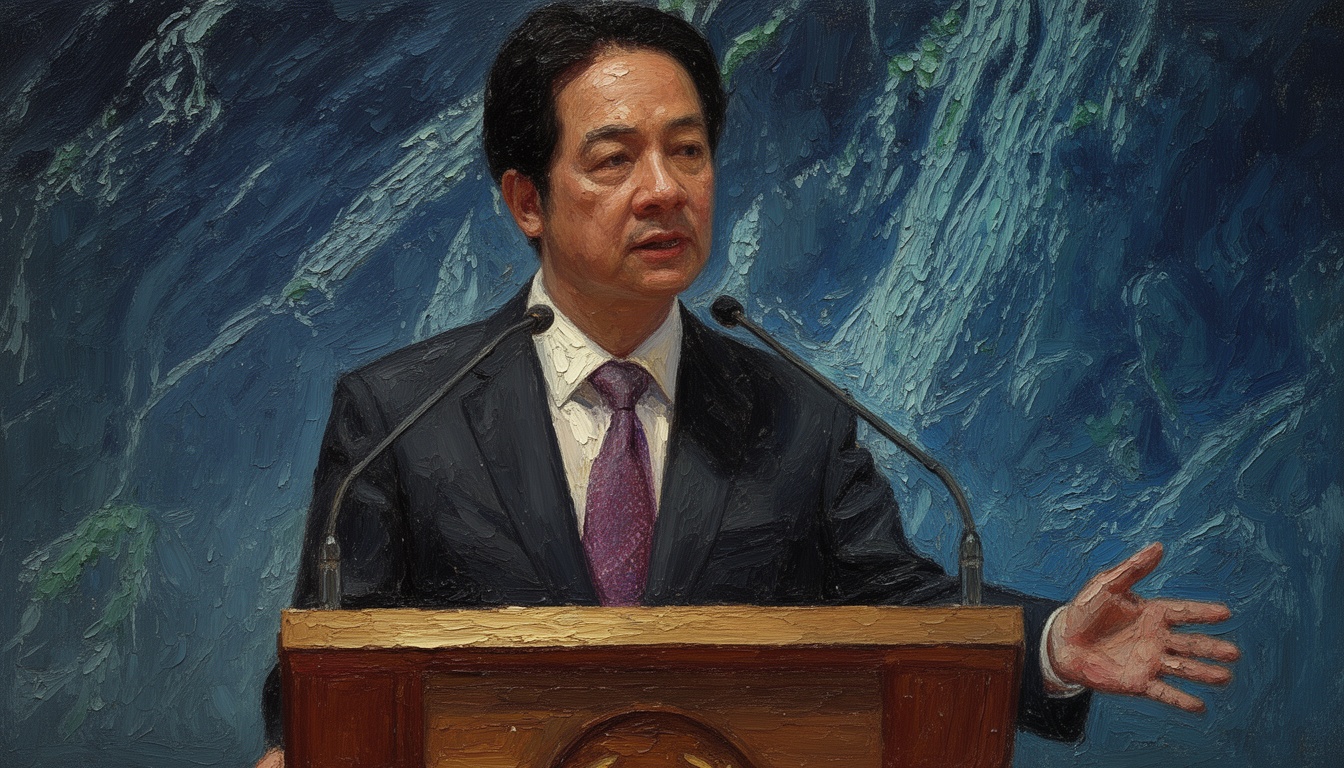
Beijing Labels Taiwan's Lai a 'Destroyer' of Peace
China's reprimand of Taiwanese leader highlights escalating tensions across the Taiwan Strait.
The Chinese government has criticized Taiwanese leader William Lai Ching-te, describing him as a 'destroyer of peace' just following his speech marking two years in office. This condemnation comes in the context of Lai's remarks seen as provocative amidst growing concerns regarding Taiwan's independence, especially following comments made by former US President Donald Trump. Beijing's statements underscore the sensitive nature of cross-strait relations and the potential for increased tensions in the region.
Since assuming office, Lai has been vocal about Taiwan's sovereignty, emphasizing a distinct Taiwanese identity separate from mainland China. His recent anniversary speech reportedly included comments that were interpreted by Beijing as inflammatory and confrontational. The State Council's Taiwan Affairs Office (TAO), which oversees relations with Taiwan, expressed vehement opposition to Lai's rhetoric, marking a significant moment in the ongoing diplomatic strains between the two entities.
The significance of this confrontation lies in both the military and diplomatic realms, as China insists on its sovereignty over Taiwan and has ramped up military posturing in the region. The comments from the TAO signal a hardening stance by Beijing, indicating that any perceived challenges to its claims over Taiwan may lead to further escalations or potential military readiness.
Operationally, the People’s Liberation Army (PLA) has recently increased its exercises near Taiwan, conducting multiple air and naval operations in the vicinity that further illustrate China’s commitment to demonstrating its military capabilities in response to perceived threats. Last month, reports indicated that over 30 PLA aircraft entered Taiwan's air defense identification zone (ADIZ) in a single day, a significant operational display designed to intimidate and signal resolve.
The likelihood of increased tensions in the Taiwan Strait is high, as both sides maintain their respective narratives regarding sovereignty and identity. Lai's remarks and Beijing’s subsequent response may lead to a cycle of provocation that could destabilize the region further, with analysts warning of potential military confrontations if diplomatic channels fail to address these intensified conflicts.