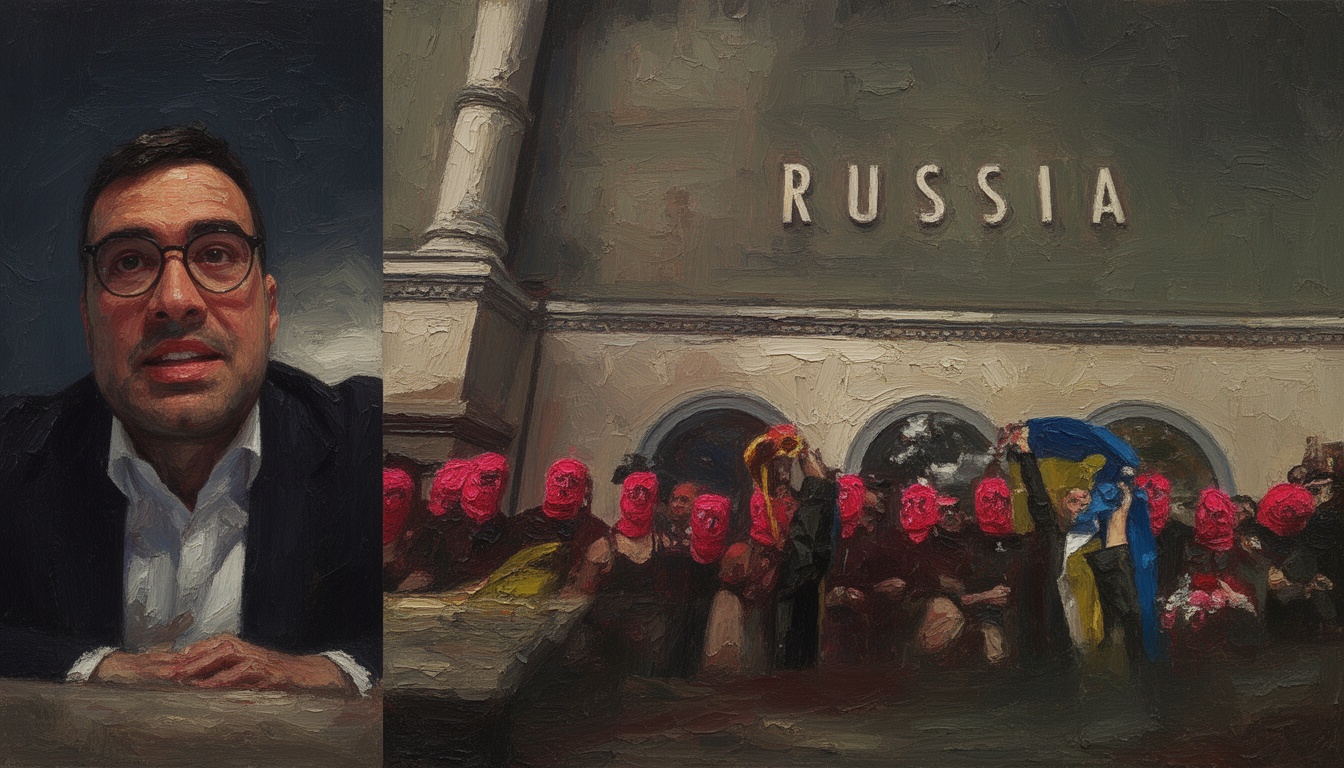
Russia Returns to Venice Biennale Amid Protests
The re-emergence of Russia at the Venice Biennale raises critical questions about cultural politics in wartime. Protests indicate increasing tensions between art and state power.
Russia's participation in the 2026 Venice Biennale marks its first return since the onset of its full-scale invasion of Ukraine in 2022. This development has sparked significant protests from various activists, artists, and political dissidents. They argue that the integration of state power and warfare into the cultural framework undermines the essence of art.
The Venice Biennale is one of the most prestigious cultural events globally, and Russia's involvement illustrates a stark intersection between international artistic expression and the realities of geopolitical conflicts. Critics argue that the presence of the Russian state at such an event serves as a form of propaganda, intentionally clouding the distinction between culture and warfare.
This resurgence of Russian art at the Biennale also epitomizes the broader trend of using cultural platforms to project national narratives. The backlash from various groups illustrates growing discontent with state involvement in artistic spheres, raising questions about the autonomy of art in times of conflict.
Operational complexities arise as cultural events are increasingly viewed as arenas for political statements. As protests escalate, the psychological and social dynamics accompanying Russia's participation will play a crucial role in shaping future iterations of the Biennale and similar events worldwide.
The implications of this situation extend beyond just the current exhibition. It forces the global community to reckon with the evolving nature of cultural diplomacy and the potential for art to become entangled in political and military agendas. The coming months will likely see heightened scrutiny around the role of state-sponsored art within international arenas and the reaction of the artistic community towards such dynamics.