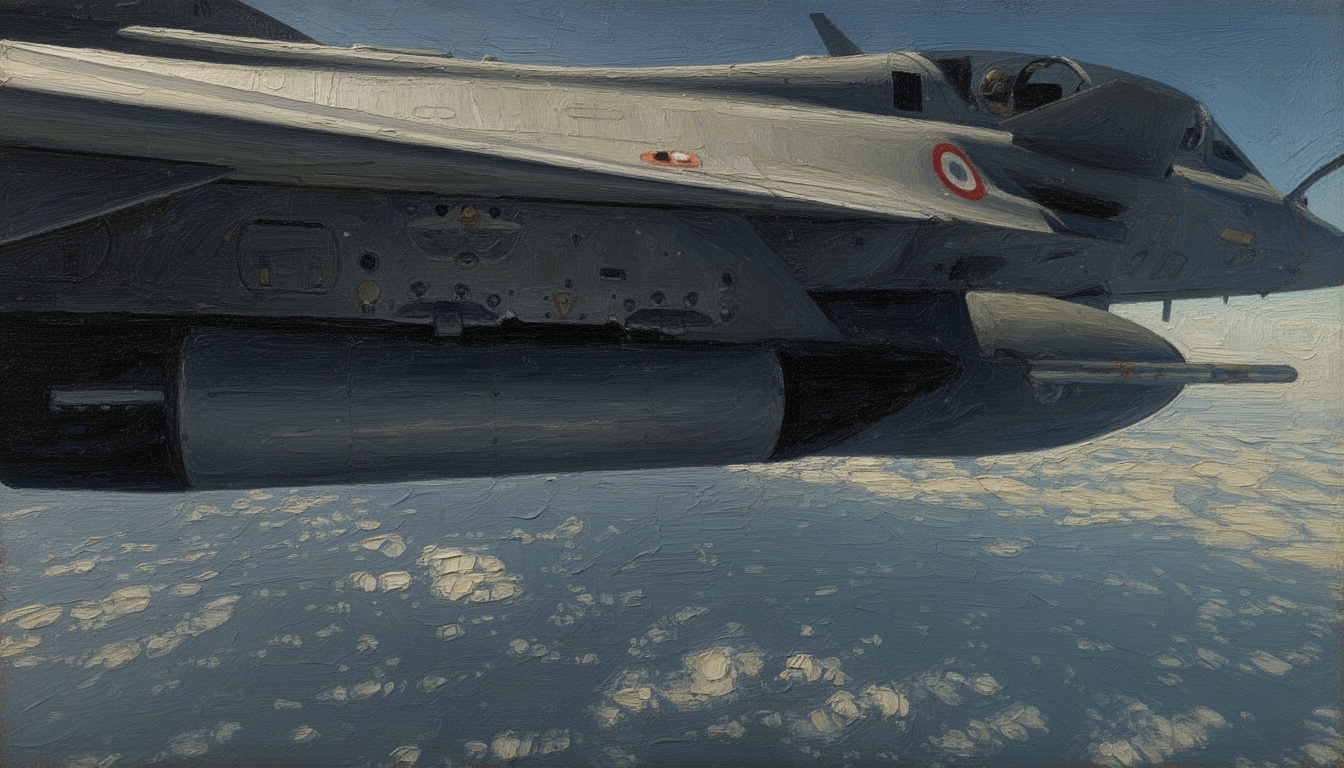
Rafale Fighter Integrates 68mm Laser-Guided Rockets
France enhances Rafale capabilities with cost-effective solution against drone threats. New 68mm rockets aim to counter Shahed-type drones effectively.
The French military has integrated 68mm laser-guided rockets into its Rafale fighter jet, providing a cost-effective solution against drone threats, particularly those resembling the Shahed series. This development comes in response to the increasing use of surveillance and attack drones in modern warfare, necessitating versatile and affordable countermeasures.
The Rafale, a multirole combat aircraft, is already equipped with an arsenal that includes air-to-air and air-to-ground munitions. The addition of these 68mm rockets enhances the aircraft's operational flexibility, allowing it to engage a wider range of targets without relying on more expensive munitions. Reports indicate that these guided rockets are intended to significantly reduce costs per engagement when targeting small, low-flying drones.
Strategically, this upgrade reflects France’s commitment to maintaining its edge in aerial combat capabilities amid evolving battlefield dynamics. The enhanced Rafale is now better equipped to address asymmetrical threats posed by drone swarms, demonstrating a shift in focus towards low-cost, high-efficiency defense solutions.
The 68mm rocket, designed for precision strikes, is expected to improve the Rafale's lethality against various UAVs while potentially reducing collateral damage. The integration of this new munition reinforces the aircraft's status as a versatile platform within NATO forces, capable of adapting to different combat scenarios.
Looking forward, the deployment of laser-guided 68mm rockets on the Rafale could inspire similar adaptations in other military aircraft. This would signify a broader trend towards utilizing low-cost, precision-guided munitions across various air forces, further shaping the future landscape of aerial combat as drone technology continues to advance.