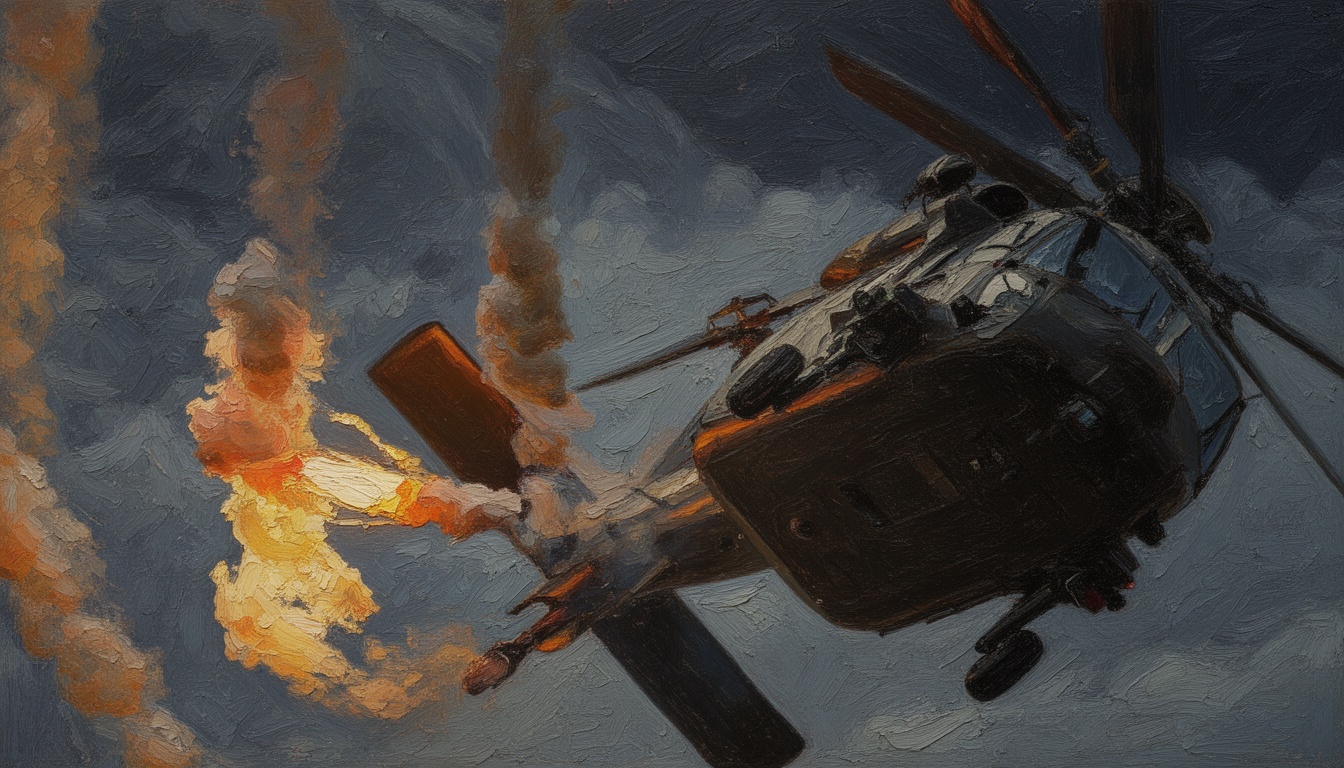
China's Z-20 Helicopter Advances in Defense Technology
The Harbin Z-20 helicopter symbolizes China's efforts to close military gaps. With advancements in design and rotor technology, it enhances China’s aviation capabilities against its global rivals.
The Harbin Z-20 helicopter shows significant strides in China's military aviation capabilities, mirroring aspects of the US Sikorsky UH-60 Black Hawk. With a striking resemblance, the two helicopters pose a challenge to distinguish one from another due to their similar dimensions. This similarity highlights China's long-standing ambition to reduce the technology gap with Western nations, particularly in helicopter design and performance.
The Z-20, unlike the UH-60, features five main rotor blades as opposed to four, a modification that could enhance its lifting capabilities and operational flexibility. Moreover, the Z-20’s cabin is designed with two front windows, offering improved visibility for pilots. These design choices not only reflect innovations in Chinese aerospace engineering but also signal a strategic shift in the country’s defense posture.
Strategically, the development of the Z-20 represents a broader effort by China to strengthen its military capabilities in an increasingly competitive global landscape. As tensions rise in the Asia-Pacific region, enhancing helicopter technology is crucial for both transport and combat roles, providing the People’s Liberation Army (PLA) with a vital edge.
The Z-20, while drawing inspiration from established platforms, encapsulates China’s focus on building an indigenous defense industry. Beijing's investment in advanced rotorcraft technology serves as a direct challenge to established military powers and aims to reshape power dynamics in regional conflicts.
Future assessments will likely focus on the operational deployment of the Z-20 and its integration within PLA’s broader military strategies. The capability to produce and maintain advanced helicopters such as the Z-20 will undoubtedly contribute to China's goal of being a self-reliant military power.