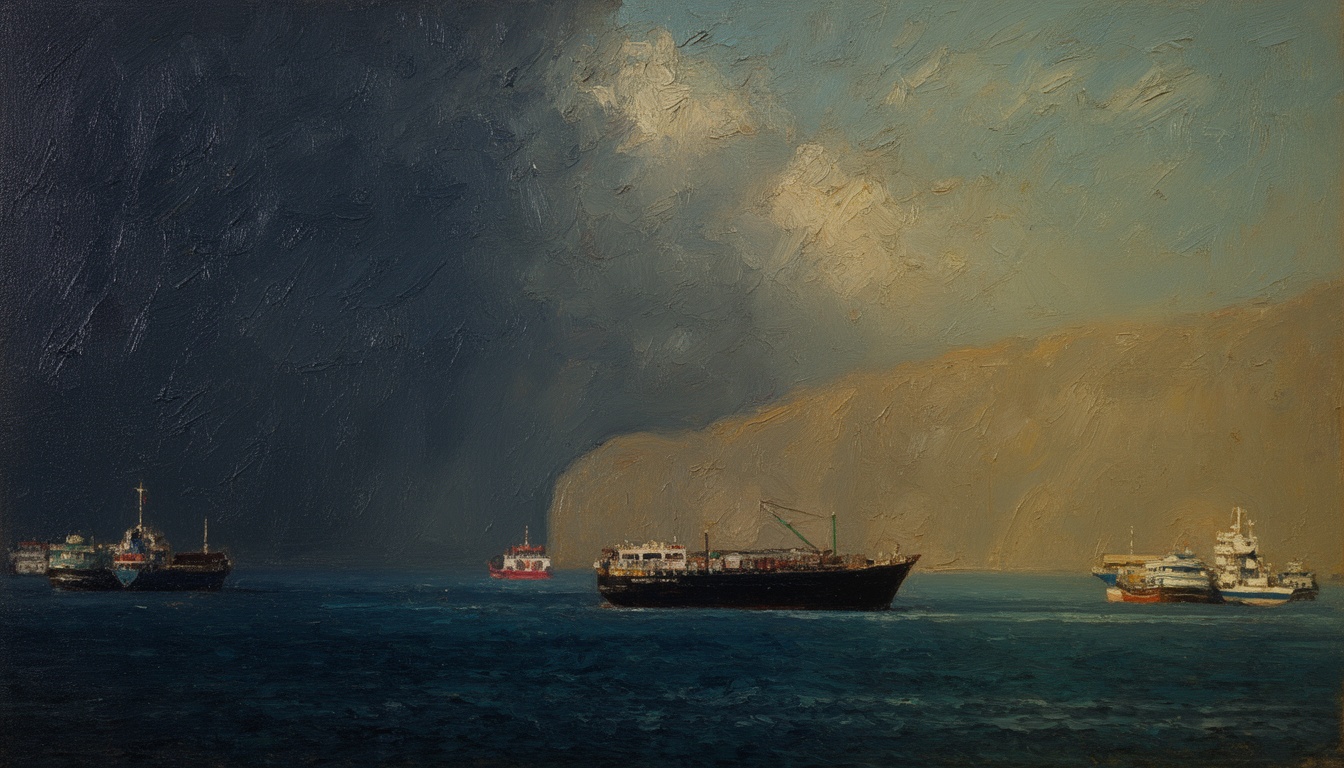
Cargo Ship Struck by Unknown Projectile in Strait of Hormuz
An unidentified projectile damaged a Singapore-flagged cargo ship crossing the Strait of Hormuz. This incident highlights ongoing risks in a critical maritime chokepoint amid rising tensions.
A Singapore-flagged cargo ship was reportedly struck by an unknown projectile while navigating through the Strait of Hormuz near the Omani coast on Thursday. The United Kingdom Maritime Trade Operations (UKMTO) confirmed the incident, indicating that the vessel sustained damage to its bridge. Fortunately, the vessel's master reported there were no casualties or injuries among the crew.
The Strait of Hormuz is a vital waterway, through which about 20% of the world's oil passes. The recent attack underscores the heightened maritime security risks in the region, particularly following the escalation of tensions stemming from the Iran conflict since late February. As the likelihood of such incidents increases, the safety of commercial shipping operations continues to be a significant concern for international maritime agencies.
In response to ongoing threats in the Gulf, the United Nations' International Maritime Organisation (IMO) has been facilitating safe passage for vessels out of the region. Many ships have been trapped in the Gulf due to the unstable security environment since the onset of the conflict, complicating logistical support for international shipping lanes.
The implications of this attack could have far-reaching effects on global shipping and oil markets. Maritime routes that bypass the Strait of Hormuz might become more appealing, as shipping companies seek to avoid potential risks in the increasingly hostile waters. Stakeholders in the international community are likely to call for enhanced naval presence in the area to deter further attacks and ensure the security of vital maritime routes.
As tensions rise, it remains to be seen how shipping companies will adapt their strategies in the face of ongoing threats. Future incidents of this sort may accelerate shifts in trade patterns and impact oil prices globally, reflecting the profound interconnections in today's geopolitical landscape.