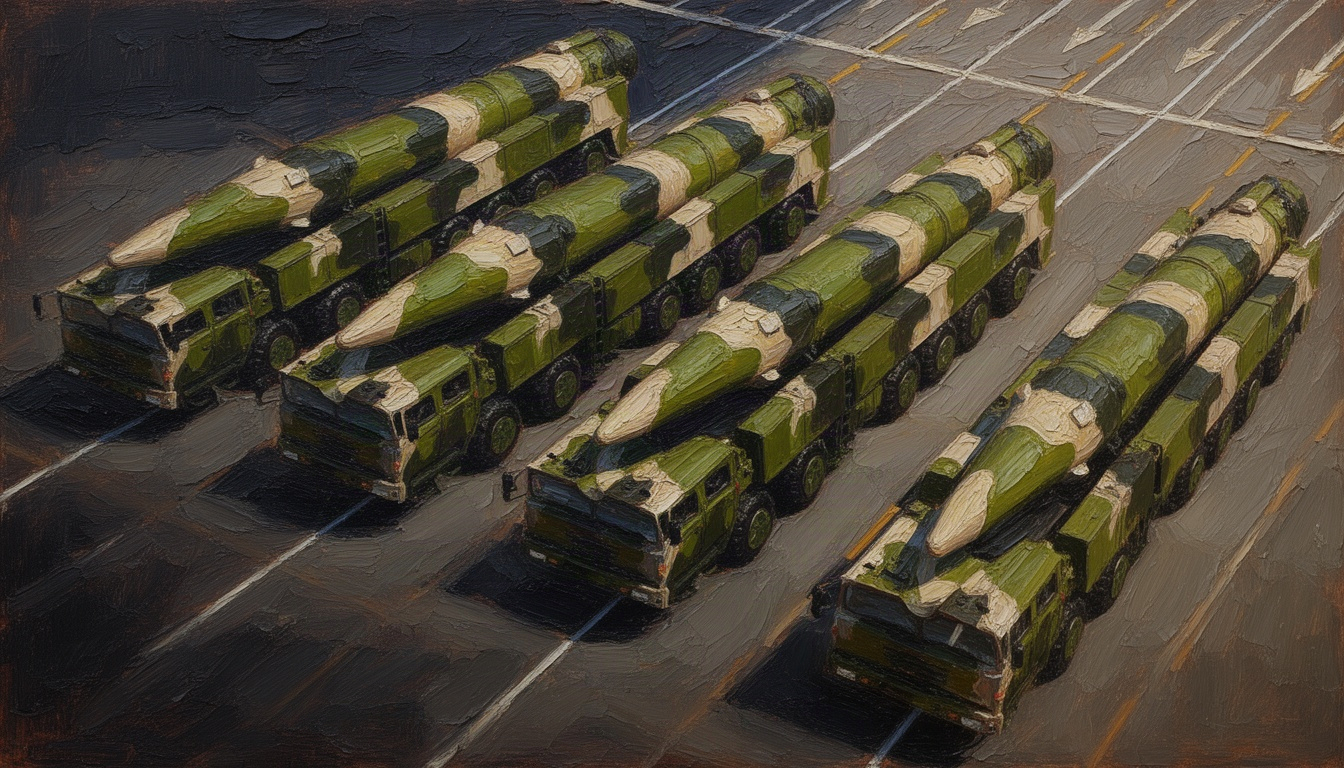
China Builds Comprehensive Regional Ballistic Missile Arsenal
China's extensive ballistic missile capabilities pose significant threats to regional stability. The diverse systems are critical for Beijing's anti-access strategy targeting key U.S. assets.
China's regional ballistic missile arsenal is diversifying rapidly, presenting a notable challenge to U.S. and allied forces in the Asia-Pacific region. The capabilities range from mobile short-range systems designed to threaten Taiwan to long-range weapons capable of striking strategic U.S. positions such as Guam.
Beijing has significantly enhanced its missile production, reportedly fielding over 1,500 short-range ballistic missiles (SRBMs) within striking distance of Taiwan. These systems provide China with the ability to exert dominance during potential conflicts and serve as a deterrent against foreign intervention.
The strategic significance of these weapons lies in their role as part of China's anti-access/area denial (A2/AD) strategy. The deployment of dual-capable missiles underscores the level of concern for U.S. interests in the region and highlights the shift in military balance.
Recent developments include the introduction of the DF-17 hypersonic missile, which presents a unique challenge to existing missile defense systems. This weapon is designed for precision strike capabilities, complicating the defensive calculations for regional adversaries.
As China continues to bolster its missile inventory, the implications for regional security remain profound. Increased military capabilities may lead to heightened tensions, prompting neighboring nations to reassess their own defense strategies in response to Beijing's aggressive posture.