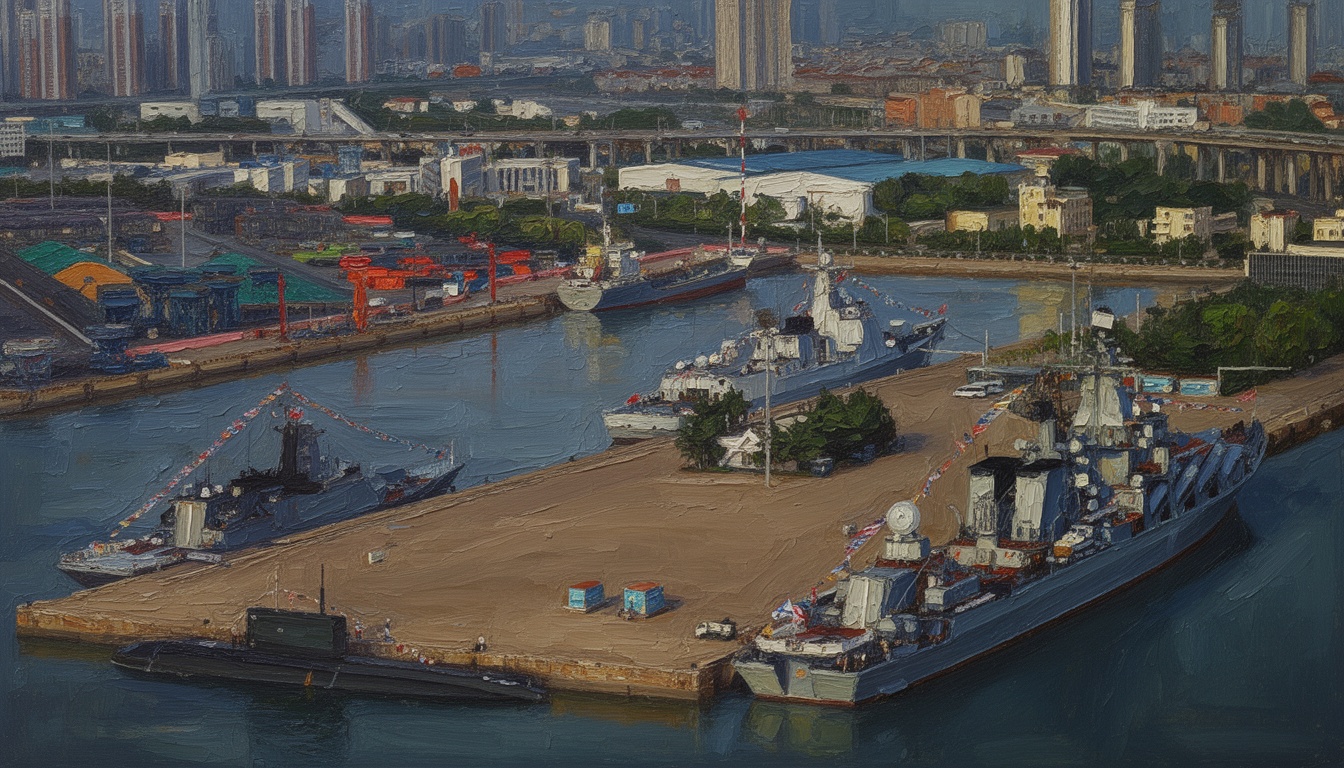
China Engages Russia for Submarine Rescue Skills in Yellow Sea
China and Russia's joint naval drills emphasize strategic military cooperation. The exercises focus on enhancing submarine rescue capabilities amid growing maritime competition.
China and Russia initiated the Joint Sea-2026 naval exercises on Monday in the eastern Chinese port city of Qingdao. This year's drills are specifically centered on submarine rescue operations, reflecting China's interest in acquiring expertise from Russia, its strategic ally in defense matters. The exercises signify a continued strengthening of military ties between the two nations, especially since the inception of these annual drills in 2012.
The collaboration comes at a time of increasing tensions in the maritime domain, particularly with regard to underwater operations. Both countries are aware of the evolving challenges posed by advanced submarines and the increasing scope of undersea competition. By focusing on submarine rescue, the exercises aim to improve the operational readiness of both navies, enhancing their capabilities to address potential maritime emergencies.
This year’s exercises also include advanced simulations meant to ensure both navies are fully prepared for any underwater crisis scenarios. The specifics of the submarine types and technologies involved have not been disclosed, but both nations are known to operate modern submersible platforms with distinct capabilities. The exercises potentially demonstrate a growing synergy in naval strategies between Beijing and Moscow that could alter the regional naval power balance.
The strategic significance of this bilateral engagement cannot be understated, as it reinforces not only joint operational capabilities but also the geopolitical alignment of China and Russia amid increasing pressure from Western naval forces. As regional powers recognize the importance of submarine warfare, these drills could lead to improved response protocols and a more cohesive military framework.
In the longer term, the outcomes of the Joint Sea-2026 exercises may influence future operational protocols within both navies. If successful, these collaborations may be positioned to extend beyond just joint exercises to deeper military engagements, including technology transfers, shared intelligence, and perhaps collaborative defense initiatives in the Indo-Pacific region.