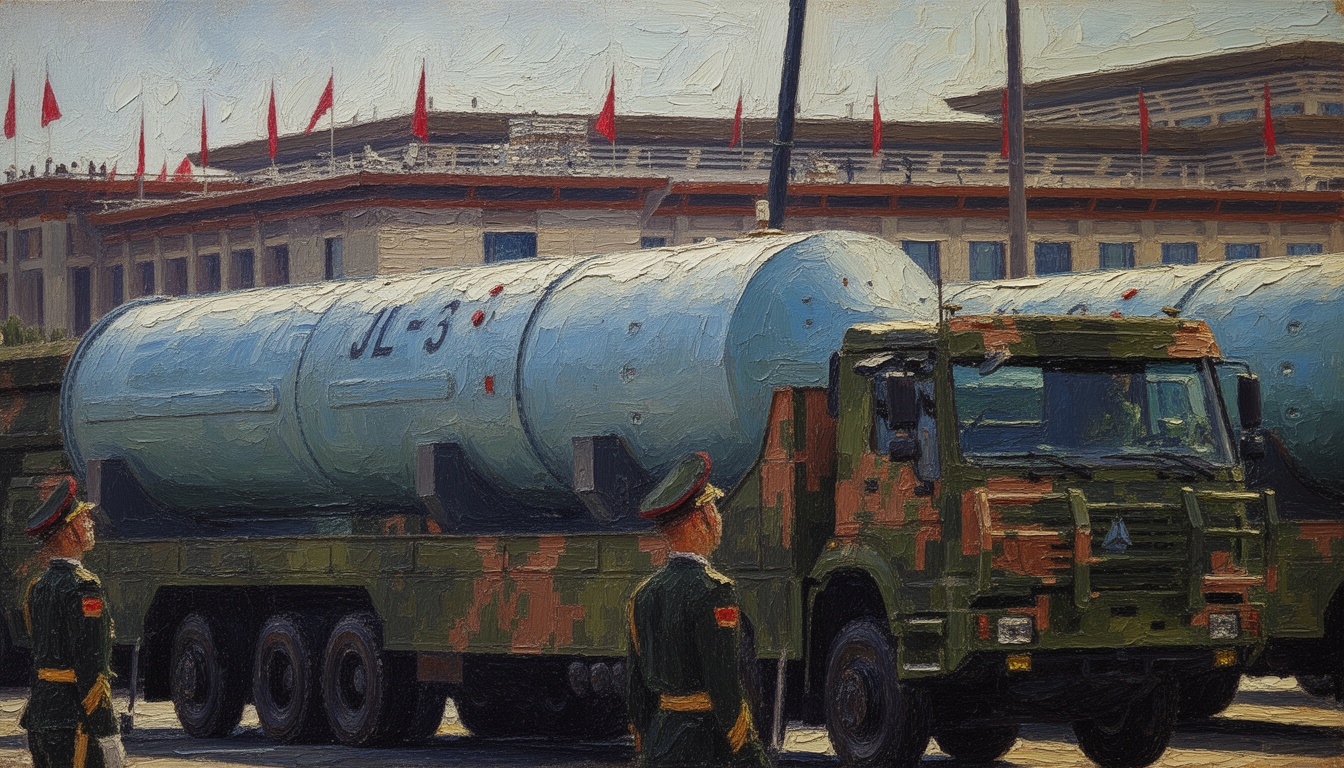
China Launches Strategic Missile from Submarine Before NATO Summit
NATO chief Mark Rutte warns of China's military expansion and its global implications ahead of the summit in Turkey.
China has reportedly conducted its first known launch of a long-range strategic missile from a nuclear submarine, a significant development in its military capabilities. This event occurred just days before the NATO summit set to take place in Ankara, Turkey. NATO Secretary-General Mark Rutte emphasized the growing relevance of developments in the Indo-Pacific region to transatlantic security issues during a news conference on Monday.
Rutte's remarks highlight concerns within NATO regarding China's ongoing military build-up. The alliance is facing an increasingly complex security environment, with the Indo-Pacific and European theaters becoming more intertwined. Experts are examining how China's actions could impact NATO’s defense strategies and relationships with other global powers.
The strategic missile launch marks a crucial step for China as it enhances its naval capabilities. The submarine used in this operation reportedly features advanced technologies, including stealth capabilities designed to evade detection. This aligns with China's broader goal to modernize its military forces and secure its interests across various regions.
As NATO leaders prepare for their annual summit later this week, the implications of China's military activities will likely dominate discussions. The heightened tension between major military powers could lead to more robust defense policies within NATO. The alliance may need to recalibrate its strategies accordingly to respond effectively to emerging threats from state actors like China.
In summary, China's missile launch not only illustrates its growing military ambition but also signifies the strategic links between the Indo-Pacific and European security landscapes. As NATO gears up for its summit, the need for a united response to these challenges will be critical for maintaining stability in both regions.