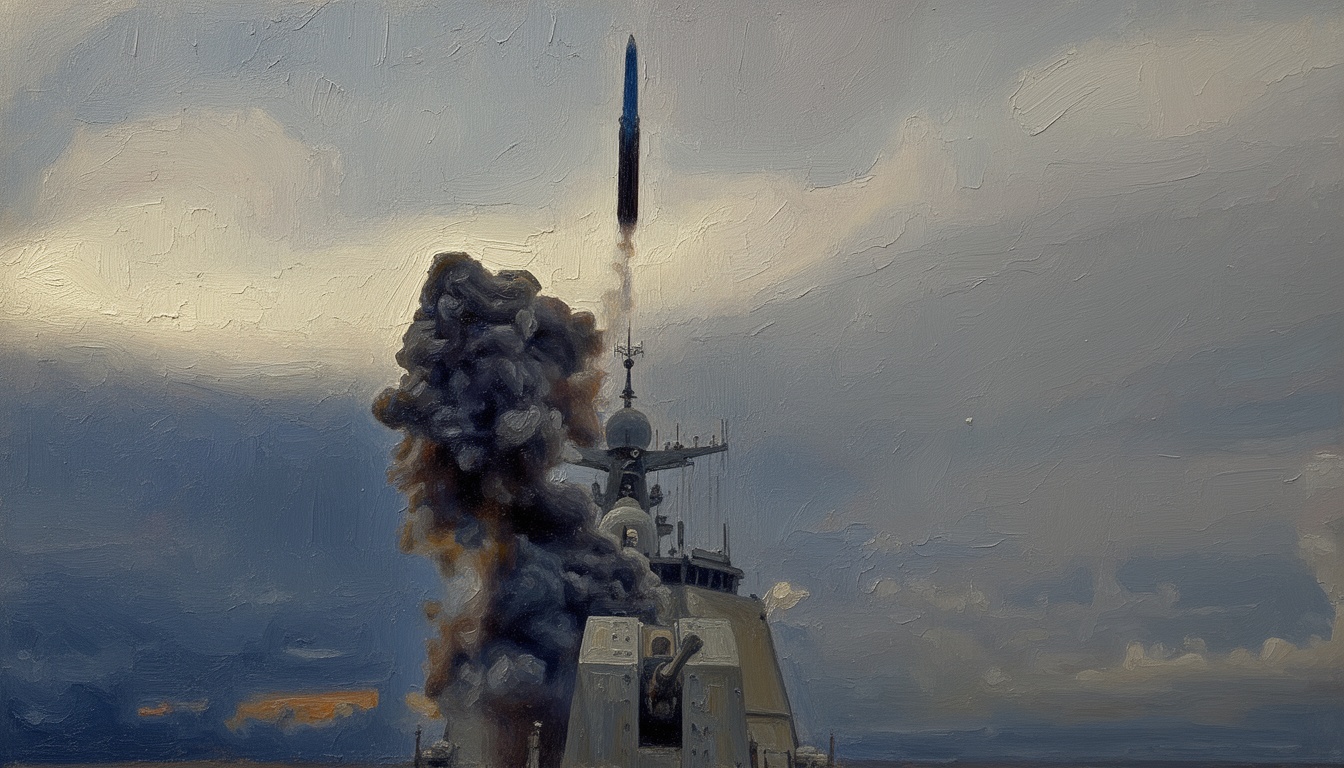
China Test-Fires YJ-20 Hypersonic Anti-Ship Missile from Type 052D Destroyer
The launch of the YJ-20 from a Type 052D destroyer indicates a significant enhancement in China's naval strike capabilities, enabling a broader operational reach.
On Friday, China successfully test-fired the YJ-20 hypersonic anti-ship missile from a Type 052D destroyer, marking a significant development in its naval capabilities. This launch demonstrates the adaptability of the YJ-20, which was initially associated primarily with the larger Type 055 destroyers. By deploying this advanced missile on smaller vessels, the People's Liberation Army Navy (PLA Navy) can distribute its strike capabilities across a greater number of platforms.
The Type 052D destroyer, a class known for its advanced multi-role capabilities, now enhances its fleet's operational flexibility with the addition of YJ-20 missiles. This missile is designed to fly at five times the speed of sound and is intended to target enemy naval vessels effectively. By integrating hypersonic weapons on more hulls, China is significantly increasing the reach and density of its maritime strike options throughout the region.
This strategic shift indicates China's focus on modernizing its naval forces to compete more effectively with the United States and other regional powers. The YJ-20's deployment across multiple classes of ships implies an intent to create a more distributed and resilient force that can operate in contested environments.
Details regarding the exact range and capacity of the YJ-20 remain undisclosed; however, acclaim exists for its performance criteria. The Type 052D can carry a combination of various weapon systems, suggesting flexibility in targeting options against surface threats.
In conclusion, the test-launch of the YJ-20 from a Type 052D destroyer extends the reach of China's strike capabilities, providing the PLA Navy with enhanced deterrence options in maritime operations. The implications of this development could reshape naval engagement strategies in the Indo-Pacific region as tensions continue to evolve.