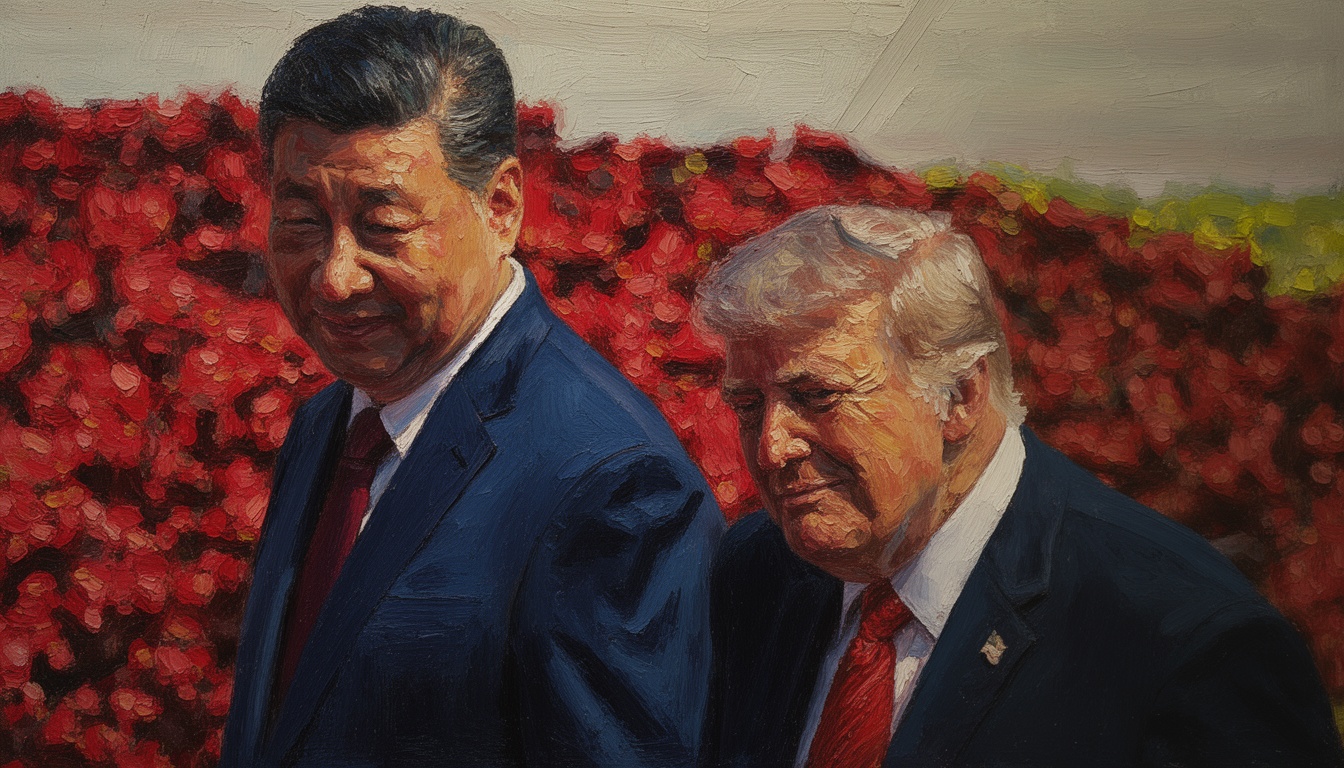
China-US Relations Face Severe Structural Challenges
Deep-rooted rivalry and regulatory barriers impede China-US cooperation. The recent summit offers only temporary improvement.
The relationship between China and the United States remains at a critical juncture, characterized by deep-seated structural rivalry. Zhao Hai from the Chinese Academy of Social Sciences (CASS) emphasized during the World Economic Forum's annual meeting in Dalian that although last month's leaders' summit provided a temporary floor, significant challenges persist. Regulatory hurdles and mutual distrust pose substantial barriers to any meaningful thaw in relations.
Background context reveals the complexity of China-US interactions which have been strained by trade disputes, technological competition, and geopolitical tensions. Zhao noted that the ongoing rivalry encompasses strategic sectors such as artificial intelligence and rare earths, critical components for advanced technologies and defense systems. These areas are not only economically vital but are also arenas for political contestation.
The strategic significance of this situation cannot be overstated as nations globally reevaluate their dependencies on China for rare earth elements, which play a crucial role in many high-tech industries. The U.S. and its allies are likely to seek alternative supply chains, further straining relations with China. As Zhao pointed out, the fragile cooperative framework established by recent diplomatic efforts remains vulnerable to these underlying pressures.
From a technical perspective, the discussion around rare earths illustrates the broader economic competition. Rare earths are essential for manufacturing technologies like the F-35 fighter jet and various renewable energy systems. The U.S. continues to bolster its rare earth mining and processing capabilities to diminish reliance on Chinese exports. However, substantial investment and time are needed to develop a competitive infrastructure.
The likely consequences of these developments could lead to a longer-term cold phase in China-US ties, characterized by a continual cycle of limited engagement and heightened competition. Both nations may find it increasingly difficult to build a stable and cooperative relationship, raising concerns over global economic stability and security dynamics.