China's Carriers Likely to Integrate J-35 Stealth Fighters
The potential integration of J-35 stealth fighters into China's naval fleet could enhance the operational capabilities of the PLA Navy significantly. This development marks a key advancement in China's maritime military strategy.
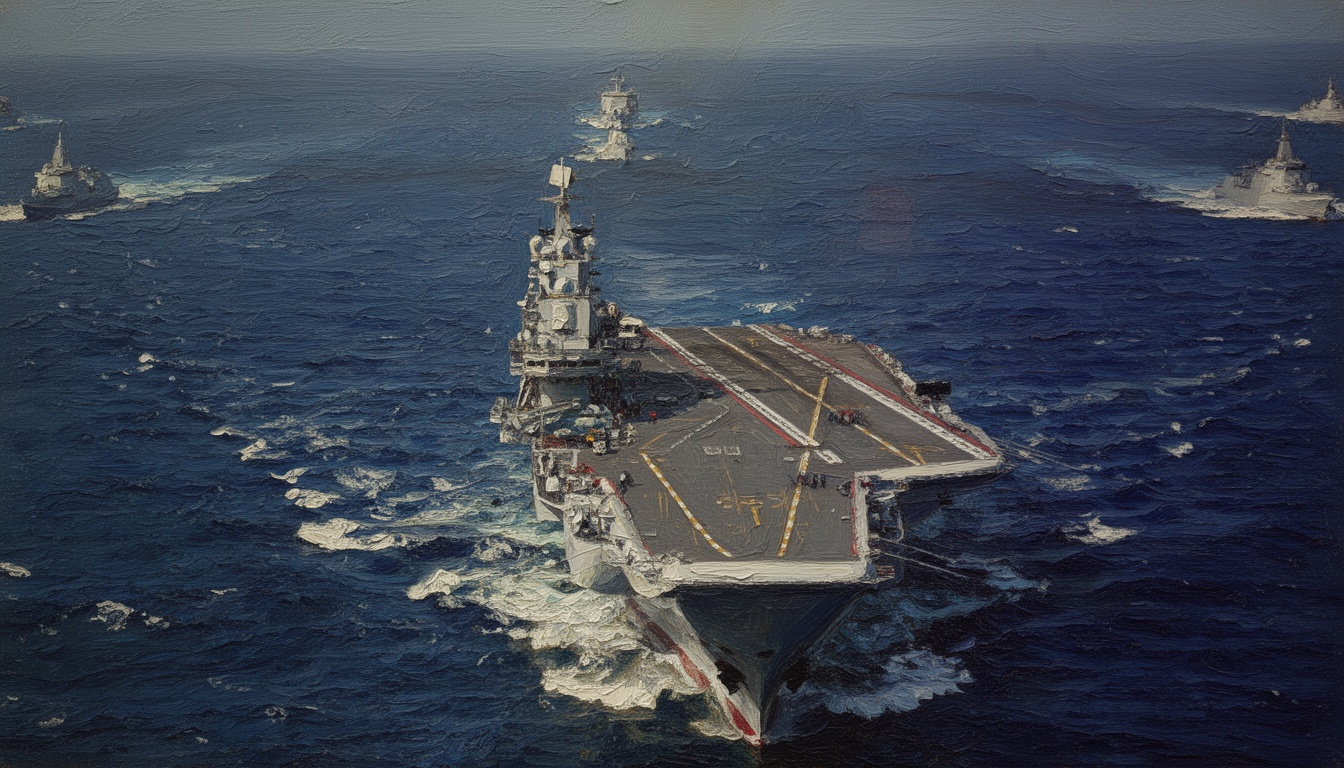
All three of China’s aircraft carriers may soon be equipped to operate the J-35 stealth fighter, enhancing the People's Liberation Army Navy's (PLAN) combat capabilities significantly, according to Chinese military experts. Currently, only the Fujian, China's most advanced carrier, hosts the J-35 due to its electromagnetic catapult system, designed to assist launching fifth-generation fighters into the air.
In contrast, the older Liaoning and Shandong carriers rely on a more traditional launch method, using a ski-jump deck to deploy their J-15 fighters. This limitation has raised concerns about their ability to effectively utilize advanced stealth aircraft like the J-35. However, recent assessments indicate that upgrades or modifications may be forthcoming for these carriers, potentially allowing them to accommodate more advanced aircraft.
The strategic significance of this development cannot be overstated, as it could fundamentally alter the balance of power in maritime operations in the region. The integration of J-35 fighters would provide the PLAN with enhanced aerial strike capabilities, improved situational awareness, and superior stealth features crucial for modern naval warfare.
Technically, the J-35 is comparable to the United States' F-35B fighter, featuring advanced avionics, a low observable design, and exceptional maneuverability. The successful deployment of this aircraft across all three carriers would mark a substantial leap forward for China’s naval aviation capabilities. This evolution indicates a notable shift in the PLA Navy's operational readiness and deterrence posture.
In conclusion, should the plans to integrate the J-35 across all carriers move forward, it will likely lead to enhanced capabilities for China, enabling a more robust maritime presence and potentially altering regional dynamics in the Asia-Pacific. The international community will be closely monitoring these developments as they unfold.