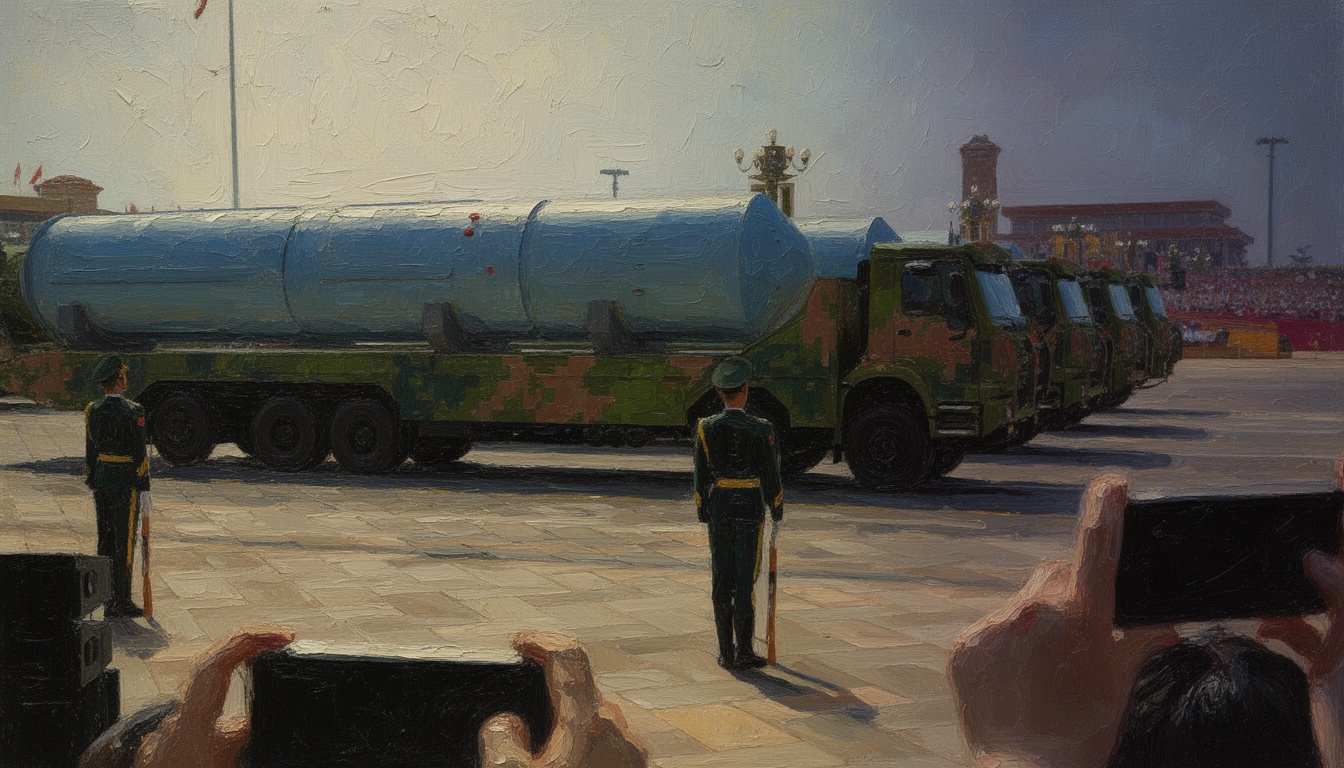
China's JL-3 Submarine Missile Test Marks Historic Milestone
China has confirmed its first submarine-based missile test in over 40 years, highlighting advancements in its naval capabilities and nuclear deterrence.
The People's Liberation Army (PLA) conducted a significant missile test in the Pacific Ocean on July 6, marking China's first verified launch of a submarine-based missile since 1982. During this test, a dummy warhead reportedly traveled 8,000 kilometers (5,000 miles), showcasing the extended range capabilities of the missile system involved. This event underscores China's ongoing modernization of its strategic forces and the expansion of its deterrent capabilities.
The missile type utilized in this test has not been officially confirmed by the PLA. However, reports suggest that the JL-3 missile was employed, which is designed for launch from submarines and is a key component of China's nuclear deterrent strategy. The JL-3 missile is expected to feature enhanced range and precision compared to its predecessors, reflecting the advancements in China's military technology.
Strategically, this test represents a pivotal moment for China as it seeks to enhance its maritime warfare capabilities amid rising tensions in the Pacific region. The successful launch underscores China's commitment to developing a comprehensive naval strategy that encompasses nuclear and conventional forces. Furthermore, this development may provoke a recalibration of military postures among other regional powers concerned about China's growing military footprint.
Operationally, the nuclear-powered submarine from which the missile was launched is expected to be part of China's ongoing efforts to build a formidable underwater warfare presence. This submarine's ability to launch the JL-3 further diversifies China's strike options and complicates defensive calculations for potential adversaries, particularly in light of its increased stealth and survivability.
In conclusion, the implications of this missile test may extend beyond military demonstration. It could influence the strategic dynamics in the Asia-Pacific region, prompting responses from neighboring countries and potentially contributing to an arms race. Continued development and testing of advanced missile systems emphasize the urgent need for dialogue and confidence-building measures to mitigate tensions in the area.