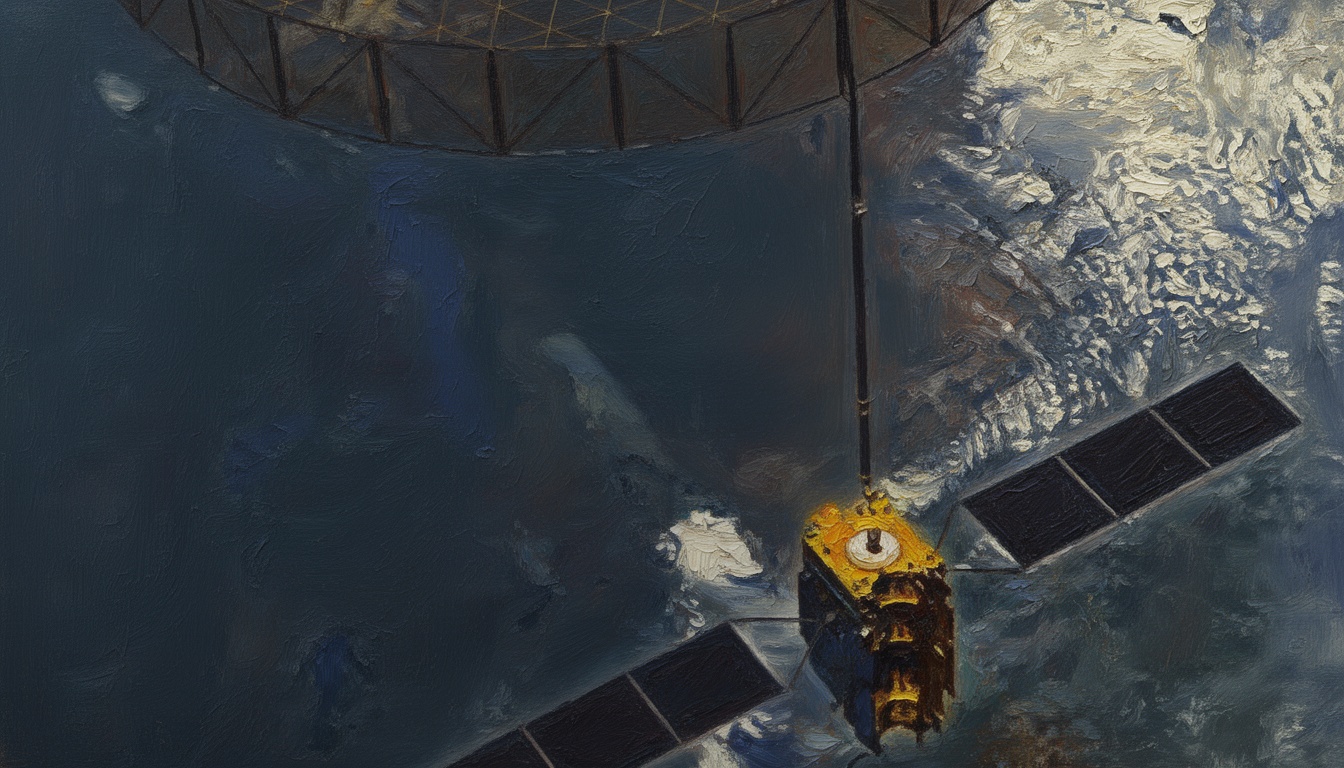
China's Rare Metal Fuels Unique High-Orbit Satellite
China's Ludi Tance-4 01 radar satellite provides global surveillance with gallium nitride technology, raising security concerns for other nations.
China has unveiled the Ludi Tance-4 01 radar satellite, a unique platform that operates at a high orbit of 36,000 kilometers (approximately 22,000 miles). This satellite, exclusively powered by gallium nitride (GaN) semiconductors, provides continuous surveillance over a significant third of the Earth's surface. Given its geosynchronous orbit, it remains fixated over specific areas, enhancing its monitoring capabilities.
The importance of this technology lies in the reliance on gallium nitride, a rare mineral whose extraction and supply are largely controlled by China. This dominance in the production and supply chain raises strategic concerns for countries reliant on advanced satellite technologies. The satellite's capabilities demonstrate China's advancement in military and surveillance technologies, which could shift regional security dynamics.
With only one satellite of its kind in operation, the Ludi Tance-4 01 showcases China's cutting-edge advancements in aerospace technology. The satellite's unique features stem from its ability to maintain a static position relative to the Earth, making it incredibly useful for gathering intelligence, monitoring weather patterns, and tracking movements across vast territories.
Countries aiming to enhance their own surveillance capabilities might find themselves struggling to access gallium nitride, especially given the supply chain's reliance on Chinese mining and processing. This could lead to increased investments in alternative supply sources or the development of competitive technologies to mitigate dependency on China's resources.
In summary, the emergence of the Ludi Tance-4 01 could have significant implications for global security. Nations may need to reassess their strategic capabilities in response to the advancements presented by China's high-orbit surveillance technology.