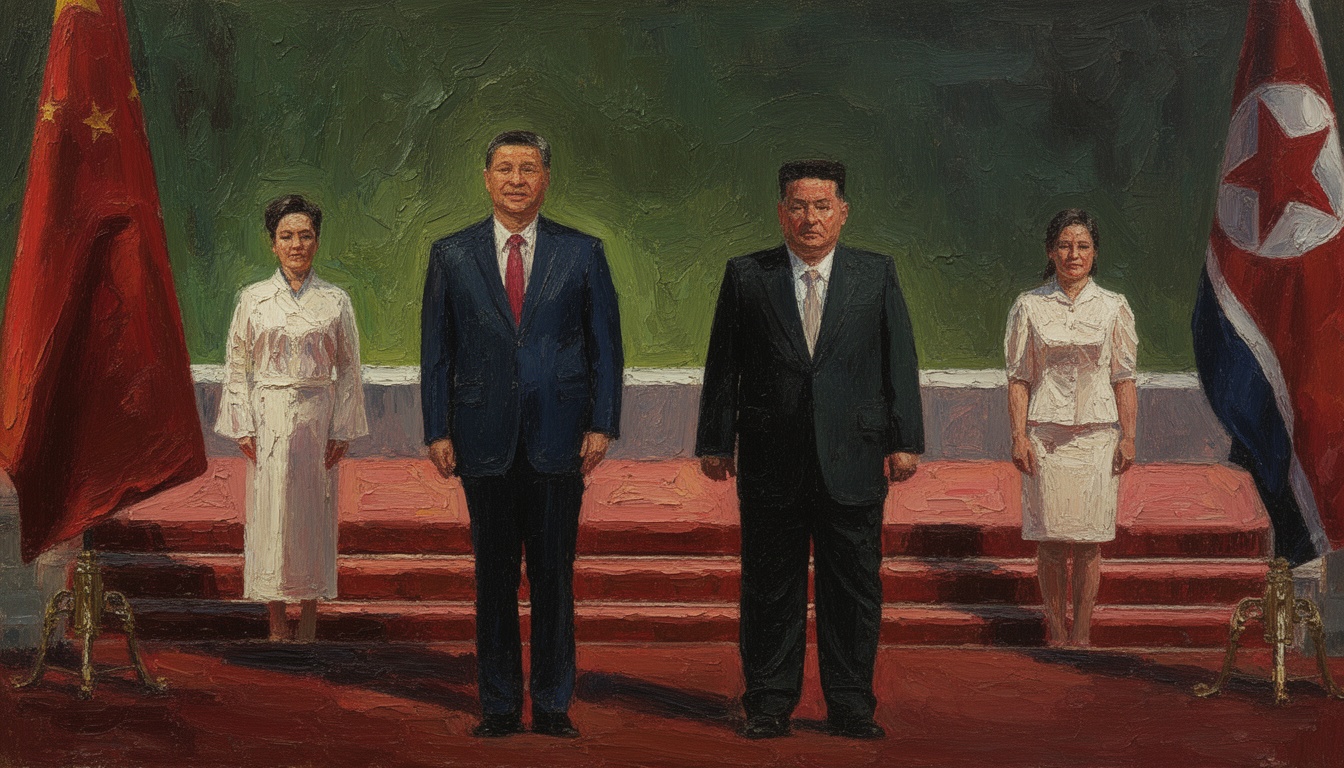
China's Xi Pledges Stronger Ties with North Korea
Xi Jinping's rare visit to North Korea may enhance bilateral relations amidst shifting geopolitical dynamics. Strengthened ties could affect regional diplomacy and confidence in nuclear discussions.
Chinese President Xi Jinping met with North Korean leader Kim Jong Un in Pyongyang on Monday, during a rare summit aimed at reinforcing ties between the two nations. Xi emphasized China's unwavering commitment to supporting North Korea's interests and maintaining close cooperation. This engagement indicates a strategic partnership that may be pivotal in the context of regional security dynamics.
Historical relations between China and North Korea have been complex, with China serving as North Korea's primary ally and economic partner. In recent years, however, these relations have seen fluctuations due to North Korea's nuclear ambitions and regional tensions. Xi's visit and the commitment to bolster ties signal a reinvigoration of the relationship amid increasing economic collaborations, particularly with Russia.
The strategic significance of this summit lies in its potential impact on Northeast Asia’s security landscape. China, bolstered by deepening trade and military relations with Russia, is positioned to project greater influence in the region. This partnership could embolden North Korea, facilitating its confidence in future negotiations regarding denuclearization and peace on the Korean Peninsula.
In operational terms, closer ties with China may provide North Korea with economic support and military cooperation, enhancing its bargaining power in diplomatic discussions. Historical patterns suggest that a united front with China could alter the regional security calculus, challenging U.S. influence in the area.
Moving forward, this summit's implications may extend beyond bilateral ties, affecting regional alliances and diplomatic interactions. Analysts will closely monitor developments as North Korea seeks to leverage its relationship with China to navigate ongoing tensions with Western powers, potentially recalibrating the stability dynamics in Northeast Asia.