Chinese Anti-Ship Bombers Challenge Philippine Military Exercises
The PLA Southern Theater Command's maneuvers signal regional tensions amid Balikatan drills.
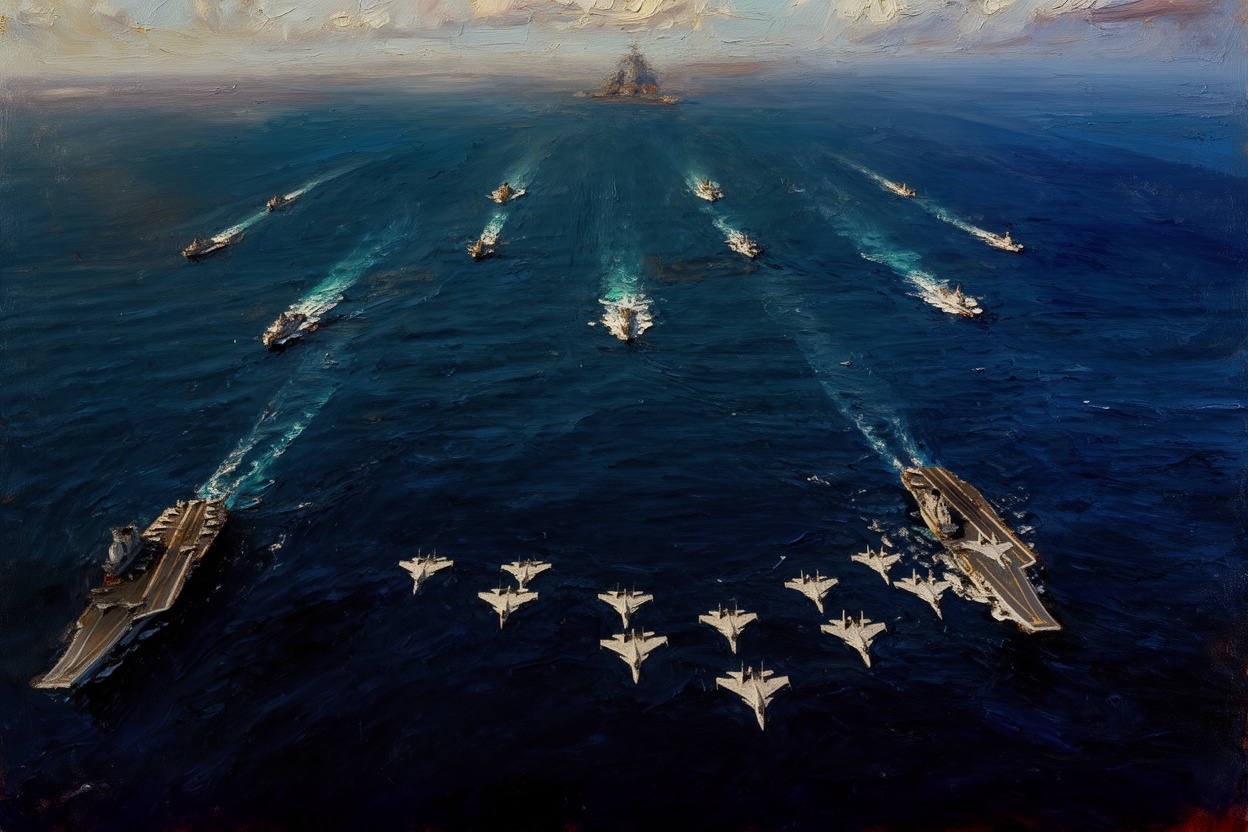
In a striking display of military might, a pair of heavily-armed Chinese anti-ship bombers, accompanied by fighter escorts, flew over Scarborough Shoal. This combat exercise occurred during the largest Philippine military drills, known as Balikatan, which are reportedly aimed at enhancing defense cooperation with the United States. The maneuvers serve as a clear indication of China's intent to assert its claims over disputed maritime territories.
Scarborough Shoal has been a hotbed of tension between the Philippines and China for years, with the Philippine Navy actively contesting Chinese claims. The People's Liberation Army Southern Theater Command (PLA STC) asserted that these operations were part of a combat readiness patrol, responding to what it perceives as provocation from Philippine forces. Such activities raise the stakes in a region already fraught with geopolitical sensitivities.
Strategically, the timing of the PLA's maneuvers comes as the Philippines engages in joint drills with the United States, further complicating the already delicate balance of power in the South China Sea. The Balikatan exercises focus on enhancing the military capabilities of Philippine forces, potentially increasing the effectiveness of their defenses against perceived threats from Beijing.
The Chinese anti-ship bombers involved in this operation are likely of the H-6K variety, known for their ability to deploy anti-ship cruise missiles and engage naval targets effectively. The presence of fighter escorts suggests an intention to provide air superiority and protection for the bombers during these provocative flights.
Looking ahead, China's demonstration of military capabilities in response to the Balikatan exercises indicates an escalating pattern of assertiveness in the South China Sea. This may prompt the Philippines to further strengthen its defense ties with the United States and seek deeper military support as regional tensions escalate.