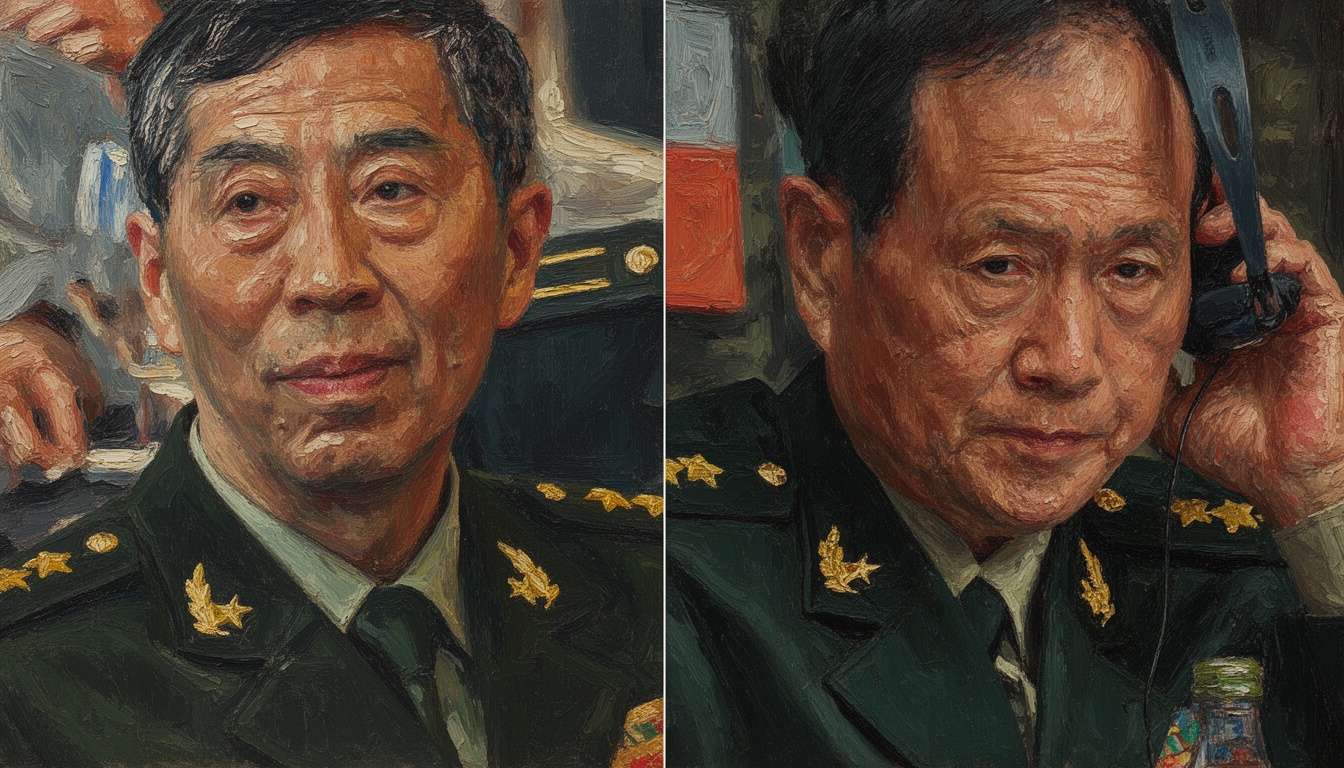
Chinese Ministers Wei Fenghe, Li Shangfu Receive Suspended Death Sentences
The suspended death sentences of two former Chinese defence ministers reflect a significant crackdown on corruption within the military. Wei Fenghe and Li Shangfu's convictions could have implications for China's defense structure.
Wei Fenghe and Li Shangfu, two former ministers of national defense of China, have been sentenced to suspended death sentences after being convicted of corruption. This ruling was announced by a military court which found Wei guilty of accepting bribery while Li was convicted of both accepting and offering bribes. The sentence was released in a brief statement on Thursday afternoon, though it did not disclose any specific amounts related to the bribery cases, increasing speculation about the depth of corruption within China's military leadership.
The convictions of Wei and Li occur against the backdrop of President Xi Jinping's campaign to purge corrupt officials within the Communist Party and military institutions. This initiative, dubbed an anti-corruption campaign, has been ongoing since Xi took power in 2012 and has targeted high-level officials to strengthen the integrity of the Party and military. The outcomes of these convictions may signal a broader effort by the Chinese leadership to instill a culture of accountability within the armed forces, crucial in a country where military operations are tightly controlled by the state.
On a strategic level, the cases raise questions about the reliability of China's military leadership moving forward. The defense ministers hold substantial influence over the development of military policies and defense spending, and their removal from key positions could impact the stability and effectiveness of defense strategy planning in China. Observers are particularly concerned about how this internal strife might affect China's position against perceived external threats and its assertive military behavior in the South China Sea.
In terms of operational implications, the removal of both Wei and Li could lead to shifts in military leadership that may affect ongoing modernization programs. Under their tenures, China has made significant investments in advanced weaponry, including the Type 075 amphibious assault ship and the DF-17 hypersonic missile. With the current shake-up at the top levels of defense, there may be delays or changes in these programs as new leadership takes time to settle in and establish its own priorities.
Looking ahead, the impact of these decisions on China's defense policy will be critical to monitor. The suspended death sentences signal a zero-tolerance approach to corruption, which, while potentially fostering a more disciplined military structure, could also foster further instability if not managed carefully. As the military finds its footing amidst these transitions, there will be close scrutiny on how defense policies evolve and how they position China in an increasingly tense global security environment.