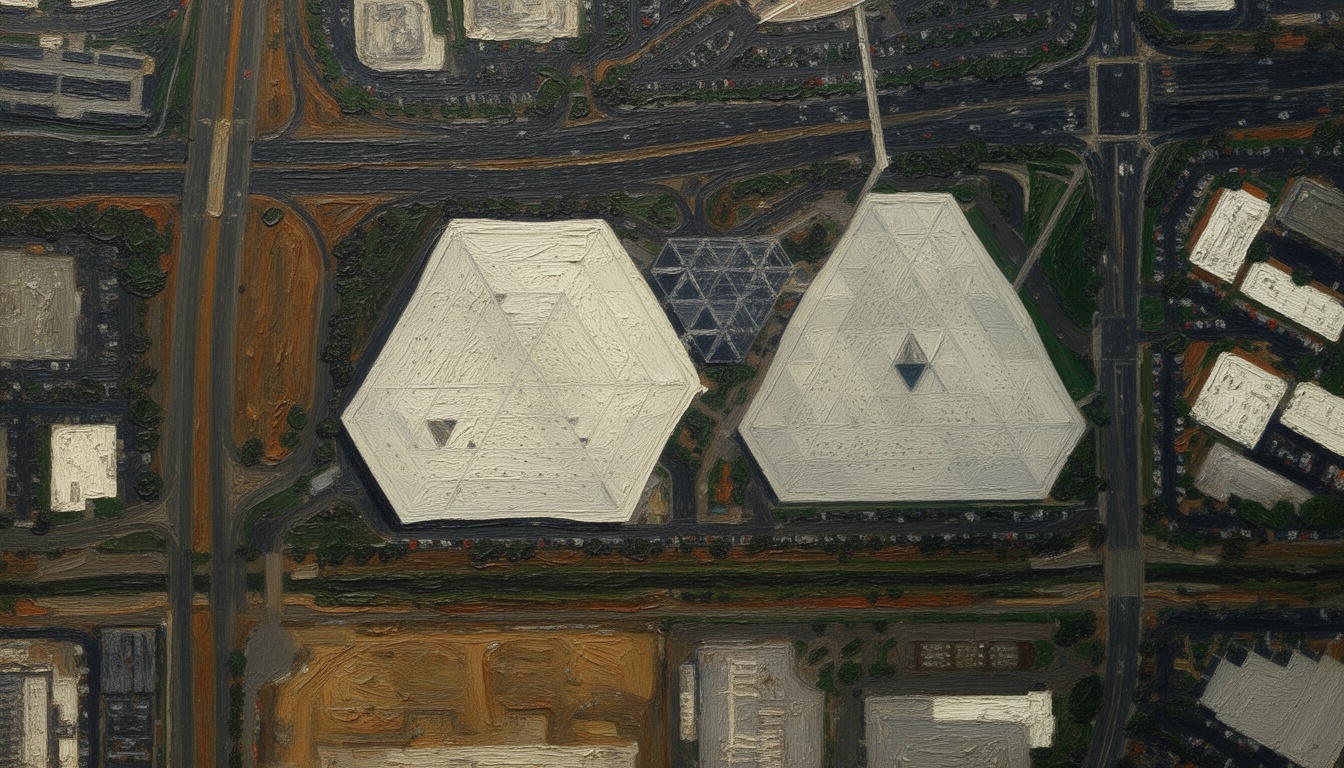
Chinese Satellite Company Publishes Images of Nvidia, Apple HQs
A Chinese satellite firm has released high-definition images of key tech hubs, potentially raising security concerns among U.S. allies. The images were shared following U.S. sanctions for alleged ties to Iran.
Changguang Satellite, a China-based firm, has recently published high-definition satellite images of Nvidia and Apple headquarters located in Silicon Valley, California. This release follows the company's imposition of U.S. sanctions due to its alleged assistance to Iran. The images were shared on social media on Monday, drawing significant attention from international observers.
The Changchun-based company, known for its advanced satellite capabilities, used its Jilin-1 satellite constellation to capture the images. These visuals provide an intricate bird’s-eye view of notable technological landmarks in the region, raising potential security concerns regarding the monitoring capabilities of Chinese satellite technologies.
The release of such photos could lead to heightened scrutiny from U.S. defense officials and allies, who may view this as an extension of China's strategic intelligence-gathering efforts. Given the critical nature of both Nvidia and Apple in global technology supply chains, the implications of such surveillance capabilities can be far-reaching.
Nvidia and Apple are pivotal players in the semiconductor and technology sectors, respectively. Nvidia, a key supplier of graphic processing units, has significant partnerships with various sectors including defense. Apple, with its vast user base, stands as an iconic representation of American innovation. The timing of the release, following sanctions against Changguang, underscores the ongoing tensions between the U.S. and China regarding technological competition and security issues.
In conclusion, this incident not only highlights the capabilities of Chinese satellite technology but also raises significant questions about the global impact of such surveillance conducted by state-affiliated entities. It remains to be seen how U.S. policymakers will respond to this new development in the ongoing tech rivalry with China.