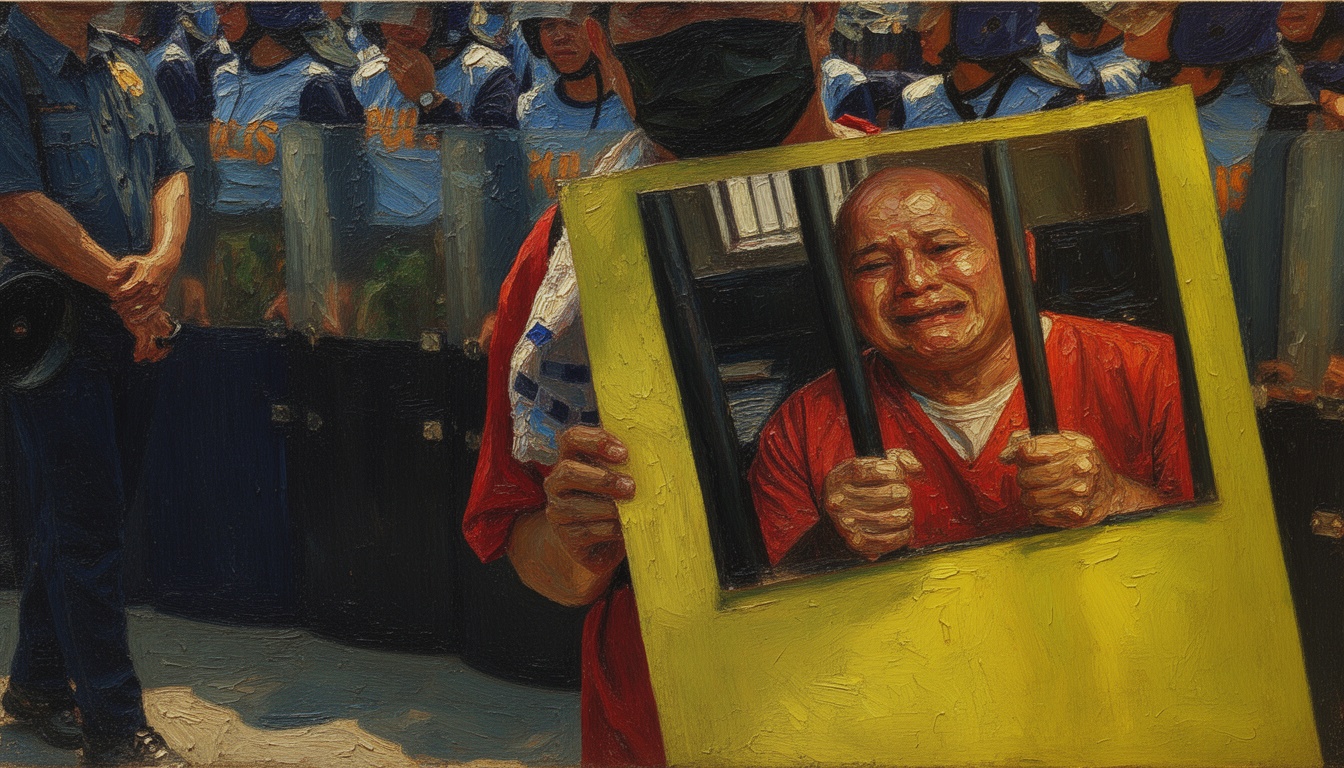
Philippine Senator Flees Senate Amid International Arrest Warrant
The Philippine Senate is engulfed in chaos as Senator Bato dela Rosa flees to evade an international arrest warrant. Gunfire erupted within the congressional building shortly after.
The Philippine Senate faced unprecedented chaos when Senator Ronald 'Bato' dela Rosa fled down the hallways on Monday, attempting to evade an international arrest warrant for his alleged involvement in crimes against humanity. Dela Rosa, dressed in a muddy olive shirt, was reported to have knocked aside female investigators in a desperate escape, marking an alarming moment in the legislative body’s history.
This incident followed a string of political turmoil in the Senate, where allegations of corruption and power struggles have plagued lawmakers for years. Dela Rosa's sanctioning of questionable police operations during his tenure as police chief has come under scrutiny, drawing international condemnation and leading to the warrant issued earlier that week.
The implications of this incident extend beyond the walls of the Senate, highlighting the deteriorating state of political stability in the Philippines. The chaos indicates a potential rift within the government as President Ferdinand Marcos Jr. contends with increasing pressures from both domestic and international communities regarding the rule of law and human rights violations.
Reports indicated that gunfire erupted in the congressional building on Wednesday night, raising concerns about security within the legislative institutions. Authorities are investigating the source of the shots, which sent lawmakers scrambling for safety. Meanwhile, escalating tensions within the Senate could lead to further unrest in the Philippines as opposition parties aim to capitalize on the vacuum created by Dela Rosa's exit.
In the aftermath of these events, the global community is watching closely as the Philippines navigates this political crisis. The government's ability to manage the situation could have lasting impacts on its international relations and internal security policies, especially concerning the ongoing scrutiny of human rights practices under Marcos’s administration.