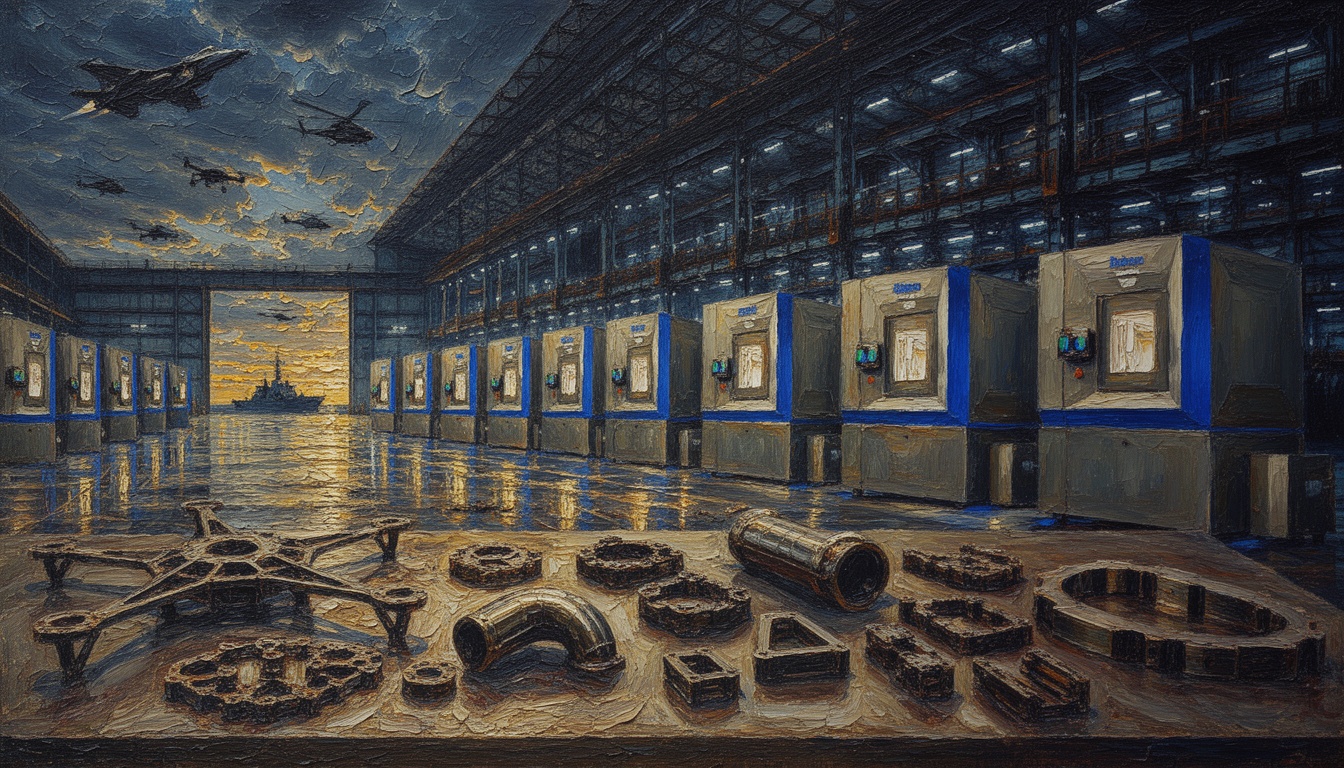
Distributed Defense Manufacturing: Autonomous and Software-Defined Future
The evolution in defense manufacturing is leaning towards distributed, autonomous systems that leverage software. This transition could redefine production capabilities in defense and critical industries.
A revolution is underway in defense manufacturing, where processes are becoming increasingly distributed, autonomous, and reliant on software. Traditional manufacturing methods are being supplemented, and in some cases replaced, by additive manufacturing techniques that allow for rapid prototyping and production. This shift is significant for military and critical sectors, as it could enhance operational capabilities while reducing supply chain dependencies.
Roboze, a key player in this transformation, is reshaping how additive manufacturing is perceived in defense. The company is transforming 3D printing from a prototyping tool into a robust production infrastructure, capable of producing parts on-demand, with high precision and durability. This approach not only streamlines logistics but also democratizes production, enabling smaller entities to contribute to defense manufacturing sustainably and efficiently.
Strategically, the move towards distributed manufacturing can enhance national security by mitigating risks associated with centralized production facilities. By decentralizing production, militaries can increase resilience against disruptions caused by geopolitical tensions or supply chain vulnerabilities. Additionally, autonomous production processes can speed up manufacturing times, ultimately leading to a quicker response to defense needs.
From a technical standpoint, Roboze's innovations include the development of highly specialized materials engineered for defense applications, such as high-performance polymers. Their systems are designed to operate with minimal human intervention, and software-defined processes can adapt to changing production requirements almost instantly. These advancements signal a significant leap in manufacturing capabilities, which can provide a tactical advantage in various military operations.
The implications for the future are profound. As defense sectors worldwide adopt these technologies, we may witness a fundamental shift in how military capabilities are developed and sustained. Decentralized and software-defined manufacturing could not only enhance efficiency but also support a more agile defense posture in an increasingly complex global environment.