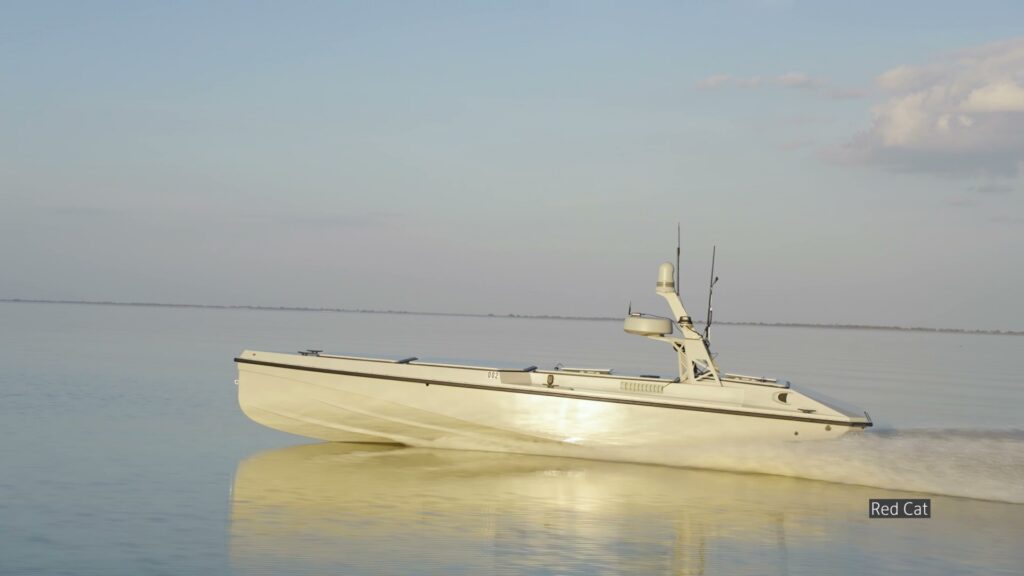
Emergence of Unmanned Surface Vessels Enhances ISR and Counter-UAS
The launch of Red Cat's Blue Ops signifies a pivotal step in the mass production of unmanned surface vessels (USVs), aimed at enhancing intelligence, surveillance, and reconnaissance (ISR) capabilities and countering unmanned aerial systems (UAS).
Red Cat has officially launched Blue Ops, a new subsidiary intended to mass produce unmanned surface vessels (USVs). This move represents a significant shift in their operational focus from aerial drones to maritime capabilities. The introduction of USVs is expected to bolster maritime security and provide vital intelligence, surveillance, and reconnaissance (ISR) capabilities.
Historically, unmanned surface vessels have been underutilized compared to their aerial counterparts. However, the growing threat of unmanned aerial systems (UAS) necessitates enhanced countermeasures, which USVs can effectively provide. Blue Ops aims to fill this gap in the defense sector by integrating advanced technologies suited for both ISR operations and UAS countermeasures.
The strategic significance of developing USVs like those from Blue Ops lies in their potential to operate in contested environments, conduct surveillance missions, and support naval operations without risking human life. With increased global naval tensions, the demand for unmanned systems is likely to skyrocket, pushing nations to adopt these innovative platforms.
Blue Ops will leverage cutting-edge technology to produce USVs that can carry various sensor packages, depending on mission requirements. The precise specifications of these vessels remain undisclosed, but they are expected to be equipped with advanced communication and navigation systems, enhancing their operational utility.
The implications of this development extend beyond mere production; it indicates a strategic pivot towards unmanned operations in naval warfare. Nations investing in USV technology may gain a tactical advantage, reinforcing their defensive postures in the maritime domain.