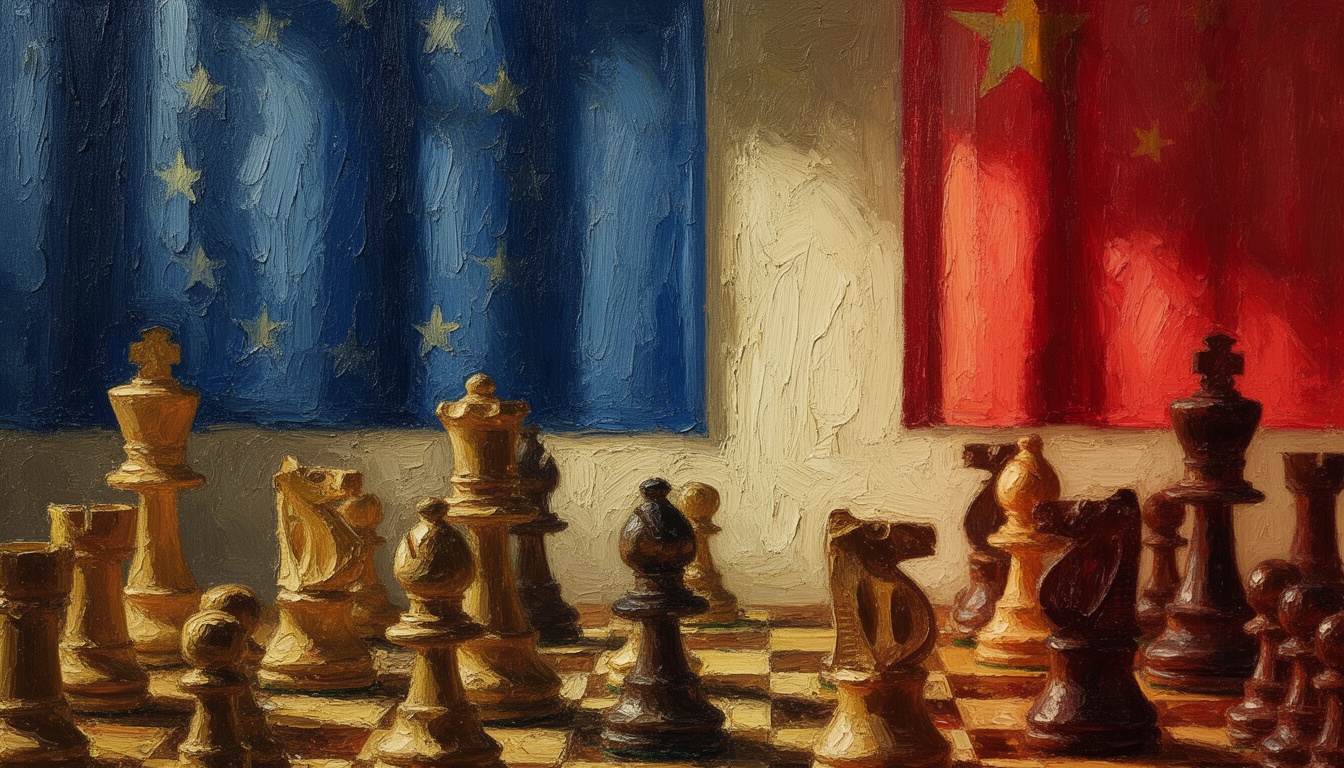
EU Trade Chief Advocates for Reducing China Dependencies
The European Union seeks to implement rules for supplier diversification, mimicking strategies used against Russian energy reliance. This marks a significant policy shift aimed at enhancing economic security.
The European Union's trade chief, Maros Sefcovic, has publicly confirmed that the bloc is exploring a specific instrument aimed at compelling companies to diversify their suppliers. This initiative is part of the EU's broader strategy to reduce dependencies on China in the wake of geopolitical tensions. The call for a dedicated diversification mechanism highlights the urgency of addressing vulnerabilities exposed by recent global events.
The concept of diversifying suppliers is not new, but Sefcovic's announcement marks a notable step in formalizing such a strategy within EU policy. In his remarks on Friday, Sefcovic drew parallels to the EU's swift reaction in decreasing its reliance on Russian energy resources following the onset of the war in Ukraine in 2022. This suggests a heightened awareness within the EU about the risks associated with over-dependence on single nations for critical supplies.
Strategically, this move is seen as an effort to bolster the EU's economic security and resilience against future shocks. By encouraging businesses to seek alternative suppliers, the EU aims to build a more robust supply chain that can withstand external pressures. This transition is likely to have implications not only for trade relations with China but also for the global market dynamics.
The specifics of the proposed rule are still under discussion, with Sefcovic emphasizing that this 'dedicated instrument' should be proportionate and tailored to meet the challenges posed by dependency on China. This could involve guidelines on how companies should evaluate their supply chains and criteria for acceptable diversification efforts. In essence, the EU aims to promote a balanced approach to trade that minimizes risk while encouraging competitive practices.
If implemented, this policy could reshape the landscape of EU-China trade relations, prompting a reevaluation of existing partnerships and supply chains. Companies operating within the EU will need to adapt rapidly to comply with new regulations that prioritize security and diversification, potentially leading to a shift in sourcing strategies that could have far-reaching consequences for both local and global markets.