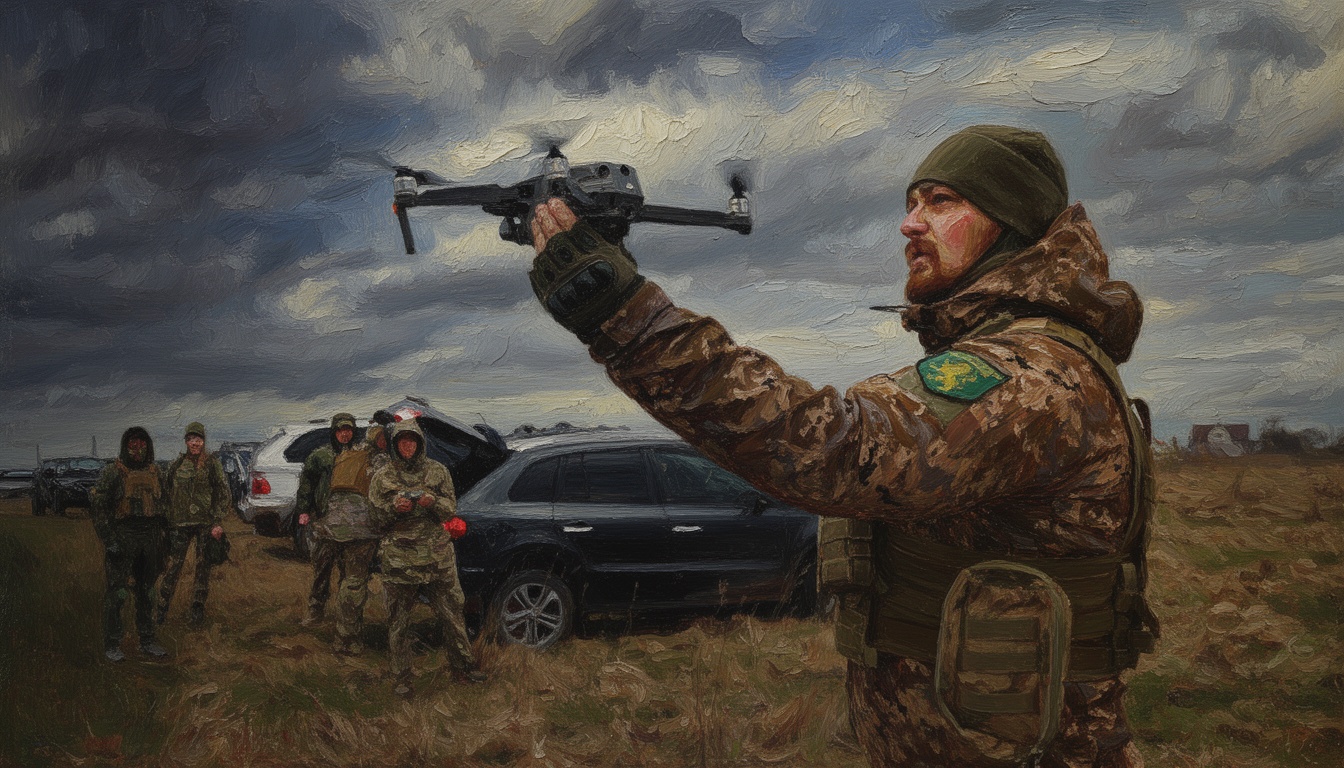
EU, Ukraine Accelerate Drone Production Agreement
The European Union and Ukraine have signed a key agreement to boost drone manufacturing capabilities. Ukrainian President Volodymyr Zelenskyy announced the current production of 10 million drones annually, with plans to increase to 20 million with external support.
The European Union and Ukraine have formalized a significant deal aimed at fast-tracking the production of unmanned aerial vehicles. This agreement marks a strategic partnership focused on enhancing Ukraine's capabilities in drone manufacturing, specifically to address ongoing defense needs in the face of regional security challenges.
Ukrainian President Volodymyr Zelenskyy revealed that the nation is producing 10 million drones per year. This output is expected to double to 20 million annually, enabled by support and resources from EU partners. This initiative not only enhances Ukraine's military capabilities but also signifies a deeper collaborative effort between the EU and Ukraine amidst rising tensions in Eastern Europe.
The strategic importance of increasing drone production cannot be overstated, as unmanned systems play a crucial role in modern warfare and situational awareness. The agreement will facilitate technology transfers and joint production efforts in the defense sector, allowing Ukraine to better equip its armed forces for current and future conflicts.
As part of the deal, specific technologies and systems will be targeted for production. This includes medium- and large-sized drones used for intelligence, surveillance, reconnaissance, and potential combat roles. Enhanced production capacity is expected to contribute significantly to national defense while fostering economic growth within the Ukrainian defense industry.
In conclusion, this agreement to accelerate drone production not only strengthens Ukraine's military deterrence but also consolidates the European Union's strategic foothold in defending its borders. Future assessments will focus on the pace of production increases and the impact on overall military engagement capacities in the region.