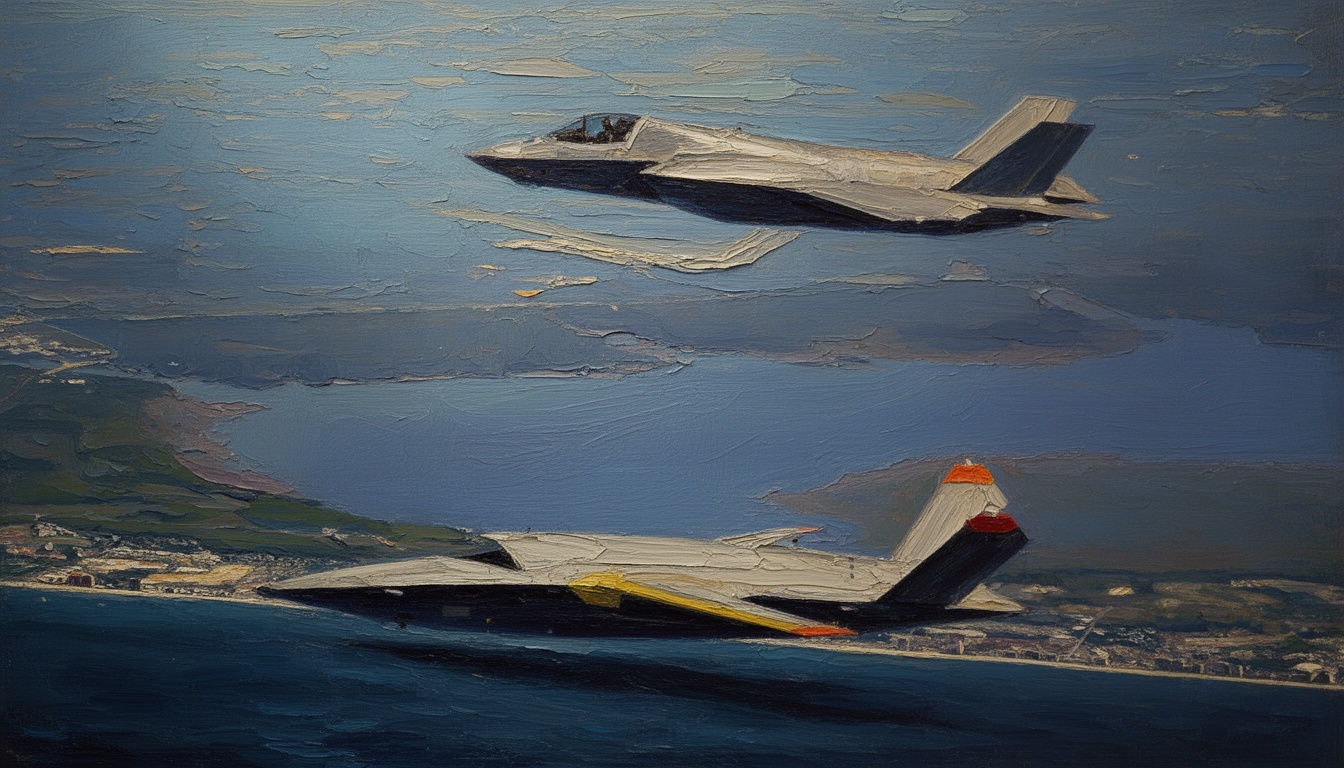
F-35s Direct Drones as Gateway to USMC 6th-Gen Fighter
USMC explores Collaborative Combat Aircraft as a conduit to a family of next‑generation capabilities, potentially including a stealth fighter predicated on an F/A‑XX concept. The approach signals a rapid path from distributed ISR/UAS integration to a broader, high-end fighter architecture.
The United States Marine Corps is advancing a path where F-35s act as the quarterback for a swarm of drones, forming a bridge to a future sixth‑generation fighter. This Collaborative Combat Aircraft concept envisions unmanned platforms permeating the kill chain, while manned assets retain command and control roles. The arrangement aims to compress development timelines by leveraging existing architectures and pilot workflows, accelerating integration of new sensors, munitions, and autonomy-enabled maneuver. In practical terms, the F-35 fleet would orchestrate diverse drones to extend range, persistence, and sensor fusion across the battlespace, creating a scalable prelude to a more capable but as-yet-undefined platform.