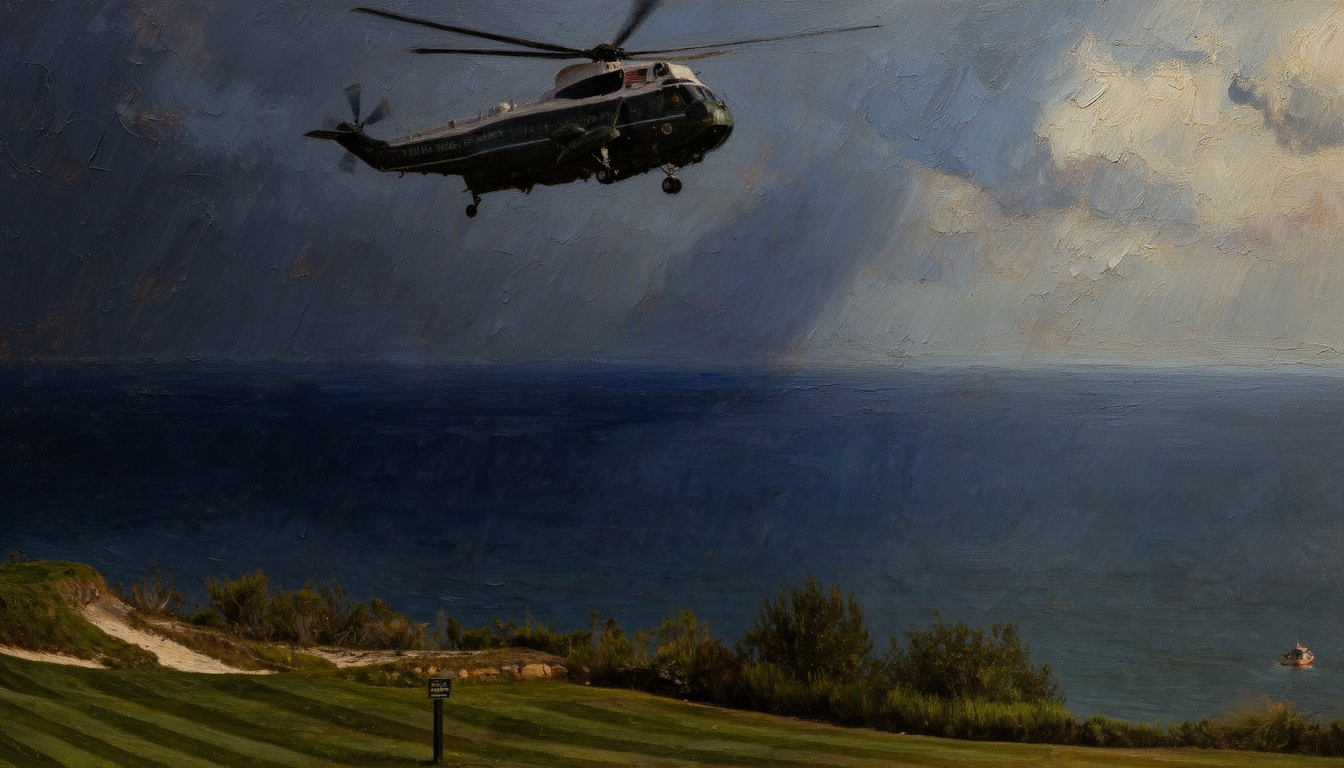
FAA Investigates Near Miss Between Trump Helicopter and Passenger Jet
The incident raises significant concerns regarding air traffic safety near the White House.
A military helicopter transporting President Donald Trump reportedly came alarmingly close to a passenger jet on Tuesday while departing from Reagan Washington National Airport. This incident has become a focal point for discussions on aviation safety, particularly regarding the protocols in place when high-profile individuals are in the air.
The Federal Aviation Administration has confirmed that the passenger aircraft was cleared for takeoff despite the proximity of Marine One, the helicopter used to transport the president. Typically, commercial flights are grounded during such operations to prevent incidents like this from occurring. This inconsistency in air traffic control procedures prompts an urgent review of safety measures involving the presidential transport.
The strategic implications of this incident cannot be understated. Aviation safety near critical government locations is paramount not only for protecting high-level officials but also for ensuring the safety of the general public. If a collision had occurred, the ramifications could have led to dire consequences, potentially escalating into a national security threat.
Technical details from the FAA indicate that the helicopter was operating under special military orders, allowing for its presence in restricted airspace while carrying a VIP. The exact specifications and operational protocols of Marine One ensure its capability to navigate complex airspace environments, but the incident has sparked questions about the effectiveness of communication between military and civilian air traffic control.
Looking forward, this incident may prompt policy changes regarding airspace management, especially during significant political events or when VIPs are in transit. Renewed emphasis on rigorous safety checks is critical in avoiding future close calls with commercial aircraft. In light of past incidents, such as the January 2025 crash which killed 67 people, it’s clear that the aviation industry must reassess its operational strategies to ensure no lives are put at risk.