Myanmar Generals Erase Aung San's Legacy Amid Power Struggle
Myanmar's military is actively removing statues of independence leader Aung San, signaling a broader campaign against the democratically elected government. This move aims to undermine the legacy of Aung San, which is pivotal to national identity.
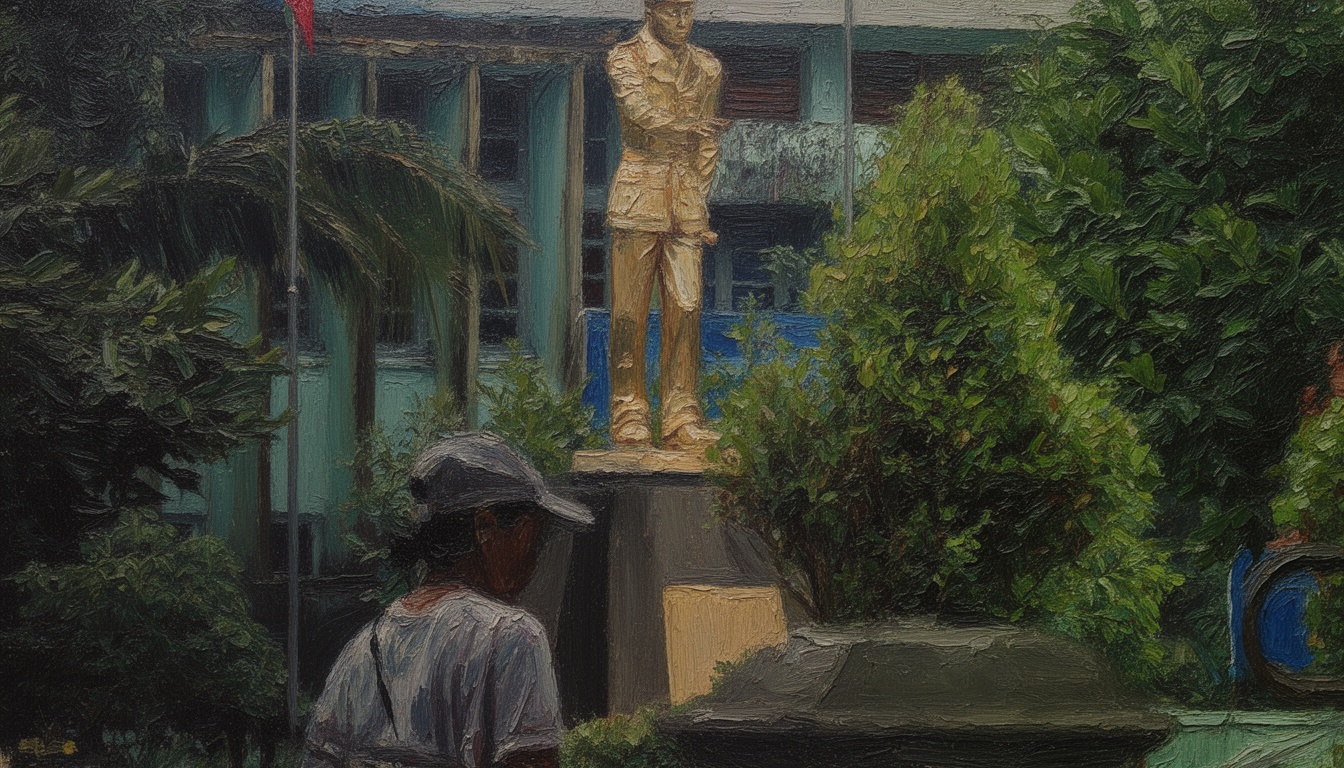
In a significant development in Myanmar, military-backed authorities have begun dismantling statues of Aung San, the nation's revered independence leader. This operation is officially justified by claims of 'incorrect proportions and shapes,' but analysts suggest a more sinister motive aimed at erasing Aung San's legacy to delegitimize the elected government.
Aung San, considered the founding father of Myanmar, played a crucial role in its fight for independence and in founding the military. His contributions to uniting the country's diverse ethnic groups are seen as central to the national narrative. The current junta's actions appear to be an attempt to rewrite history and consolidate power by undermining symbols of democratic governance.
Strategically, this move reflects an ongoing war for control of Myanmar's national identity, as the regime seeks to reframe its own legitimacy in the eyes of the people. By dismantling statues and eradicating references to Aung San, the generals are attempting to sever ties between the citizenry and the ideals that led to the establishment of the democratic government.
Technical assessments indicate that the dismantling process of the statues has begun in various locations across the country, with authorities vowing to remove all remnants of Aung San's commemorative presence. This could further entrench divisions among Myanmar's diverse ethnic groups, challenging the fragile peace that has been established.
In conclusion, the ramifications of this campaign could be severe, potentially inciting further civil unrest as citizens react to the erasure of their national hero from public discourse. Observers anticipate that this strategy could alienate significant segments of the population, ultimately leading to intensified conflict and destabilization.